

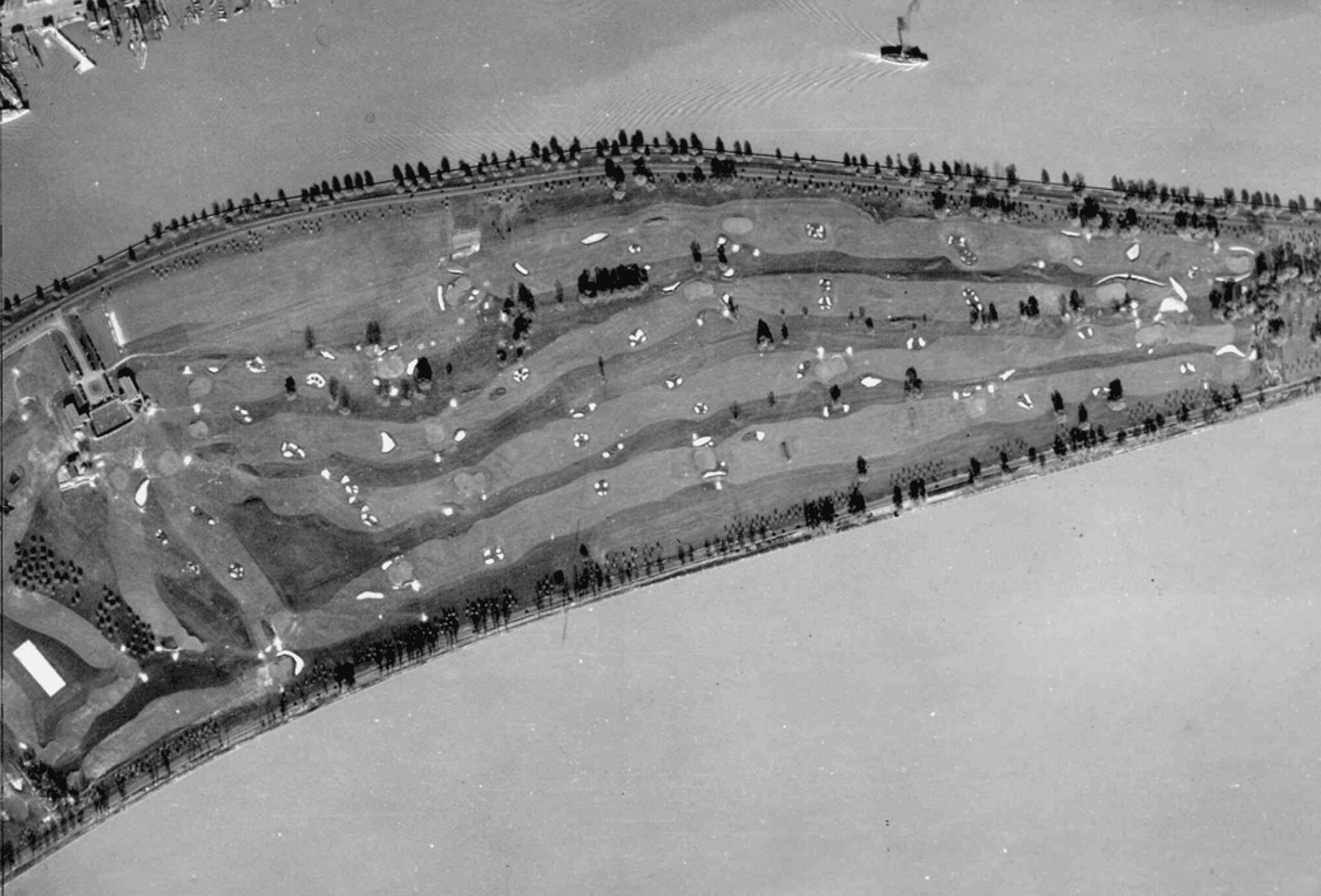
WASHINGTON — A preservation nonprofit and two District residents sued the Trump administration Friday to block a proposed overhaul of East Potomac Golf Course, arguing federal agencies are unlawfully remaking protected parkland set aside for public recreation. The complaint says the project is moving ahead without required environmental review and includes dumping demolition debris at the site, Feb. 13, 2026.
The suit, filed in U.S. District Court for the District of Columbia, lists the D.C. Preservation League, Washington resident Dave Roberts and Washington resident Alex Dickson as plaintiffs and names the Department of the Interior and the National Park Service as defendants, according to a Reuters report.
The case lands amid a broader push by President Donald Trump’s administration to reshape prominent public spaces in the nation’s capital — an effort that has drawn a series of legal and political challenges in recent months.
What the lawsuit alleges about East Potomac Golf Course overhaul
At the center of the case is East Potomac Park — a low-lying, century-old recreational landscape that includes East Potomac Golf Course and is listed on the National Register of Historic Places. Plaintiffs argue that an 1897 act of Congress requires the park to remain “forever held and used as a park for the recreation and pleasure of the people,” and that federal officials cannot convert the property into a more exclusive venue without clear legal authority.
The lawsuit also invokes federal environmental requirements, including the National Environmental Policy Act, contending that Interior and the Park Service failed to study potential impacts before starting work tied to the renovation. The complaint points to dirt, debris and wreckage from the White House East Wing modernization project being placed on parts of the course — a volume the plaintiffs put at roughly 30,000 cubic yards — raising concerns about contaminants and airborne pollution.
Public land claim: The filing says an 1897 law setting aside East Potomac Park for recreation bars a shift toward private or exclusive uses.
Environmental review claim: Plaintiffs argue the government skipped required analysis before moving forward with reconstruction tied to East Potomac Golf Course.
Dumping claim: The lawsuit cites debris placed on the course and says the government has not addressed potential environmental hazards.
Roberts, a frequent player at the municipal course, said in a statement carried by The Associated Press that the public facility “deserves better than becoming a dumping ground for waste and yet another private playground for the privileged and powerful.” The AP report noted the course’s first 18 holes were built between 1918 and 1923 and that the site is recognized, in part, for efforts to racially integrate in the 1940s.
In a separate statement released by plaintiff attorneys, the D.C. Preservation League said the dispute is about public access and historical character, warning that remaking the course as a tournament-level destination would alter a site long used by everyday golfers. “Losing this golf course would significantly impact our shared history and limit public access to one of the District’s vital recreation and green spaces,” Executive Director Rebecca Miller said, according to a Democracy Forward release.
The Interior Department has said it does not comment on pending litigation, but it also told news outlets it would “ensure these courses are safe, beautiful, open, affordable, enjoyable and accessible,” even as it pursues changes at the public golf facilities in Washington.
How East Potomac Golf Course reached this point
Debates over what East Potomac Park should be — and who it should serve — did not start with the lawsuit. A 2015 WAMU report described the park as a “hidden gem” in disrepair and explored how better connections and investment could reshape the public waterfront, with East Potomac Golf Course as one of its defining amenities.
In 2020, the National Park Service signed a 50-year lease with the nonprofit National Links Trust to operate and rehabilitate the District’s three municipal courses — including East Potomac Golf Course — promising affordability, historic restoration and expanded community access. The agency announcement, archived by the Park Service, is detailed in a National Park Service news release; it also notes the courses’ role in the civil rights movement and protests for equal access that helped spur integration of recreational facilities in 1941.
Golf-industry outlets also covered the long-term plan, including proposed restoration work tied to the course’s early-20th-century design. In June 2020, The Fried Egg reported that well-known architects agreed to provide design help and that East Potomac would be central to the effort to preserve municipal golf.
By 2024, the National Links Trust had begun moving parts of the broader refurbishment plan into permitting and construction phases. An Axios overview of the Rock Creek Park Golf Course renovation described the work as the first chapter of a multi-course push that also envisioned future improvements at East Potomac and Langston.
That trajectory shifted late last year, when the Trump administration terminated the National Links Trust’s lease, saying the group had not met required capital-improvement obligations. The nonprofit disputes those claims and says it invested more than $8.5 million while keeping fees below market rates.
In its statement on the lease termination, National Links Trust said it is “devastated” by the decision but agreed to continue operating East Potomac Golf Course and the other two city courses temporarily so they can remain open while legal and administrative issues play out.
What happens next
The lawsuit asks a federal judge to stop reconstruction work at East Potomac Park until the government complies with environmental review and other legal requirements. If the court grants emergency relief, it could pause early site work at East Potomac Golf Course while the case proceeds; if not, opponents say irreversible changes could occur before the public has a chance to weigh in.
For now, golfers and neighborhood advocates are watching for the administration’s next steps — and for any court timetable that could determine whether East Potomac Golf Course remains a largely affordable, everyday municipal facility or shifts toward a higher-end model driven by presidential priorities.


