

Why Tel Aviv bomb shelters now define the city’s routine
The city’s own emergency guidance shows how central that calculation has become. The city’s emergency page directs residents to a bomb shelter map, nearby public protected spaces and shared shelters inside apartment buildings. The Home Front Command’s shelter instructions tell residents to reach the safest available protected space quickly and stay there for 10 minutes after an alert, turning distance to reinforced concrete into one of the city’s most important daily measurements.
The practical result is a quieter but more revealing shift in urban behavior. Work, meals and sleep are increasingly planned around proximity to shelter. Parents are rehearsing routes with children, and residents in older buildings without easy access to protected rooms are deciding that remaining underground for longer stretches is easier than sprinting back and forth multiple times a day.
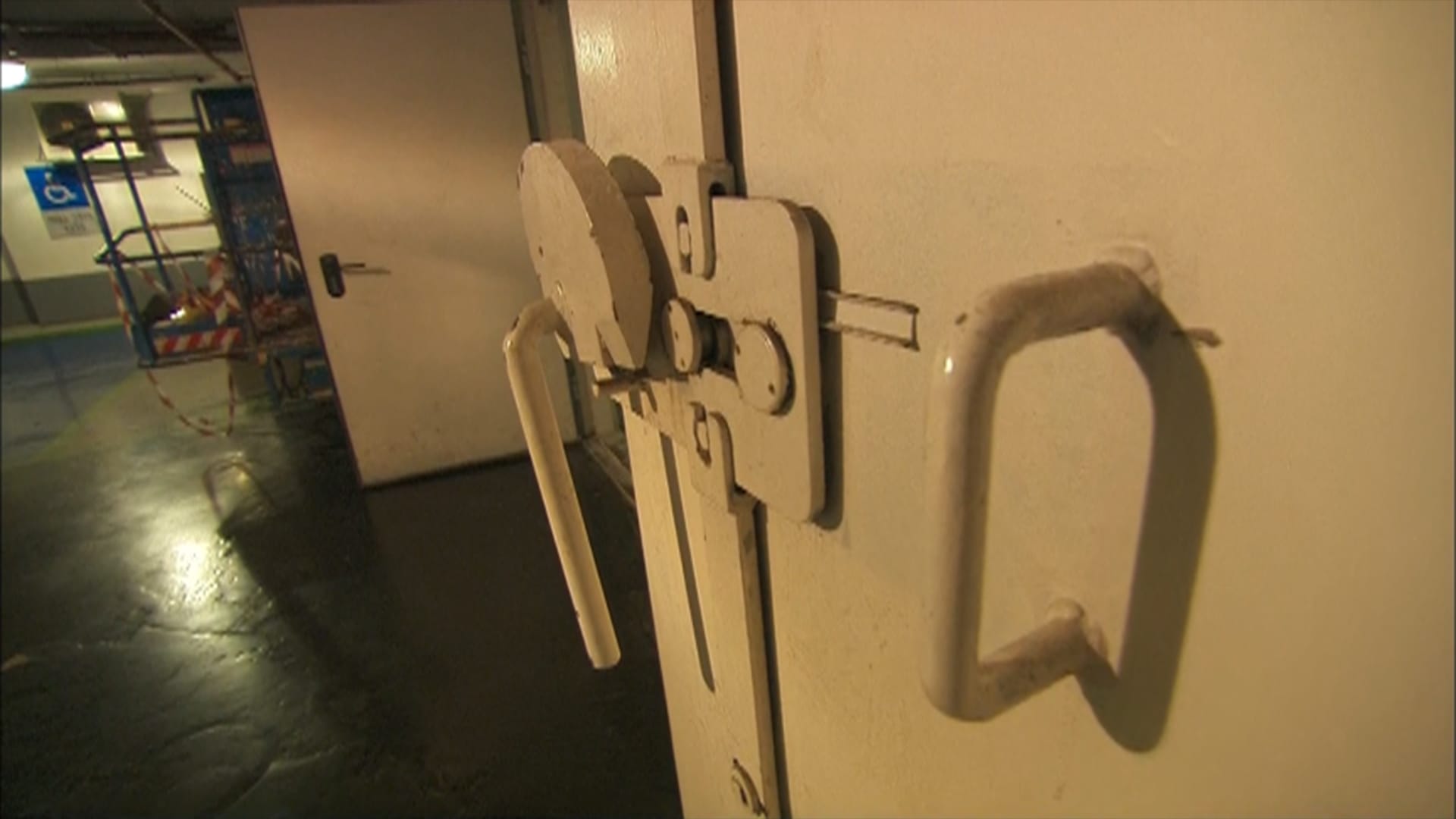
That underground routine is now visible across the city. An AP photo essay on life inside Israel’s shelters showed parking garages, metro stations and basements turned into temporary communities, with families eating beside tents and hospital staff moving emergency care into protected underground space. A Times of Israel report on Tel Aviv residents seeking normalcy under rocket fire said more than 400 residents were unable to live in their homes earlier this week after missile damage and described tent encampments, thinner mall traffic and growing weariness across the city.
The strain is visible even when sirens are quiet. Fatigue now sits alongside fear as a defining feature of daily life. Sleep is lighter, routines are shorter and the question behind even simple errands is whether there is enough time to get below ground if an alert sounds. Reuters images from Tel Aviv after the March 24 missile barrages captured the other side of that calculation: fresh impact sites, fire damage and emergency crews moving through central neighborhoods after another wave of strikes.
That is why Tel Aviv bomb shelters now function as more than civil-defense infrastructure. They are absorbing the city’s overflow of anxiety, logistics and improvisation. They are where children wait out alerts, where neighbors share chargers and water, and where residents try to preserve the smallest pieces of normal life while accepting that normal has already been redefined.
Tel Aviv bomb shelters and a longer history of emergency life
The city’s dependence on shelters did not begin with the current Iran war. In July 2014, The Jerusalem Post reported that Tel Aviv had published a GPS-based public shelter map after rocket fire reached central Israel. The next month, Reuters reported that the military urged shelters to open beyond the Tel Aviv area when a truce collapsed and rocket fire resumed. During the May 2021 Gaza fighting, Reuters again described shelters becoming temporary homes for Israeli families living under sustained fire.
What makes this period different is not the existence of the shelter network but the way it has moved deeper into the texture of big-city life. Tel Aviv is Israel’s commercial and cultural core, a place built around movement, nightlife and constant street activity. When parking garages, bus-station basements and mall levels begin to function as semi-permanent living space, the story is no longer only about emergency response. It is about how a modern city reorganizes itself when insecurity becomes repetitive instead of exceptional.
For now, residents are still doing what cities under threat usually do: adapting faster than they can process what that adaptation costs. But each night spent on a mattress in a public shelter, each workday shortened by alerts and each family choosing concrete over comfort adds to a more durable change. In Tel Aviv, the shelters are no longer waiting for the next emergency. They are where the emergency is being lived.


