

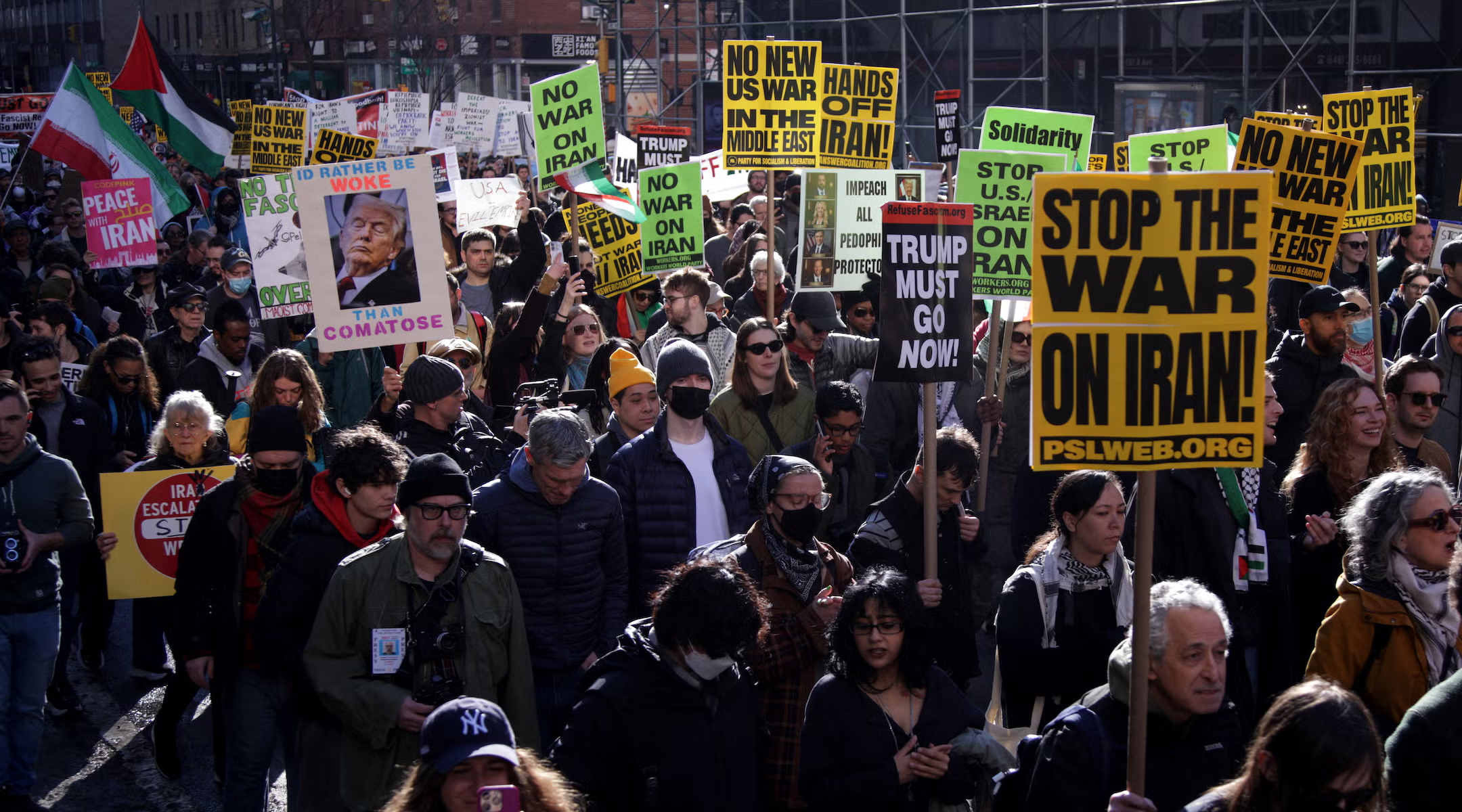
WASHINGTON — Two-thirds of Americans want the United States to end the Iran war quickly even if that means falling short of the administration’s goals, according to a new Reuters/Ipsos poll, while U.S. average gasoline prices rose above $4 a gallon for the first time in more than three years, April 1, 2026. The backlash is being driven less by battlefield rhetoric than by what the conflict is doing to household budgets, as voters weigh fuel costs, inflation pressure and the risk of a longer war.
In the survey, conducted Friday through Sunday among 1,021 adults, 66% said Washington should work to end U.S. involvement quickly. Another 27% said the United States should stay in the fight until all of its objectives are met. The same poll found 60% disapproved of U.S. military strikes on Iran, and even among Republicans there were visible divisions: 57% backed a longer campaign, but 40% favored a quicker exit.
Iran war poll shows pocketbook pain is overtaking the war message
That picture aligns with a separate AP-NORC survey that found 59% of Americans believe recent U.S. military action against Iran has gone too far, while 45% said they were extremely or very worried about being able to afford gasoline in the next few months. For the White House, that creates a clear political problem. Support for preventing Iran from obtaining a nuclear weapon remains relatively broad, but tolerance for the conflict weakens when voters tie it directly to fuel and household costs.
There is also little sign the price shock will fade quickly. A Reuters survey of oil analysts found the 2026 Brent forecast had jumped nearly 30% from February to $82.85 a barrel after the war disrupted flows through the Strait of Hormuz, which carries roughly one-fifth of global oil and liquefied natural gas shipments. Analysts said inventories are likely to remain tight even if shipping gradually normalizes, a warning that helps explain why many voters appear more open to a quick end than to a longer campaign with uncertain economic fallout.
The $4 gasoline threshold matters because voters often treat it as both an economic and psychological line. Once prices move above it, the war can stop feeling distant. Commuters, delivery businesses and lower-income households see the conflict in weekly budgets, and the administration loses room to argue that the burden is mostly overseas. In a midterm year, price shocks also tend to break through more quickly than foreign-policy arguments.
Backlash has been building for weeks
The current mood did not emerge in a single news cycle. In the first weekend of the campaign, a Reuters/Ipsos survey from March 2 found only 27% of Americans backed the strikes, and 45% said higher gas or oil prices would make them less likely to support the operation. That early finding now looks significant in hindsight: the public was signaling from the start that battlefield arguments would be filtered through fuel prices and the prospect of U.S. casualties.
By late March, the pressure had already spread beyond foreign policy. Another Reuters/Ipsos poll from March 24 showed President Donald Trump’s approval at 36% as gas prices surged and disapproval of the strikes climbed to 61%. The numbers pointed to damage not just from anti-war sentiment, but from broader doubts about the administration’s handling of the economy and the cost of living.
The pattern also echoes an earlier rupture in U.S.-Iran tensions. After the January 2020 killing of Iranian Gen. Qassem Soleimani, Reuters/Ipsos found that 71% of Americans believed the United States and Iran would be at war within the next few years. The difference now is that escalation is no longer hypothetical. Voters are reacting not only to the danger of a wider war, but also to the visible cost of one that is already underway.
The latest survey suggests Americans may still accept tough rhetoric toward Iran, but they are far less willing to absorb an open-ended conflict that feeds into grocery bills, freight costs and the drive to work. If fuel remains above $4 and oil stays elevated, the political debate is likely to turn even more heavily on affordability, duration and whether Washington can show the public a credible exit.


