

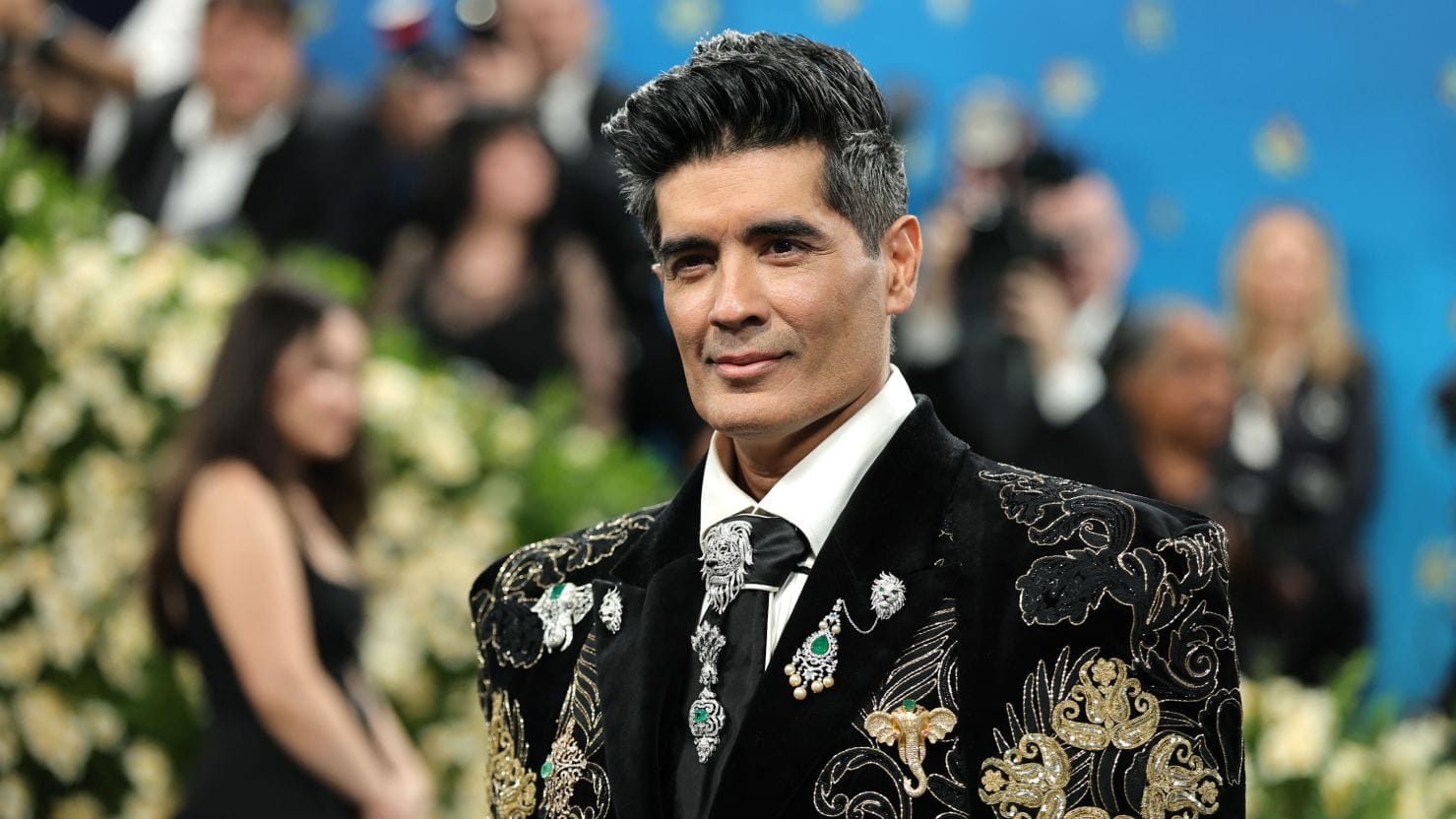
In a recent lifestyle interview, Malhotra framed memorable gifting around narrative, suggesting that a present lands best when it feels personal instead of transactional. That thinking quickly moved from idea to example when he spoke about designs gifted to Meryl Streep and Anne Hathaway after Karan Johar met the actors in Tokyo, describing the moment as a proud way to take Indian craftsmanship to a wider stage.
Why Manish Malhotra says meaningful gifts need a story
For Malhotra, the point is not excess for its own sake. A gift, in his telling, should feel edited, intentional and emotionally legible. That same thread runs through his broader brand expansion. In a February interview, he described jewelry as another form of storytelling while discussing a new accessories push and a Dubai Fashion Week showcase built around adapting Indian artisanship for a global audience.
The scale of that ambition is no longer subtle. GQ India’s late-2025 profile placed Malhotra’s recent run in a distinctly international frame, from the Met Gala to celebrity dressing across markets, reinforcing that his brand is operating far beyond its Bollywood foundation. In that context, his comments on gifting read less like a seasonal soundbite and more like a statement of brand strategy: emotion first, craftsmanship close behind, and visibility as the outcome.
Manish Malhotra and the longer arc of Indian fashion’s rise
This is not a sudden reinvention. In a 2023 interview with Teen Vogue, Malhotra traced his work back to costume design and to a long-running effort to modernize Indian heritage craft without stripping it of identity. That balance between preservation and reinvention helps explain why he talks about gifting the way he talks about fashion: both are supposed to communicate character.
The commercial groundwork has been building for years as well. Vogue reported in 2021 that Reliance’s stake in Manish Malhotra reflected rising confidence that Indian designer labels could scale beyond their domestic base. By 2024, another Vogue report argued that Indian fashion had moved from a fleeting global moment to a sustained movement, with Malhotra’s expansion sitting inside that larger shift.
That is why his message about gifting resonates now. He is not arguing that the best gift is the biggest one. He is arguing that the best gift is the one with a point of view. As Indian fashion continues to press outward, that may be the sharper lesson too: global luxury travels farther when it carries not just craft, but meaning.


