

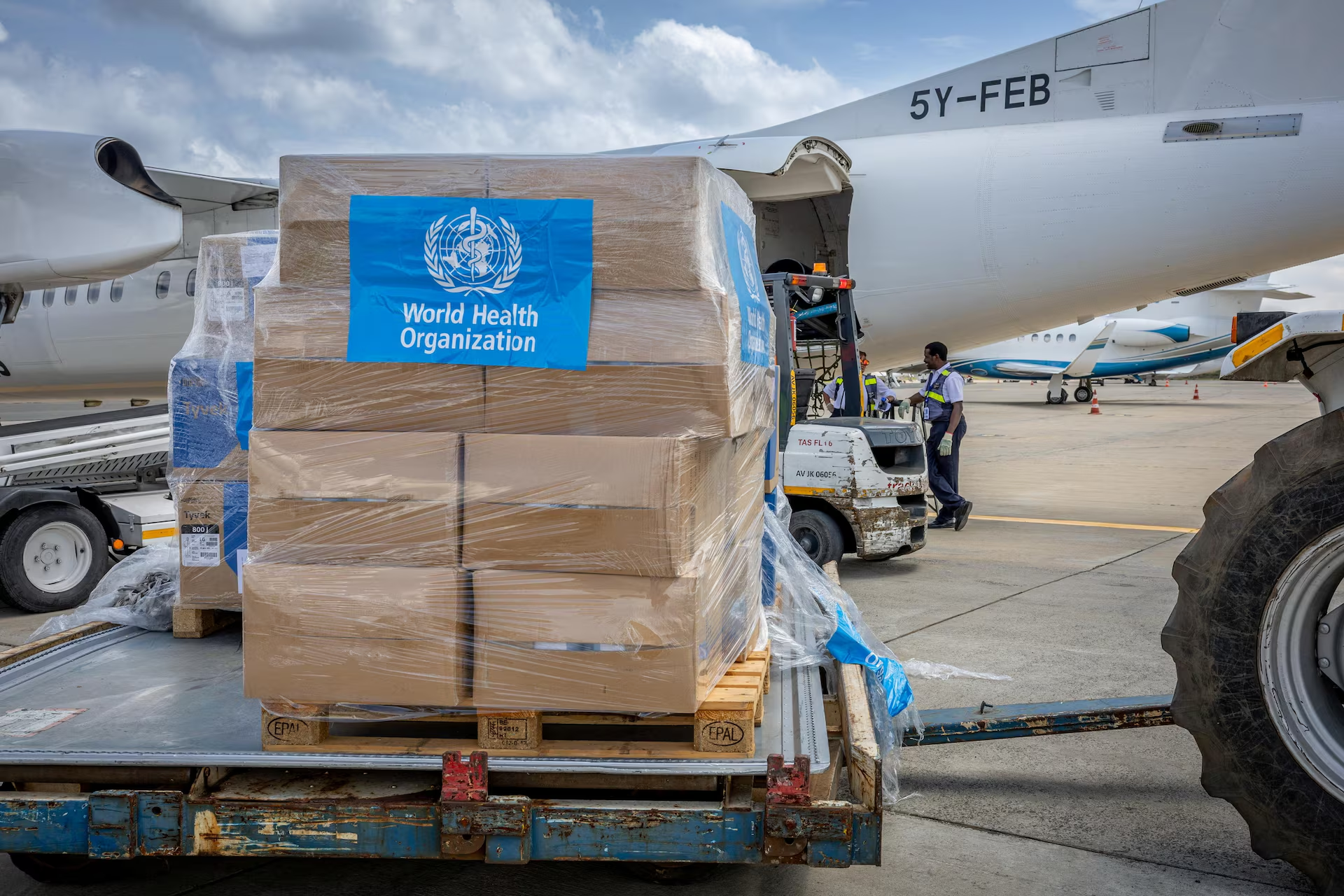
marking a significant setback for a US-backed public health preparedness initiative. The decision has triggered debate over disease control,
national sovereignty, and the role of foreign-funded medical infrastructure in East Africa.
The ruling comes at a time when global health agencies continue to emphasize preparedness for viral hemorrhagic fevers, including Ebola,
which has repeatedly caused outbreaks across the African continent over the past decades.
Kenya Ebola Quarantine and the Suspended Facility Plan
The Kenya Ebola quarantine facility plan was designed to enhance rapid isolation and treatment capacity in the event of a
cross-border outbreak. However, legal challenges raised concerns about environmental impact assessments, public consultation processes,
and the long-term implications of hosting a high-risk containment facility near populated areas.
Health experts have long warned that Ebola preparedness requires strong isolation infrastructure, as outlined in the
World Health Organization Ebola fact sheet,
which details transmission risks, containment strategies, and emergency response requirements.
Court Ruling Halts US-Backed Health Infrastructure Project
The court’s decision effectively pauses construction and implementation of the facility, citing procedural concerns and insufficient stakeholder engagement.
The project had reportedly been supported through international health funding mechanisms aimed at strengthening regional disease surveillance systems.
Similar health cooperation efforts in Kenya have previously been documented through development programs such as
USAID’s Kenya health initiatives,
which focus on strengthening healthcare systems, epidemic preparedness, and laboratory infrastructure.
Public Health Concerns and Regional Preparedness
Kenya has not experienced a large-scale Ebola outbreak, but its geographic proximity to countries with prior outbreaks has made preparedness
a key priority for health authorities. Border surveillance and quarantine readiness remain central to national disease control strategies.
The US Centers for Disease Control and Prevention Ebola resource page
highlights the importance of early detection, isolation, and contact tracing in preventing Ebola spread across borders.
Historical Context: Ebola Outbreaks in Africa
Ebola has shaped public health policy across Africa for decades, particularly following major outbreaks in West and Central Africa.
These events exposed weaknesses in emergency response systems and led to increased international investment in preparedness infrastructure.
Earlier reporting on large-scale outbreaks, such as the 2014 West Africa crisis, is documented in
BBC News coverage of the Ebola outbreak in West Africa,
which highlighted the devastating impact on health systems and regional economies.
Balancing Sovereignty and International Health Support
The suspended Kenya Ebola quarantine project has raised broader questions about how developing nations balance foreign assistance with domestic regulatory control.
While international funding can accelerate infrastructure development, it often comes with governance and transparency requirements.
According to regional reporting from
Reuters Africa coverage on Kenya,
Kenya has increasingly positioned itself as a regional health hub, attracting investment in medical research, logistics, and disease surveillance systems.
Risk Communication and Public Opposition
Local opposition to quarantine facilities often stems from concerns about safety, stigma, and economic impact on surrounding communities.
Public trust plays a critical role in the success of epidemic preparedness infrastructure, especially for diseases with high mortality rates.
Health communication experts emphasize that misinformation and fear can undermine outbreak preparedness, even when facilities are designed with strict biosafety protocols.
Continuity of Global Health Preparedness Efforts
Over time, global institutions have strengthened frameworks for epidemic response, particularly after repeated Ebola outbreaks in Africa.
These frameworks prioritize early containment, rapid response teams, and cross-border coordination.
The evolution of such strategies is closely tied to international health cooperation efforts described in
World Health Organization global health programs,
which continue to guide outbreak preparedness worldwide.
Conclusion: A Project at the Intersection of Law and Public Health
The suspension of the Kenya Ebola quarantine facility underscores the complex intersection of public health policy, legal oversight, and international development funding.
While the need for epidemic preparedness remains urgent, the ruling highlights the importance of balancing safety infrastructure with legal compliance and public participation.
As global health threats continue to evolve, Kenya’s decision may influence how future quarantine and containment projects are planned across the region.


