

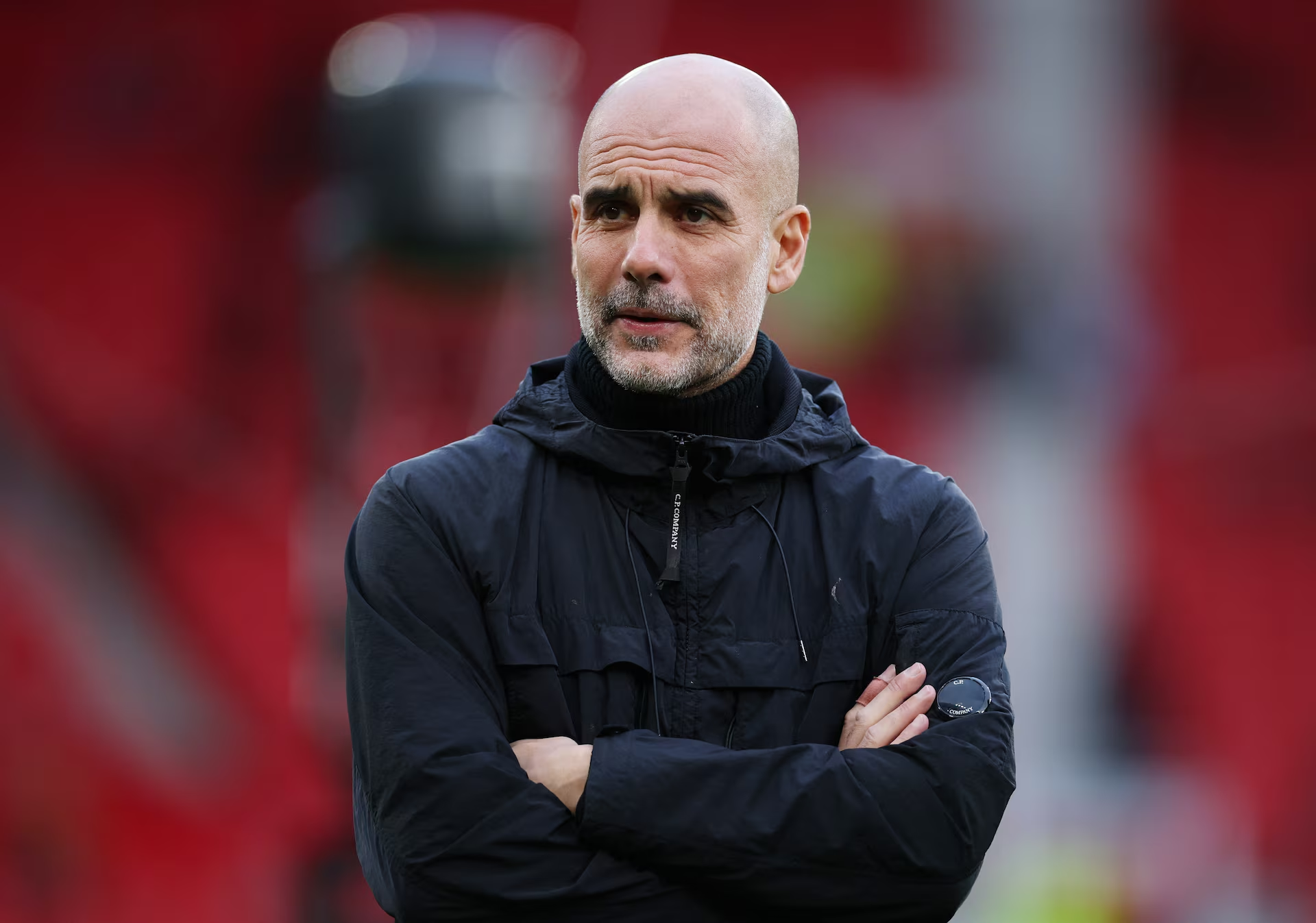
As one of the most decorated coaches in modern football, Guardiola’s influence now extends beyond the pitch, where his comments and symbolic gestures have repeatedly drawn both praise and criticism across Europe and beyond.
Guardiola Activism and Catalan Identity in Focus
Guardiola’s activism first drew international attention during the Catalan independence movement, where he publicly supported the region’s right to self-determination while maintaining a carefully framed stance on non-violence. His remarks during that period positioned him as one of the most visible sports figures to engage with Spain’s political tensions.
His advocacy has since been widely documented in sports and political reporting, including long-term coverage of his managerial philosophy and public statements in profiles such as Pep Guardiola’s career overview on Wikipedia, which tracks both his football achievements and broader public influence.
Guardiola Activism and Global Social Justice Messaging
Beyond Catalonia, Guardiola has consistently spoken on global humanitarian issues, including racial equality and social justice movements. During the rise of global protests in recent years, he emphasized the responsibility of public figures to address inequality, a stance that resonated strongly with supporters while drawing scrutiny from critics who prefer sports and politics remain separate.
His comments and media interactions have frequently been covered by major international outlets, including ongoing football coverage and analysis from BBC Sport’s football reporting, which has tracked his managerial tenure and public statements across multiple seasons.
Guardiola Activism and the Palestine Debate
Guardiola’s remarks regarding the Israel–Palestine conflict have further intensified debate around his public role. In statements that emphasized humanitarian concern and the impact of war on civilians, he joined a small but growing group of elite sports figures willing to address the issue directly in public forums.
Coverage of international political responses to sport and public figures has been widely documented by outlets such as Al Jazeera Sports coverage, which frequently examines the intersection of athletics, identity, and global politics.
Public Reaction and Media Scrutiny
The reaction to Guardiola’s activism remains deeply divided. Supporters argue that his platform as a global football icon gives him a unique ability to highlight humanitarian concerns, while critics contend that such positions risk politicizing sport.
Broader international reporting on European political and cultural dynamics, including sports-related commentary, has been reflected in outlets like Reuters Europe coverage, where sport and politics often intersect in broader geopolitical analysis.
Legacy Beyond Football
As Guardiola continues his managerial career at the highest level of club football, his off-field voice is becoming an increasingly significant part of his public identity. Whether viewed as a moral stance or a controversial intrusion into politics, his activism ensures that his legacy will extend well beyond trophies and tactical innovation.
His evolving role reflects a broader trend in modern sport, where elite athletes and coaches are no longer confined to the pitch but are expected to navigate complex social and political landscapes in real time.


