ABU DHABI, United Arab Emirates — Global leaders, philanthropies, and officials from polio-endemic countries pledged $1.9 billion to the Global Polio Eradication Initiative at a high-stakes Abu Dhabi Finance Week summit in the UAE capital, Dec. 8, 2025. The fresh commitments are designed to keep polio eradication on track as the initiative braces for a 30 percent budget cut from 2026 and to slash a once–$1.7 billion funding gap to $440 million, Dec. 8, 2025.
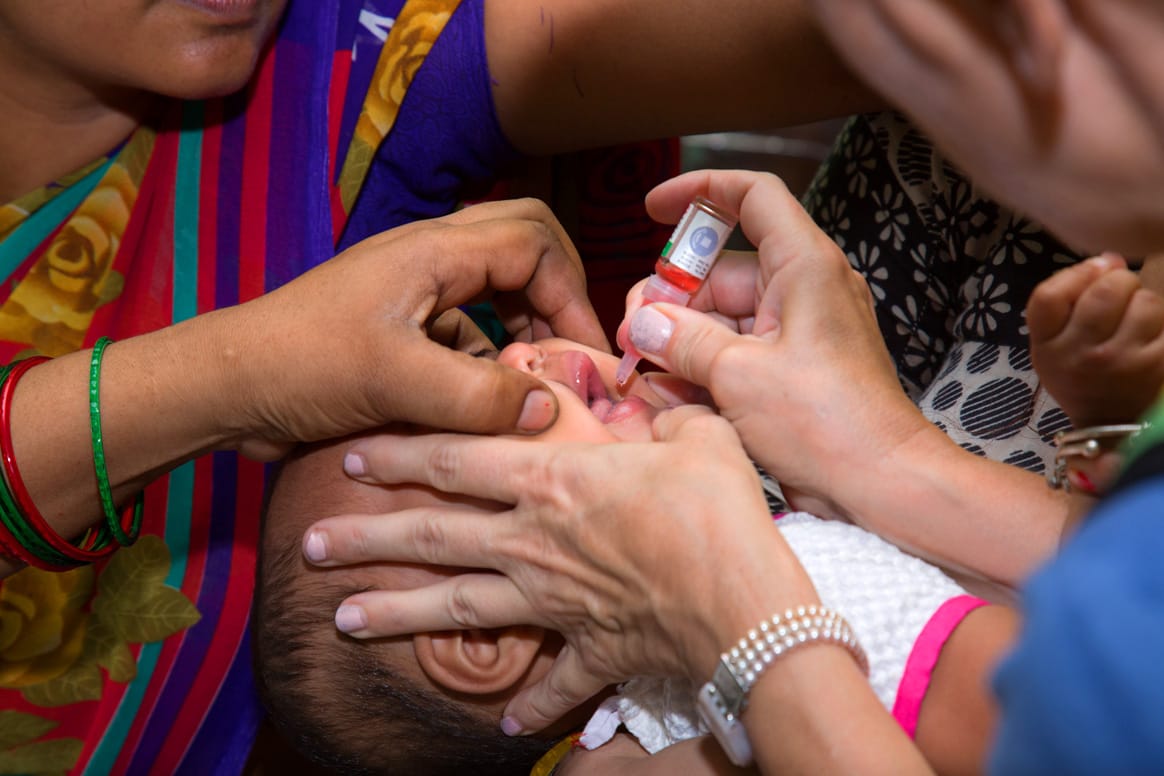
The money — roughly $1.2 billion of it entirely new — will help reach an estimated 370 million children a year with polio vaccines and shore up fragile health systems in countries where outbreaks still lurk beneath the surface, according to a detailed statement from the Global Polio Eradication Initiative.
Funding gap still threatens the endgame of polio eradication.
Even after Abu Dhabi’s pledging moment, a $440 million shortfall hangs over the 2022–2029 strategy, just as donors impose sweeping aid cuts that will shrink the initiative’s budget by about 30 percent from 2026. A Reuters analysis of the pledging moment notes that pullbacks by major funders — including the United States, Germany, and the United Kingdom — are driving the squeeze.
Campaign leaders warn that without closing the remaining gap, polio eradication could stall at the very moment when the virus is cornered. Wild poliovirus now remains endemic in only Afghanistan and Pakistan. Yet, variant poliovirus outbreaks tied to gaps in vaccination coverage continue in 18 countries, and 39 children have been paralyzed by wild polio this year alone.
Donors at the Abu Dhabi event included the Bill & Melinda Gates Foundation ($1.2 billion), Rotary International ($450 million), the Mohamed bin Zayed Foundation for Humanity ($140 million), and Bloomberg Philanthropies, as well as governments including Pakistan, Germany, the United States, Japan, and Luxembourg.
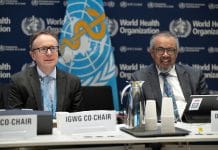
“We are on the cusp of eradicating polio and securing a historic win for humanity,” World Health Organization Director-General Dr. Tedros Adhanom Ghebreyesus said, urging governments and donors not to step back before the job is finished.
Abu Dhabi’s long game on polio eradication
The latest pledges are the third time in just over a decade that Abu Dhabi has been the stage for major polio eradication financing deals. This pattern has quietly turned the emirate into a global hub for disease eradication diplomacy.
At the 2013 Global Vaccine Summit in Abu Dhabi, governments and philanthropies backed a new six-year plan to wipe out polio, committing about $4 billion toward the Global Polio Eradication Initiative’s Endgame Strategic Plan. A World Health Organization account of that summit framed the effort as a once-in-a-generation opportunity to eliminate a human disease after smallpox.
Six years later, global leaders returned for the Reaching the Last Mile forum, where they pledged $2.6 billion to vaccinate 450 million children annually and push through the “last mile” of polio eradication. That 2019 gathering — detailed in a WHO report on the Reaching the Last Mile forum — left a smaller but still significant funding gap.
Between those summits, the UAE’s Emirates Polio Campaign helped deliver hundreds of millions of vaccine doses to children in Pakistan’s most hard-to-reach districts; a 2018 GPEI report on the Emirates Polio Campaign credited Abu Dhabi with completing a $120 million commitment first announced in 2013.
Last-mile risks: conflict, mistrust, and donor fatigue
Despite a more than 99 percent drop in global cases since 1988, polio eradication is still vulnerable to conflict, misinformation, and the simple exhaustion of donors and health workers.
Saudi Arabia’s earlier $500 million commitment, recently reaffirmed, underlines how much the drive now relies on a handful of major backers willing to keep funding vaccination teams in insecure border regions of Pakistan and Afghanistan.
At the same time, high-income countries have cut broader global health and development budgets, leaving GPEI to do more with less. One CNN report on the new pledges warns that reduced foreign aid from multiple donors could stretch frontline programs that rely on polio infrastructure for other vaccines and disease surveillance.
Advocates argue that completing polio eradication remains a bargain: modelling cited by the GPEI and by ESG News suggests that eliminating the virus would save the world more than $33 billion by 2100, compared with the ongoing costs of outbreak response.
“We’re 99.9 percent of the way there, but the last stretch demands the same determination that got us this far,” Gates said, framing polio eradication as a test of whether the world can still unite behind a shared public good.
The Abu Dhabi pledges have brought polio eradication closer to the finish line than ever before. Whether the remaining $440 million can be found — and whether vaccinators can keep reaching children in the hardest places — will determine if polio becomes only the second human disease ever wiped from the earth, or a preventable threat that the world chose to live with.