

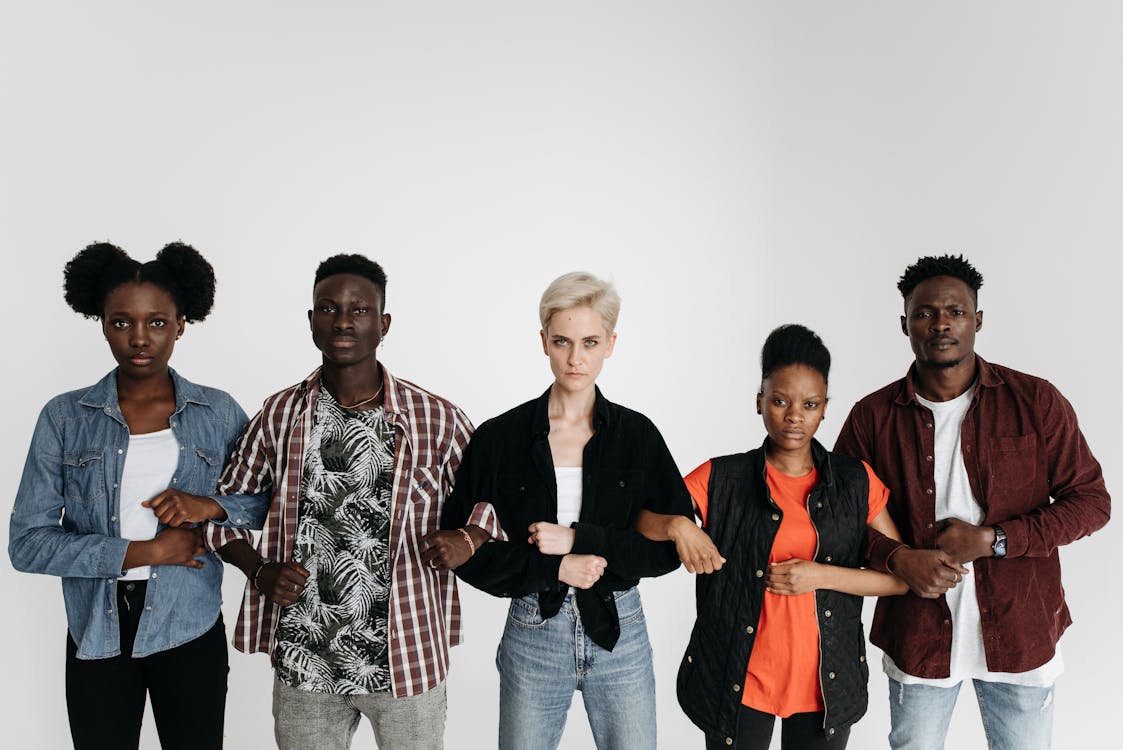
TEL AVIV, Israel — Standing Together, Israel’s most significant Arab–Jewish grassroots movement, has spent the past year stationing volunteers along Gaza-bound aid routes to shield truck drivers from far-right mobs and keep flour and medicine moving toward the strip, even as it rallies for a cease-fire at home. Organizers say the effort shows how Arab and Jewish citizens can stand together on the road to resist both war and dehumanization, even as their activism draws fire from the government and from parts of the global boycott movement, Dec. 10, 2025.
Standing Together at the aid convoys
At the Tarqumiyah crossing in the southern West Bank, a Times of Israel dispatch this spring showed Standing Together activists reloading aid after extremists ripped bags of flour, slashed tires, and hurled food into the road, then forming a line of purple-shirted volunteers between the trucks and would-be attackers.
In response, the movement formalized its “Humanitarian Guard,” sending carloads of Arab and Jewish citizens to accompany convoys from Jordan through the West Bank. A June 2024 report by German peace organization Pro Peace described more than 2,000 Standing Together volunteers signing up for dawn-to-dusk shifts at the crossing, saying their presence helped push police to intervene before settlers could reach drivers and trucks.
Standing Together’s leaders argue that guarding convoys is inseparable from their call for an immediate cease-fire and prisoner exchange: if Israelis want security, they say, Gaza’s civilians must have food, medicine, and a political horizon. The movement’s own theory of change casts this as building a broad Arab–Jewish majority that demands peace, equality, and social, economic, and climate justice in place of permanent occupation and recurring wars.
Standing Together in the crosshairs of boycott politics
The same insistence on Arab–Jewish partnership has put Standing Together at odds with parts of the international solidarity movement. In January 2024, the Palestinian Campaign for the Academic and Cultural Boycott of Israel (PACBI) published a call urging “conscientious people” to boycott the group, branding it a “normalization outfit” that supposedly distracts from and “whitewashes” what it called Israel’s genocide in Gaza. Later, a September 2025 statement from the BDS movement repeated the claim that Standing Together “serves Apartheid Israel’s propaganda,” urging allies abroad to sever ties completely.
Standing Together’s Palestinian members responded with a public statement saying that efforts to silence the group “do not serve the Palestinian cause” and instead bolster a government they describe as increasingly fascist and hostile to antiwar voices. In February 2024, they and Jewish co-leaders told The Times of Israel the boycott calls were “infuriating,” arguing that their movement offers a rare political home where Palestinians and Jews can campaign together for a cease-fire, an end to occupation, and equal rights, even as both communities face harassment and legal pressure.
A decade of Standing Together organizing
The battle over Standing Together’s role comes after nearly a decade of joint organizing that long predates the current war. The movement grew out of Israel’s 2011 social-justice protests and, by 2018, was uniting thousands of Jewish and Palestinian citizens in campaigns around disability benefits, African asylum seekers, and opposition to settlement expansion, as documented in a 2018 profile in The Nation, a 2020 essay from Partners for Progressive Israel, and a 2022 interview with field organizer Uri Weltmann.
Today, Standing Together’s leaders talk about “radical empathy” and a “politics of hope” as they navigate a society traumatized by Hamas’s October 7 attack and Israel’s devastating response in Gaza, insisting that safety for Israelis is impossible without freedom for Palestinians. In a Teen Vogue feature, co-director Alon-Lee Green said their goal is “to stop the war,” reach a cease-fire that frees hostages and ends mass killing in Gaza — goals that, for now, make Standing Together both a rallying point for thousands of Israelis and a lightning rod for furious critics at home and abroad.


