

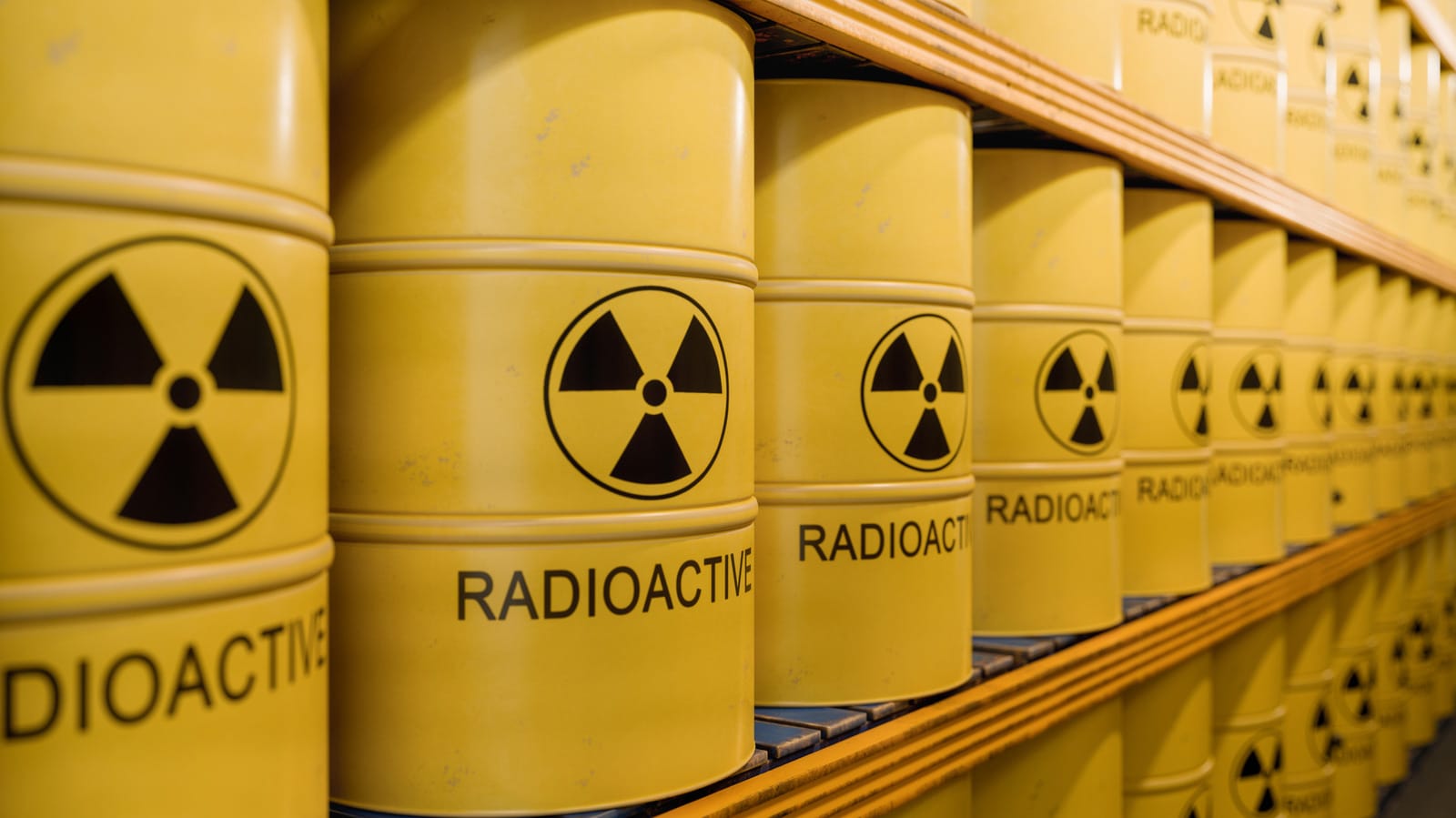
WASHINGTON — The Trump administration is preparing to invite states to consider hosting underground nuclear waste storage sites in exchange for federal incentives that could include new reactor projects, according to a person familiar with the discussions. Officials see the pitch as a way to ease a decades-long logjam over spent fuel while supporting an expansion of U.S. nuclear capacity to 400 gigawatts, Jan. 21, 2026.
Reuters reported the Department of Energy could begin sounding out governors as soon as this week with a nonbinding proposal that links waste storage to economic-development incentives tied to nuclear power. A DOE spokesperson said the story was “false” and that “no decisions have been made at this time.”
Nuclear waste at the center of the pitch
At its core, the idea is a trade: states that are willing to enter talks about long-term nuclear waste storage could be offered federal support meant to make nuclear projects easier to finance and build. The discussions described to Reuters include deep underground storage concepts and could also bundle related incentives; the proposal under consideration would be nonbinding, and states would not have to accept every element of it.
The politics are difficult. Local concerns about radioactive material have repeatedly slowed efforts to create new storage and disposal sites, leaving most spent fuel where it was generated. That nuclear waste is typically stored first in spent-fuel pools and later moved into heavily shielded steel-and-concrete dry casks at plant sites.
The concept could also revive debate over recycling or reprocessing nuclear waste. While proponents argue reprocessing could reduce the volume and change the composition of certain wastes, critics have long warned about cost, complexity and security risks tied to separating sensitive materials.
Why 400 GW by 2050 is driving urgency
The administration has tied its nuclear expansion goal to forecasts that U.S. electricity demand is climbing after decades of slower growth, with new loads driven by data centers, electrification and other factors. A study by consulting firm ICF projected demand could rise 25% by 2030 and 78% by 2050, Axios reported.
Federal documents underscore the scale of the target. A DOE fact sheet on accelerating nuclear power says the administration’s goal is to expand American nuclear energy capacity from about 100 GW in 2024 to 400 GW by 2050, and a White House executive order on reforming the Nuclear Regulatory Commission embeds the same capacity objective as part of a broader effort to speed licensing and deployment. President Donald Trump also pointed to economics and safety in public remarks this week, saying nuclear power can be built at “good prices” and be safe, Reuters reported.
A long-running search for a home for nuclear waste
The latest talks land on an issue that has frustrated presidents of both parties: what to do with the nation’s most hazardous commercial nuclear waste. For decades, federal policy centered on Yucca Mountain in Nevada as a single repository, a plan that ultimately stalled after years of political opposition and billions in spending. A 2011 Center for Public Integrity investigation documented the costs and legal fallout surrounding the government’s retreat from Yucca, and Nevada officials have continued pressing for the project to be formally shut down, including in a 2022 Associated Press report.
After Yucca, policymakers leaned toward a voluntary approach often described as consent-based siting, a concept highlighted in the 2012 Blue Ribbon Commission report. But that shift has not produced a permanent repository, and interim solutions remain contested. The Nuclear Regulatory Commission has processed applications for private consolidated interim storage, including Holtec’s HI-STORE proposal in Lea County, New Mexico, as reflected in the NRC’s case file for the project.
What happens next is uncertain.
Even opening a dialogue can trigger pushback over transportation routes, safety oversight and fears that a “temporary” facility could become permanent. For now, DOE says it has not made a decision.


