ABU DHABI, United Arab Emirates — U.S. officials and Ukrainian and Russian negotiators are scheduled to reconvene Feb. 4-5 here for U.S.-brokered Ukraine peace talks aimed at narrowing gaps over territory, security guarantees and a limited halt to strikes on energy targets. The planned sessions come as subzero temperatures deepen power and heating disruptions across Ukraine and test a fragile pause in attacks on critical infrastructure, Feb. 1, 2026.
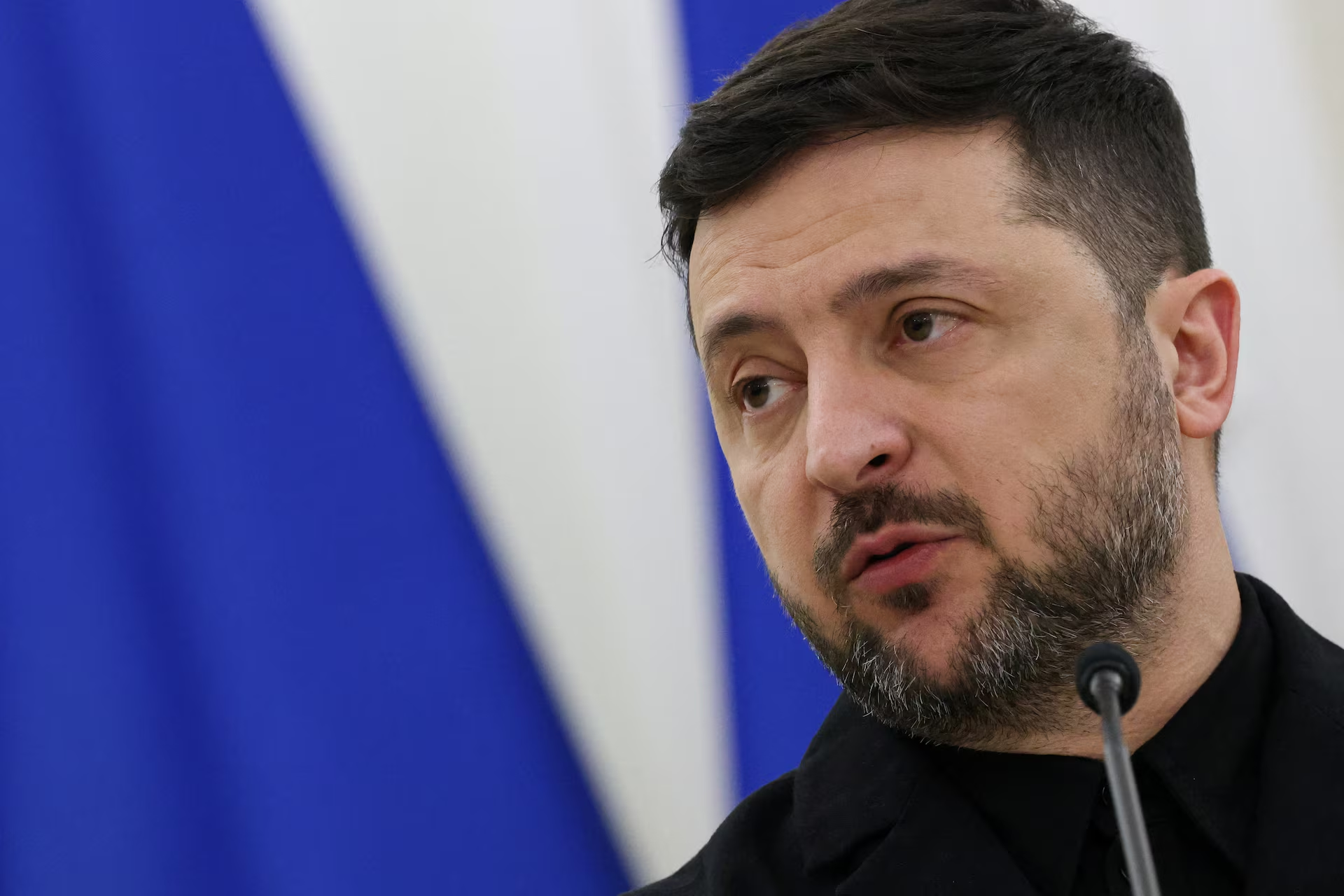
Ukrainian President Volodymyr Zelenskyy said the new round will run midweek, and reiterated that “Ukraine is ready for a substantive discussion.” Reuters reported the dates and the renewed push, while noting the talks follow a late-January round that produced no breakthrough on the core territorial dispute.
Separate reporting underscored how fluid the timetable has been. The Associated Press said envoys had expected to meet Sunday before the schedule was reset, and that officials have released few details about the agenda beyond a broad U.S. drive for movement after nearly four years of full-scale war.
Ukraine peace talks and the shaky energy-strike pause
The most immediate pressure point heading into the Ukraine peace talks is whether any pause in attacks on power and heating systems can be extended, clarified or enforced. A Jan. 30 Reuters report on the moratorium said Kyiv and Moscow described different timelines for a halt in strikes on energy infrastructure, reflecting how quickly limited confidence-building steps can fray without a formal ceasefire.
Even when attacks on major energy assets appear to slow, repair crews remain in a race against time. Naftogaz said a Russian strike hit one of its western facilities Jan. 27, forcing an emergency shutdown and adding to Ukraine’s concern that critical fuel and distribution nodes remain exposed as temperatures drop.
Meanwhile, broader air attacks have continued in many regions, compounding fears that any energy-related pause is too narrow or too temporary to ease civilian hardship. Ukrainian officials have repeatedly argued that winter conditions amplify the cost of every outage, especially in dense urban neighborhoods reliant on centralized heating.
Cold snap raises the stakes for Ukraine peace talks
In Kyiv, Mayor Vitali Klitschko said about 1,000 apartment buildings remained without heating Sunday after a widespread grid malfunction, and Ukraine’s grid operator warned of planned outages nationwide as temperatures were expected to fall further. Residents described a daily routine built around charging phones, finding warming centers and protecting water pipes from freezing.
The strain has been visible across the country. ABC News reported how rolling blackouts and the constant churn of generators have become a defining soundtrack of winter, as households and small businesses try to keep lights and heat on amid damage to generation and distribution.
One Kyiv resident, a 65-year-old veteran out for a run in a city park, summed up the wary mood: “Talks are talks. We hope for peace, but we still need to fight and secure victory.” That skepticism is likely to shadow the Ukraine peace talks even if negotiators announce narrow progress.
Continuity: what previous efforts suggest about the Ukraine peace talks
The Abu Dhabi meetings are not the first time negotiators have tried to bridge maximal demands. In March 2022, Reuters reported Ukraine floated neutrality in exchange for security guarantees during talks in Turkey, an early sign that questions of alignment and guarantees could be as contentious as the map itself.
International formats have also come and gone, often without Russia at the table. A 2024 Reuters report on Switzerland’s planned peace summit highlighted efforts to build a broader coalition around a roadmap, even as Moscow rejected the venue and Kyiv pressed for full territorial restoration.
And when diplomacy has succeeded, it has often been narrow and transactional. The Guardian’s 2023 explainer on the Black Sea grain deal traced how a limited agreement eased global food pressure for a time before collapsing, a reminder that even partial accords can be fragile without durable enforcement.
For this week’s Ukraine peace talks, the most immediate marker of momentum may be whether negotiators can extend any restraint around energy targets through the coldest stretch of the winter — and whether that narrow step can open space for harder bargaining on territory and long-term security.