

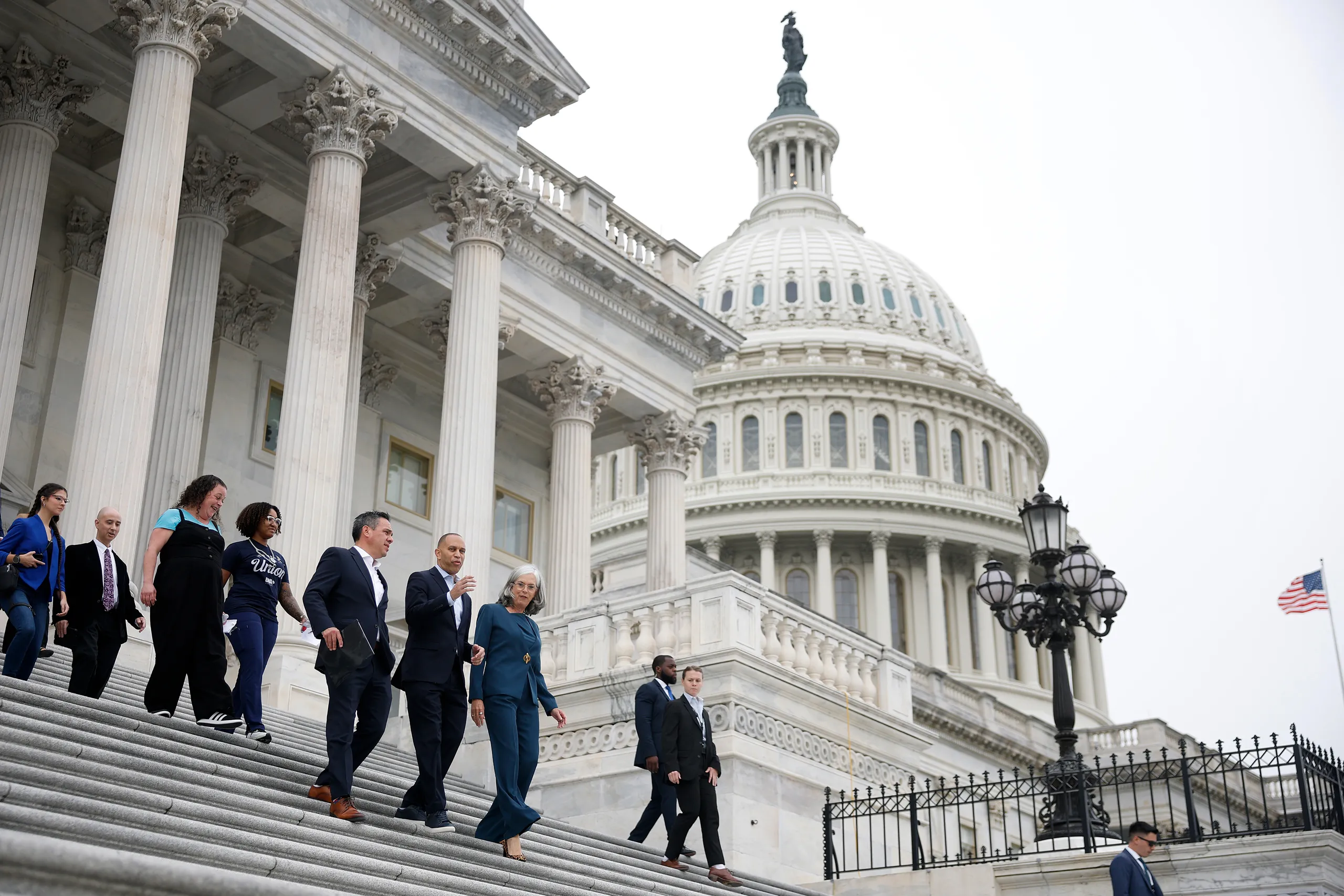
Disruption, from the partial government shutdown continued Monday as House Speaker Johnson said Republicans have the votes to reopen federal agencies by Tuesday, Feb. 3. The lapse began early Saturday after recessed before taking up a Senate-passed spending package that would temporarily extend funding while lawmakers negotiate new limits on immigration enforcement, Feb. 2, 2026.
Johnson told that “I’m confident that we’ll do it at least by Tuesday,” pointing to travel disruptions for lawmakers after a snowstorm slowed members’ return to . In an interview cited by , Johnson said the plan is to pass funding for most agencies first, then spend two weeks negotiating a full-year plan for Homeland Security.
Government shutdown talks hinge on DHS and ICE limits
The Senate plan splits Homeland Security from the broader package and funds it at current levels for two weeks, leaving time for a debate over, commonly known as ICE. Democrats, citing two fatal shootings in, have demanded guardrails that go beyond money already included for body cameras, including limits on roving patrols and new identification requirements for agents. The impasse has left Johnson relying heavily on Republican votes as the government shutdown continues, according to the.
Once enacted, the Senate-backed spending package would restore funding for departments including Defense, Labor, Health and Human Services, Education, Transportation, Housing and Urban Development, State and Treasury. Other agencies already have full-year appropriations and are not affected by the current government shutdown.
What is stalled: A wide swath of agencies awaiting final House passage of the Senate package.
What is time-limited: Homeland Security funding, under a two-week extension that sets up another deadline this month.
What continues: Essential operations, with “excepted” employees working while other staff prepare for possible furlough steps if the government shutdown drags on.
House leaders signaled they will route the bill through the Rules Committee, a path that requires only a simple majority but can be risky in a closely divided chamber. reported the committee was set to consider the Senate-passed measure Monday afternoon, a step that could tee up floor votes later Monday or Tuesday.
Inside the executive branch, agencies began “orderly shutdown” steps while awaiting congressional action. reported that the instructed departments to identify “excepted” staff who keep working and employees who could be furloughed if the government shutdown lasts beyond the first working day.
Past shutdowns show why speed matters
Recent history suggests even short government shutdown standoffs can carry lasting costs in pay, contracting and public services. The found the five-week partial shutdown ending in January 2019 reduced economic output, with some losses never fully recovered. After the 16-day lapse in October 2013, a post-shutdown report documented widespread furloughs, delayed services and broader economic disruption. For a primer on how agencies plan for funding gaps and what typically stops, the outlines the framework and common impacts.
Johnson said the goal is to end the government shutdown first and then negotiate Homeland Security restrictions during the two-week extension. If that timeline slips, agencies warn the disruption could widen quickly as furlough decisions, delayed payments and backlogs accumulate.


