

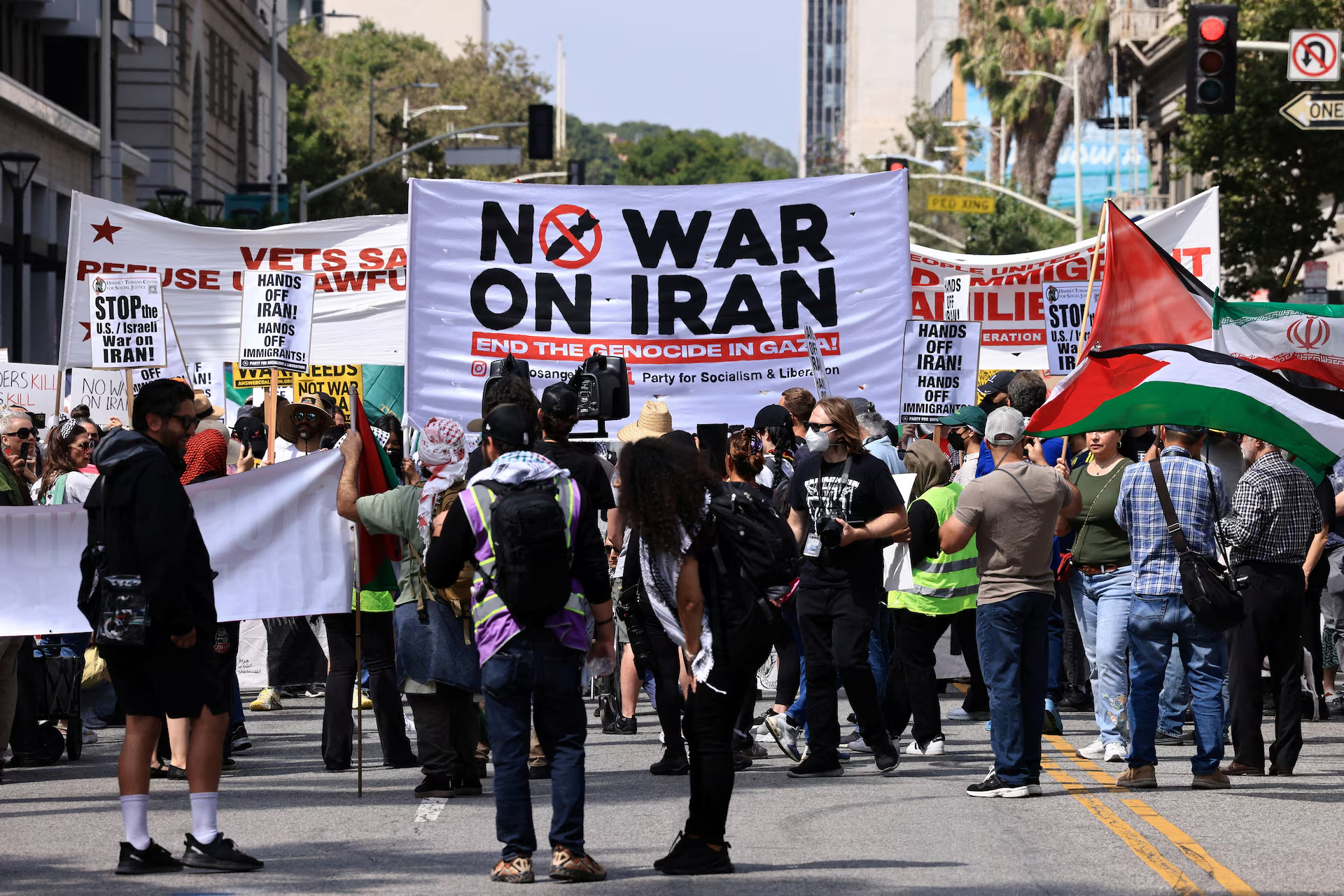
WASHINGTON — The White House has halted a federal security bulletin warning state and local law enforcement of a heightened threat to the United States tied to the conflict with Iran, even as U.S. agencies continue to describe Tehran and Iran-linked actors as a persistent danger to American officials, networks and institutions. Reuters reported that the joint bulletin from the FBI, Department of Homeland Security and National Counterterrorism Center was drafted by DHS’ Office of Intelligence and Analysis and held for review after the administration asked that it not be released immediately, March 7, 2026.
A paused law-enforcement warning collides with months of public alerts about Iranian cyber, proxy and retaliatory threats inside the United States.
The White House said it was coordinating with agencies to make sure any information sent out is accurate, current and properly vetted before release. DHS also said it is standard practice for intelligence bulletins to go to the White House for review before distribution. Still, the pause stands out because the administration has already issued broad public warnings about the risk picture, and those warnings have not been limited to the battlefield in the Middle East.
Why the Iran threat bulletin matters
In a National Terrorism Advisory System bulletin issued June 22, 2025, DHS said the Iran conflict was creating a heightened threat environment in the United States. The department warned that low-level cyberattacks by pro-Iranian hacktivists were likely, that Iran-linked cyber actors could target U.S. networks and that the chance of retaliatory violence by extremists inside the homeland could rise if Iranian leaders explicitly called for it.
That public warning is consistent with ODNI’s 2025 annual threat assessment, which said Iran remained committed to building surrogate networks inside the United States, continued to target current and former U.S. officials it believed were involved in the 2020 killing of Iranian commander Qassem Soleimani, and posed a major cyber threat to U.S. and allied networks and data.
Cyber agencies have reinforced the same point. An official June 30, 2025 alert from NSA, CISA, FBI and DC3 urged critical infrastructure operators to stay vigilant for targeted activity by Iranian-affiliated actors, while the FBI’s Iran threat overview says Tehran’s reach has included cyberattacks, espionage, attempted kidnappings and threats to current or former U.S. officials.
The pattern did not begin this week
The halted bulletin also fits a much longer record of warnings and cases. In August 2022, AP reported that an alleged member of Iran’s Revolutionary Guard was charged in a plot to kill former national security adviser John Bolton. In an October 2024 Reuters investigation, the acting director of the National Counterterrorism Center said Iran had intensified lethal plotting against former U.S. officials, Iranian dissidents and Jewish and Israeli interests in the United States and abroad. And in July 2025, AP reported that the United States and several NATO allies were publicly accusing Iranian intelligence services of increasingly threatening dissidents, journalists, Jewish citizens and current and former officials in Europe and North America.
What is not public is whether the paused bulletin contained new, specific or imminent threat information. Reuters said one administration official described the draft as poorly written and said it needed more work. What is public is that federal agencies had already laid out a broad warning framework before the White House paused the bulletin.
What remains unclear is whether the bulletin will be reissued in revised form and whether its contents have already been shared through other law-enforcement channels. For now, the administration is framing the pause as a vetting step, even as other federal warnings make clear that officials still view Iran-linked cyber, proxy and retaliatory risks as a serious concern.


