

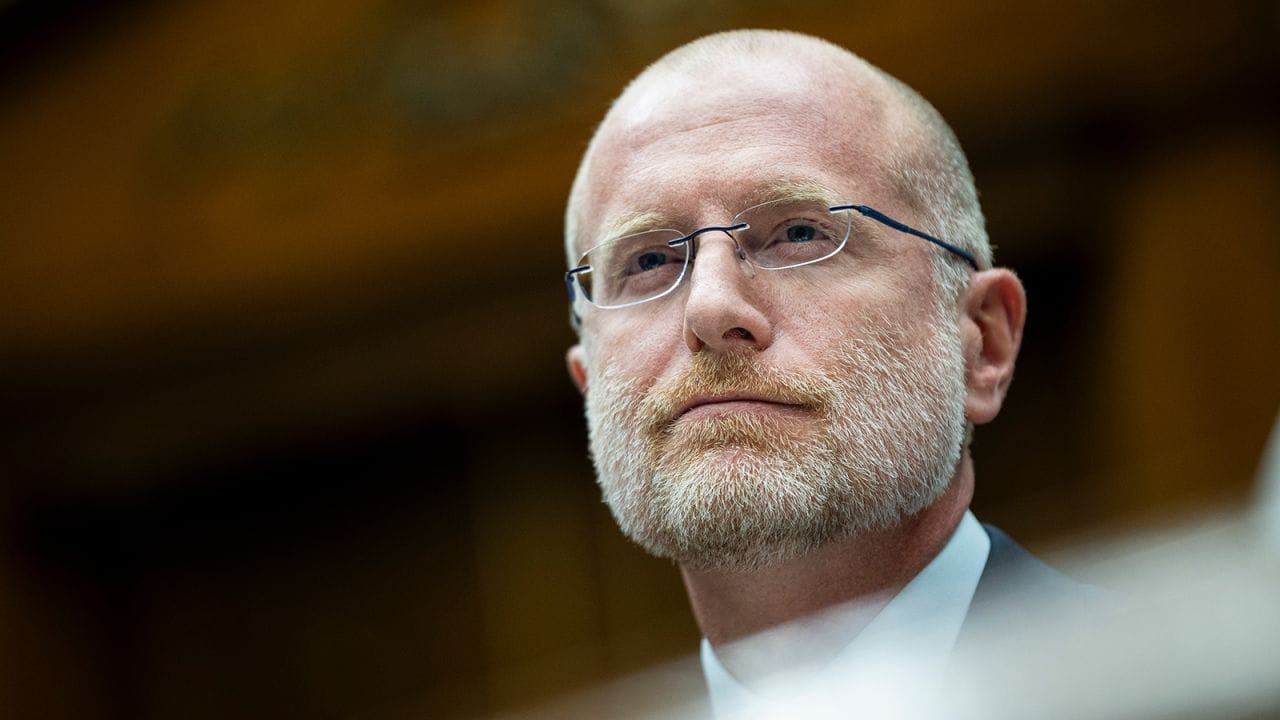
The warning came in a Saturday post on X that followed Trump’s complaints about reports on damage to U.S. aircraft in Saudi Arabia. Carr did not name a specific broadcaster or story in the message, but he wrote that stations running “hoaxes and news distortions” should “correct course before their license renewals come up.”
He later told CBS News that broadcasters should not treat their licenses as a “property right,” arguing that stations using public airwaves remain subject to a public-interest obligation that does not apply in the same way to cable, streaming, print or online-only outlets.
Why Brendan Carr’s threat matters to broadcasters
As the FCC explains in its public guide to broadcasting, radio and television stations are licensed for up to eight years, and the commission must decide at renewal whether a station has served the public interest. That authority attaches to individual local stations, not the national networks themselves.
But the agency’s own news-distortion standard is much narrower than a general accusation of bias. In a January 2025 FCC order involving WCBS and “60 Minutes”, the commission said it cannot act as a “free-roving arbiter of truth in journalism” and said complaints must include extrinsic evidence of deliberate and intentional falsification before enforcement can move forward.
That gap is why Carr’s remarks drew immediate alarm from critics, who argued that a regulator should not blur the line between punishing intentional fabrication and pressuring outlets over disputed war coverage. Carr, by contrast, has framed the issue as a straightforward application of the FCC’s public-interest authority.
Brendan Carr’s warning fits a broader FCC pattern
The Saturday threat did not emerge in isolation. In January 2025, the FCC reinstated complaints involving ABC, CBS and NBC after prior dismissals. By April, Carr said “all options” remained open in the CBS “60 Minutes” review. And by September, Reuters reported that Carr had expanded the fight to Disney and ABC affiliates over “Jimmy Kimmel Live”, pushing the FCC deeper into battles over editorial judgment.
That history explains why the Iran-war warning was read as more than a one-day social-media clash. Whether the FCC follows through with a station-specific complaint or renewal challenge remains unclear. What is clear is that Carr’s latest warning extends a months-long fight over how far federal broadcast oversight can reach into editorial decisions.


