

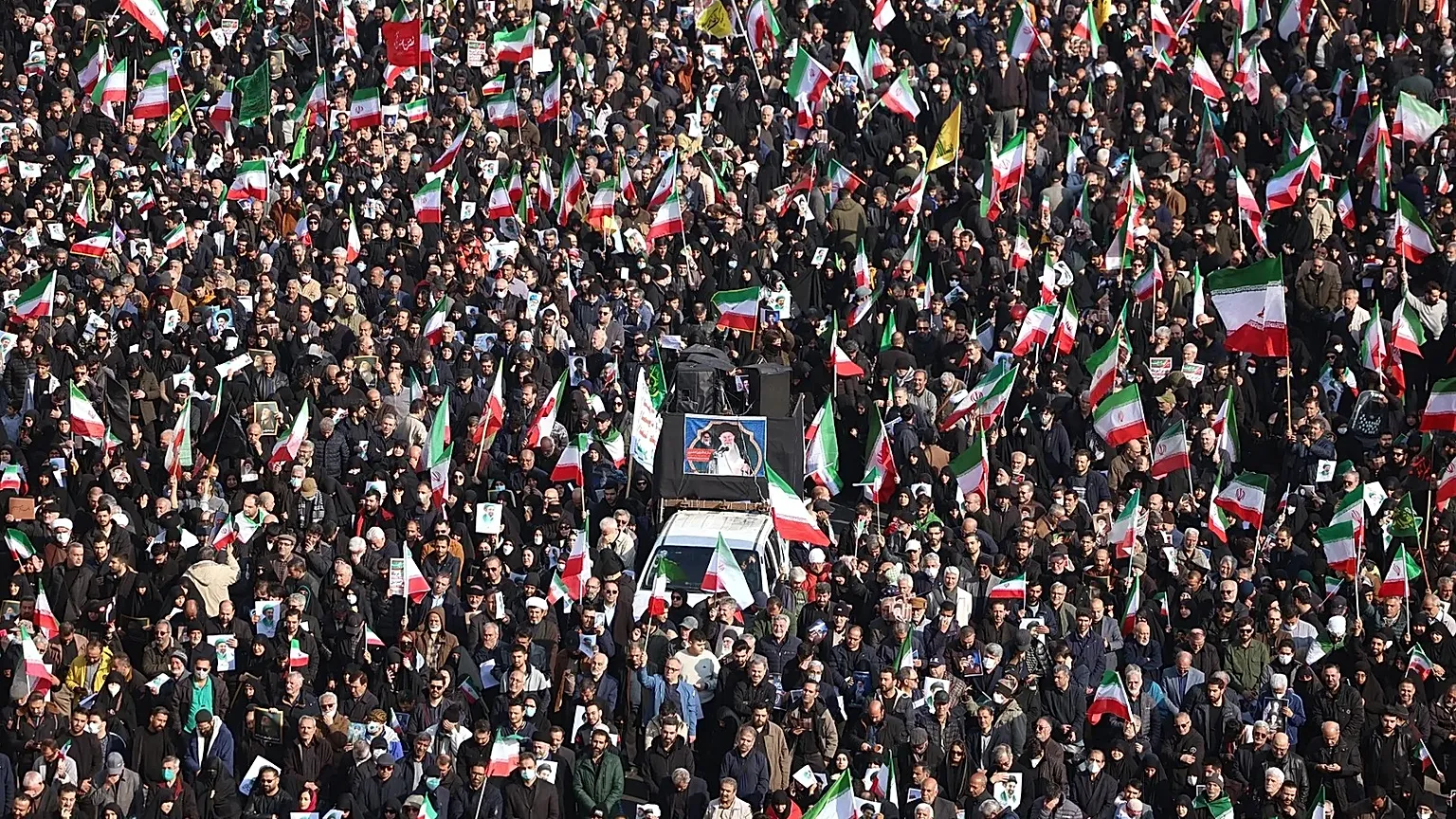
DUBAI, United Arab Emirates — Iran widened the war toward Gulf energy infrastructure after strikes on its South Pars gas field, sending Brent crude briefly above $112 a barrel and sharpening fears that the world’s most important oil and LNG corridor could face a longer, broader supply shock, March 19, 2026.
The market reaction was immediate. Reuters reported Brent briefly touched $112.86 after Iranian strikes hit regional energy sites, QatarEnergy disclosed “extensive damage” at the Ras Laffan LNG hub, and Saudi Arabia said it intercepted ballistic missiles and a drone aimed at a gas facility.
The move followed Iranian evacuation warnings for facilities in Saudi Arabia, the United Arab Emirates and Qatar after attacks on South Pars and Asaluyeh. Reuters also reported Qatar had fully shut liquefied natural gas production because of the war, a disruption that threatens to keep roughly a fifth of global LNG supply offline if outages drag on.
Iran war shifts toward Gulf energy infrastructure
This phase matters because the conflict is no longer threatening only Iranian assets. AP reported South Pars is the world’s largest natural gas field, shared with Qatar’s North Field, making any strike there more than a symbolic blow. It raises the risk that retaliatory targeting spills across neighboring producers whose facilities sit outside the direct exchange between Iran, Israel and the U.S. but inside the same tightly linked export system.
The spillover is already visible at sea. A proposal at the International Maritime Organization to create a safe corridor for about 20,000 stranded seafarers shows how fast military escalation is feeding into commercial paralysis. When ships stop moving normally through the Strait of Hormuz, the problem is not only crude volumes; it is also LNG cargoes, insurance costs, tanker availability and the willingness of crews to sail into a live-fire zone.
Even fallback routes now look less secure. Reuters reported an aerial attack targeted Saudi Arabia’s Red Sea port of Yanbu, though the initial impact was described as minimal. That is why traders are treating this as a more dangerous turn: the risk is no longer confined to Hormuz alone, but to the wider network of ports, pipelines, refineries and liquefaction plants designed to keep Gulf exports moving when one route is under stress.
Why oil is reacting so sharply
Brent is reacting this sharply because traders are no longer treating the conflict as a contained exchange. They are pricing the risk that damage could spread across processing plants, export hubs and shipping lanes at the same time. If Iran keeps retaliating against neighboring energy sites while its own infrastructure remains under pressure, producers could face a twin threat of physical damage and interrupted transport with no quick substitute for lost volumes.
A tanker delay can sometimes be managed. A damaged LNG hub, a processing plant fire or pressure on fallback export routes can last longer, widen faster and force buyers to pay up well beyond the Gulf. That is how a regional war starts to look like a global energy shock.
The continuity markets should not ignore
This is not the first time Gulf energy assets have been used to send geopolitical messages. In 2019, attacks on Saudi oil facilities knocked out more than half the kingdom’s output. In 2022, a drone-and-missile strike on Abu Dhabi killed three people and hit fuel trucks. And by early 2024, Red Sea attacks were already disrupting commodity flows and rattling energy markets. The continuity matters because each episode taught traders that even short disruptions in the region can reprice oil far beyond the immediate damage.
What makes this episode more severe is concentration. South Pars sits beside Qatar’s North Field. Ras Laffan is central to global LNG. Hormuz remains the artery for a huge share of oil and gas shipments. When pressure appears simultaneously on production sites, export hubs and maritime routes, the premium built into Brent stops looking like a temporary scare and starts to look like a durable price for uncertainty.
For now, the market is watching whether attacks spread further to Gulf producers that are not direct participants in the war, whether shipping lanes reopen fast enough to calm freight and insurance costs, and whether diplomacy emerges before more fallback routes are drawn into the fight. Until then, the Iran war is no longer just a military story. It is an energy story with global pricing power.


