

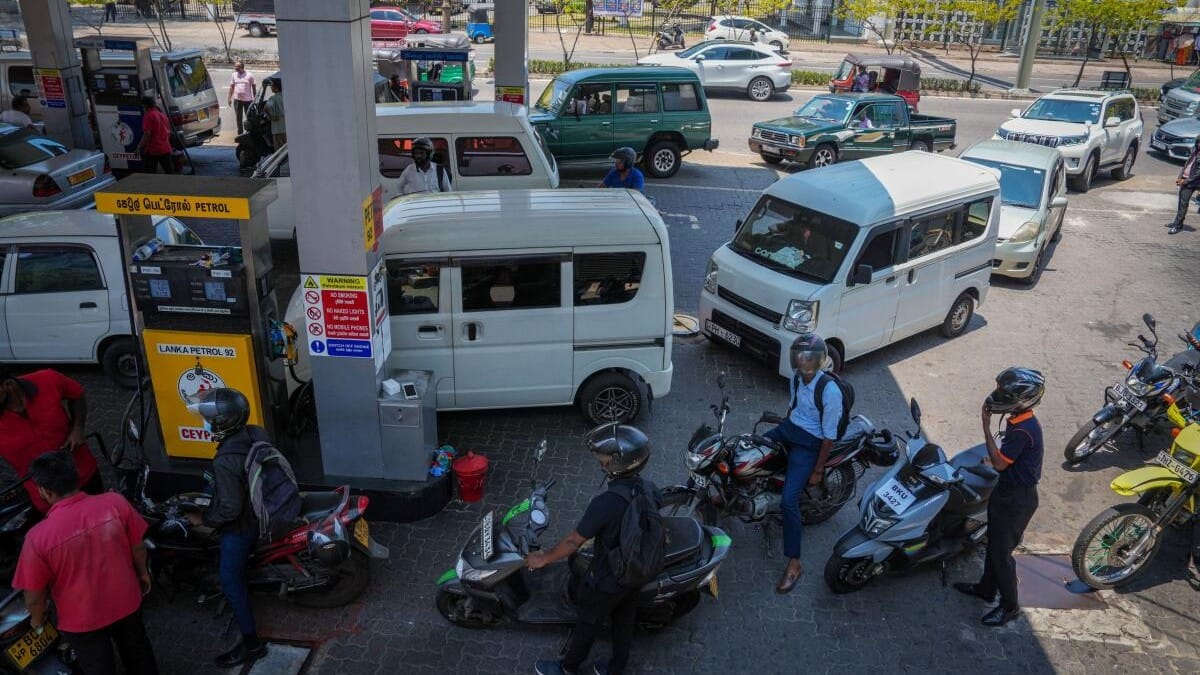
Why the Sri Lanka fuel crisis is worsening again
Officials have moved from caution to active conservation. Colombo has already introduced additional fuel-rationing measures, including an odd-even number plate system and weekly Wednesday shutdowns for schools, universities and many government offices, while keeping hospitals and other essential services running. That is a notable escalation for a country that had been trying to convince markets and voters that the worst of the fuel panic was over.
The cost pressure is just as sharp. Published CPC price tables show Lanka Petrol 92 rising from Rs. 293 a litre on March 1 to Rs. 398 on March 22, while Lanka Auto Diesel climbed from Rs. 281 to Rs. 382 over the same period — both jumps of roughly 36% in three weeks. Petrol 95 rose from Rs. 340 to Rs. 455, and kerosene from Rs. 182 to Rs. 255, underscoring how quickly a global supply shock can hit households, fishing communities, buses and freight operators in an import-dependent economy.
The broader macro picture is more stable than it was four years ago, but it is hardly comfortable. Sri Lanka’s central bank held its overnight policy rate at 7.75% this week and warned that prolonged energy-market disruption could weigh on growth, even as officials pointed to foreign-reserve buffers of about $7.3 billion and a 5% expansion in 2025. In plain terms, Colombo has more room to absorb a shock than it did in 2022, but not enough to shrug off a long war-driven oil squeeze.
Sri Lanka fuel crisis revives painful 2022 memories
The parallels with the island’s 2022 meltdown are impossible to miss. In late June that year, Sri Lanka stopped fuel sales to nonessential services and shut schools to conserve dwindling stocks as foreign exchange reserves collapsed and drivers waited days in line for petrol and diesel. Today’s situation is not yet that severe, but the public holidays, shorter transport schedules and renewed rationing show how quickly energy insecurity can reopen old political and economic wounds.
That is why continuity matters. The current recovery was built only after the IMF approved a nearly $3 billion bailout in March 2023, unlocking wider support and forcing Colombo toward hard reforms such as tax increases, tighter spending and market-linked energy pricing. Those reforms helped stabilize the economy, but they also mean global oil spikes now pass through to consumers faster, leaving the government with less room to cushion the blow through subsidies.
What happens next
The immediate test is whether Sri Lanka can keep fuel moving until fresh cargoes arrive and whether the war-driven oil disruption eases before rationing has to be tightened again. The policy test is just as important: an IMF team is in Sri Lanka from March 26 to April 9 for the combined fifth and sixth reviews of the country’s reform program, giving officials little room for a sloppy response.
If supplies stabilize quickly, Colombo may yet contain the damage to transport fares, food distribution and business confidence. If the conflict drags on, however, Sri Lanka’s fuel shock could become the first major reminder that the island’s recovery remains real but still vulnerable to events far beyond its shores.


