

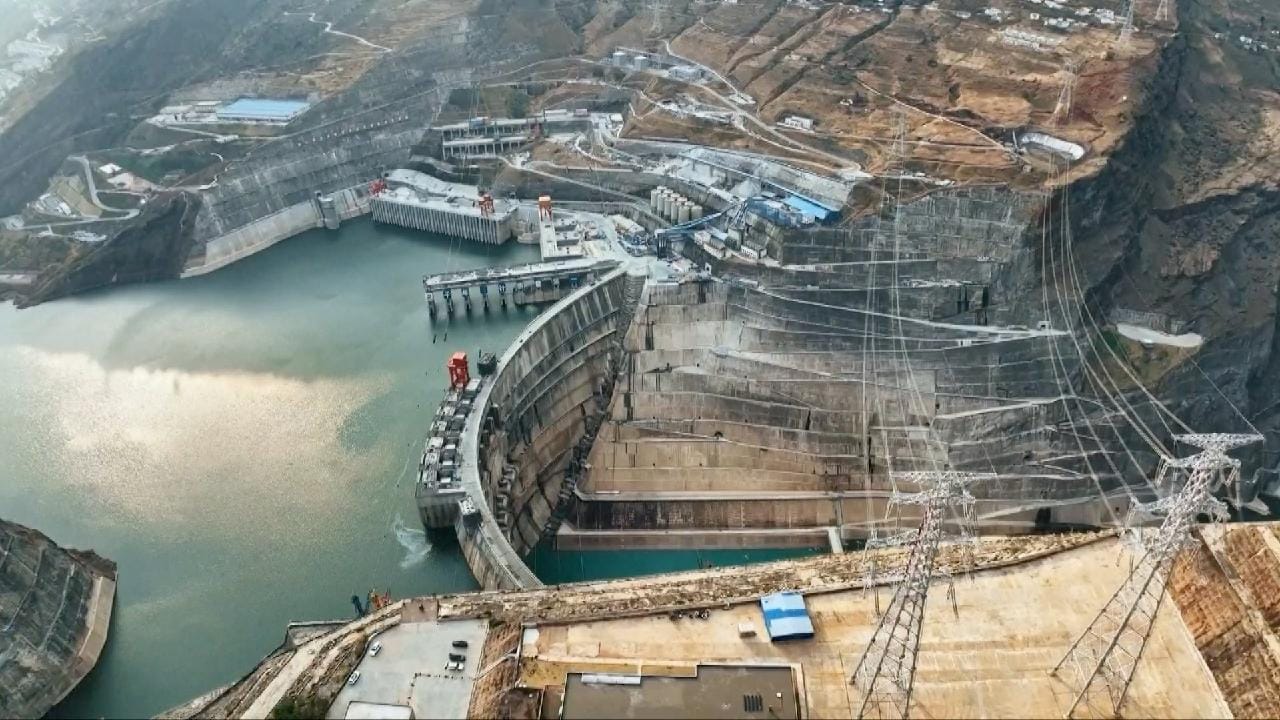
China’s plan to build a massive hydropower complex on the Yarlung Tsangpo is facing renewed scrutiny months after Beijing formally launched construction, with officials, analysts and communities downstream still questioning what the project could mean for water security in India and Bangladesh.
The concerns are not just about size. China says the project will deliver huge amounts of clean energy and support development in Tibet, but the limited public detail around how the dams will operate, how sediment flows could change and how risks will be managed in a seismically active region has kept unease high.
Why the China mega dam still worries downstream neighbors
Beijing moved the project from long-range planning into a far more concrete phase when it held a high-profile groundbreaking in July 2025, describing a five-station cascade expected to generate roughly 300 billion kilowatt-hours a year. Chinese state media has framed the scheme as a strategic clean-energy and development project, with Xinhua reporting a total investment of about 1.2 trillion yuan and a primary focus on sending power outside Tibet while also meeting local demand.
That ambition is exactly why the project has become so sensitive. The Yarlung Tsangpo becomes the Brahmaputra as it flows into India and later Bangladesh, making it one of the most politically charged rivers in Asia. A Reuters explainer on downstream concerns noted that India and Bangladesh rely on the river for irrigation, hydropower and drinking water, while experts have also warned that trapped sediment could hurt floodplain agriculture farther downstream.
At the same time, some analysts caution against overstating the most dramatic scenarios. Because much of the Brahmaputra’s water volume comes from rainfall south of the Himalayas, not from China alone, the project may not translate into a simple upstream “tap” that can fully choke off the river. Even so, uncertainty itself has become part of the problem. In a strategic basin marked by mistrust, sparse technical disclosure can be almost as destabilizing as a confirmed water shock.
India has already made its position clear. New Delhi publicly said it had conveyed concerns to Beijing in January 2025 and urged China to ensure downstream interests are not harmed. That formal objection underscored a broader fear in India’s northeast: even if average annual flows remain substantial, shifts in seasonal releases, flood control patterns or sediment loads could still reshape livelihoods and infrastructure planning.
China mega dam concerns did not start this year
The current debate is part of a much longer story. When China formally approved the project in late 2024, early reporting on the approval already highlighted worries about ecological disruption, displacement and the possibility that millions of people downstream could feel the effects. That moment made clear the issue was no longer a rumor or a feasibility concept. It was policy.
And the strategic anxiety stretches back even further. As far back as 2020, reporting on India’s own dam planning showed New Delhi was already thinking about how to respond to Chinese construction on the upper reaches of the same river system. In that sense, today’s scrutiny is less a sudden backlash than the continuation of a water-security argument that has been building for years.
What comes next
For now, the central question is not whether the project is large, but whether China will offer enough transparency to reassure its neighbors. Without clearer public information on operations, environmental safeguards, sediment management and emergency planning, every new construction milestone is likely to revive the same fears.
That means the Yarlung Tsangpo project is poised to remain more than an engineering story. It is becoming a test of whether one of Asia’s most important transboundary rivers can be managed through credible disclosure and regional confidence-building, or whether the China mega dam will harden into another long-term source of distrust across the Himalayas.
::contentReference[oaicite:0]{index=0}


