

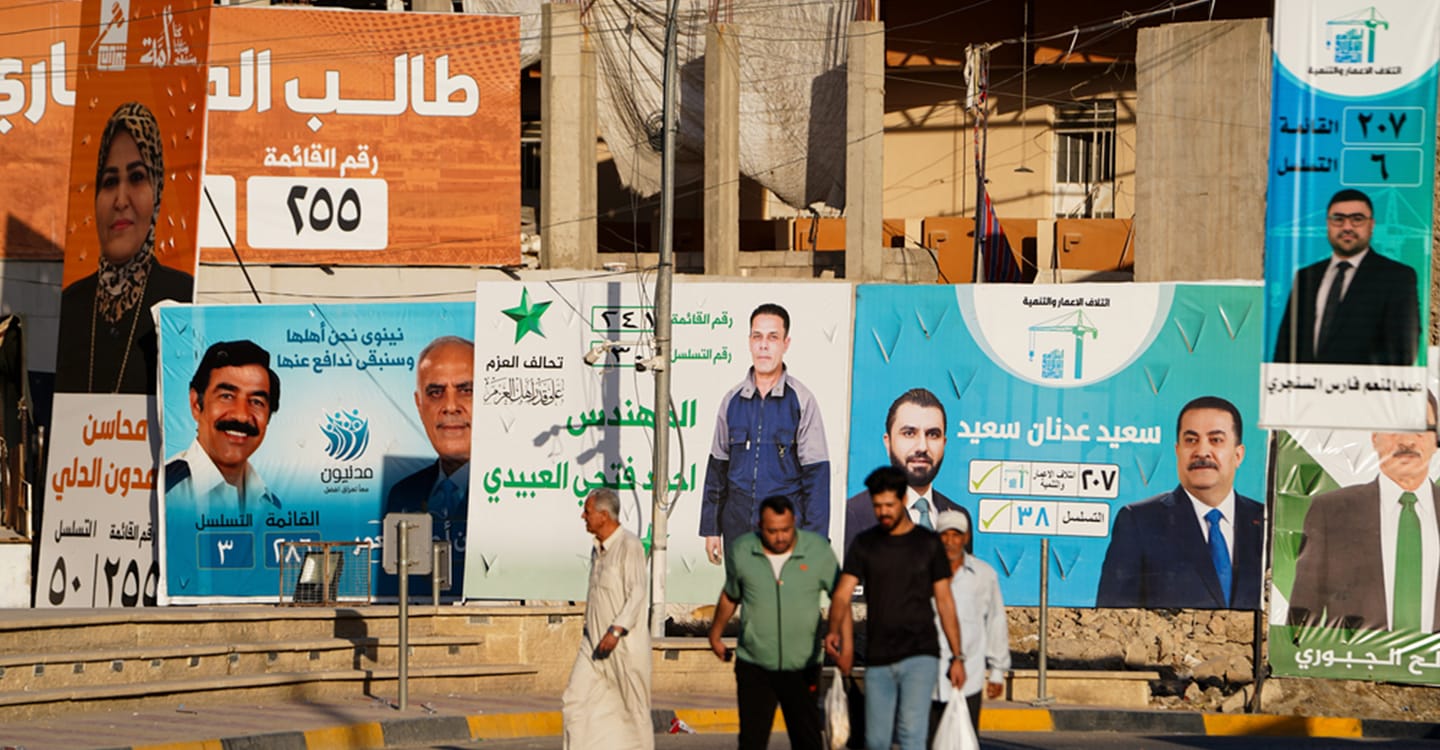
BAGHDAD, Iraq — Iraq’s newly elected parliament opened its first sitting Monday, starting the formal steps to pick new leaders and launch government-formation talks. The Iraq 2025 elections left Prime Minister Mohammed Shia al-Sudani’s coalition in first place but without a majority, while reform candidates tied to the protest-era movement for change suffered heavy losses, Dec. 30, 2025.
The vote, held Nov. 11, set up negotiations that can stretch for months, with no list close to the 165 seats needed to govern. In the first official results, Reuters reported Sudani’s coalition came first and said turnout reached 56.11%.
What the Iraq 2025 elections results say about power in Baghdad
Sudani’s Reconstruction and Development Coalition secured 46 seats in the 329-member legislature, the top showing but far short of a governing majority. Iraq’s Supreme Federal Court later certified the outcome, according to an Associated Press report on the ratified results.
The seat map also highlights how resilient Iraq’s political establishment remains. Former Prime Minister Nouri al-Maliki’s coalition won 29 seats, while the Sadiqoun bloc linked to Asaib Ahl al-Haq won 28; Kurdish and Sunni parties again hold the swing votes needed to assemble a cabinet. In Iraq’s system, the bloc that can claim to be “largest” inside parliament — sometimes by merging lists after election day — gets the first chance to nominate a prime minister, and that bargaining can blunt the advantage of finishing first.
Parliament’s opening session offered another snapshot of continuity. In its account of the first sitting, Reuters said lawmakers elected Haibet al-Halbousi as speaker, a powerful agenda-setter in a chamber built on cross-sectarian dealmaking.
Why the reform camp slid backward
The reform bloc — a loose label for Tishreen-linked candidates and other civic groups — took a bruising hit in the Iraq 2025 elections, and it was not just about vote totals. Chatham House said candidates associated with the Tishreen protest movement failed to win seats and were pushed back toward the margins by an uneven playing field and sustained pressure, in its analysis of why reform candidates were squeezed out.
Those losses matter because civic lawmakers, even when small in number, have often driven the sharpest debates on corruption, basic services and accountability — issues that animate voters but rarely decide coalition math in Baghdad.
How the Iraq 2025 elections echo earlier turning points
The reform story did not start this year. In 2019, mass demonstrations erupted over jobs, services and corruption; Reuters described tens of thousands gathering in Baghdad’s Tahrir Square as unrest spread and public anger hardened against the post-2003 order.
Early elections in 2021 were meant to channel some of that pressure into politics, but turnout sank and established parties held on. Al Jazeera’s report on the final 2021 results showed how even a clear first-place finish still led to drawn-out bargaining — a pattern now repeating after the Iraq 2025 elections.
What happens next
With the speaker chosen, lawmakers must elect a president within 30 days, then the president will ask the largest bloc to form a cabinet. After the Iraq 2025 elections, whether Sudani keeps the post will depend less on who topped the vote than on who can stitch together a workable majority — and on how much influence armed groups and longtime parties wield at the negotiating table, as Iraq tries to balance security pressures, economic demands and competing U.S. and Iranian influence.


