

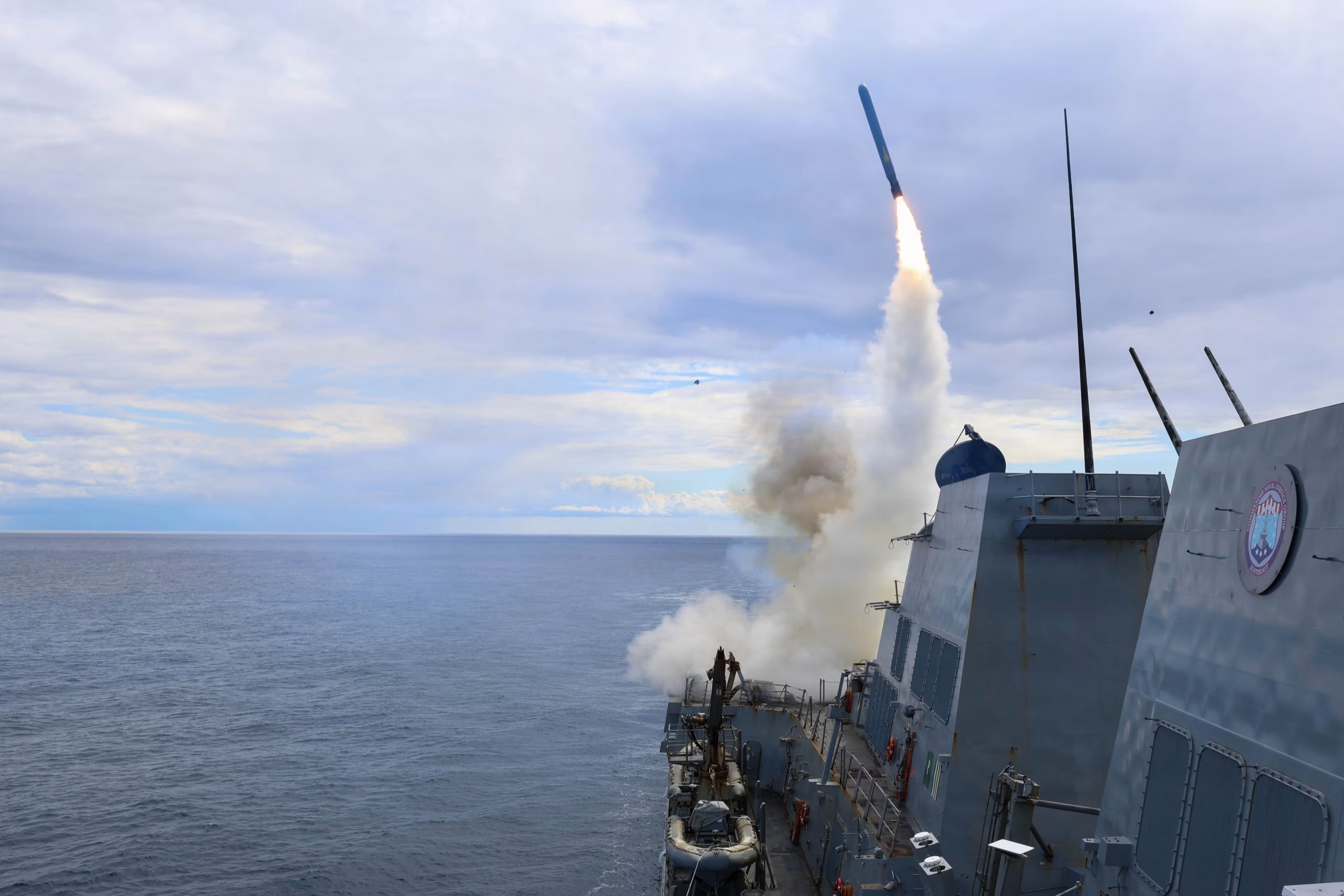
GALLE, Sri Lanka — Iran’s frigate IRIS Dena was sunk March 4 in a U.S. submarine torpedo strike about 19 nautical miles off Sri Lanka’s southern coast as the ship headed home from an Indian-hosted naval exercise. The attack, which U.S. officials described as the first American torpedo sinking of an enemy vessel since World War II, pushed the war with Iran beyond the Gulf and into the Indian Ocean, March 4, 2026.
Rescue crews answering an early distress call pulled 32 sailors from the water and, Sri Lankan authorities said, recovered 87 bodies, according to Reuters’ initial report from the scene. Later, Reuters reported on the crew’s repatriation from Sri Lanka and said Iran flew home the bodies of 84 sailors, suggesting the final casualty accounting remained unsettled even after the first rescue phase ended.
Why the Iranian warship strike matters
What makes the sinking historic is not just the loss of a frigate, but the way it happened. In a follow-up report on the ship’s final route, Reuters said IRIS Dena had just taken part in MILAN 2026, a major Indian naval exercise, before being hit off Sri Lanka. That reporting said the strike was the first time since World War II that the United States had sunk an enemy vessel with a torpedo, turning a regional naval clash into a marker of how quickly the broader war had expanded.
The episode also became a fight over narrative. In an Associated Press report on the dispute over whether the ship was armed, U.S. Indo-Pacific Command rejected Tehran’s claim that Dena was unarmed, while Iranian officials said it had been operating in a ceremonial or noncombat role after the India-hosted events. That disagreement matters because it shapes both the legal and political arguments around the strike and how other regional navies may judge risk near neutral waters.
Iranian warship deployments had pointed to a larger mission
The Dena’s appearance in the Indian Ocean was not a one-off. In February 2023, Reuters reported that IRIS Dena and IRIS Makran docked in Rio de Janeiro despite U.S. pressure, underscoring Tehran’s use of long-range naval missions as diplomatic signaling and maritime outreach. Weeks later, USNI News tracked the same Iranian surface group in Cape Town after an Atlantic transit, showing that Dena had already become part of Iran’s effort to keep warships visible far from home waters.
That longer arc makes the sinking look less like an isolated battlefield episode and more like the abrupt end of a mission designed to showcase Iranian reach. Dena had become a symbol of Tehran’s naval presence abroad; off Sri Lanka, it instead became a symbol of how exposed even a high-profile diplomatic deployment can be once a wider war spills across regions.
Why the Iranian warship aftermath still matters
Sri Lanka’s role has been watched almost as closely as the strike itself. According to an AP report on Colombo’s repatriation of Iranian sailors and its neutrality stance, Sri Lanka later sent home 238 Iranian sailors tied to the crisis while trying to balance humanitarian obligations with geopolitical pressure. Another Iranian vessel remained anchored at Trincomalee, underscoring that the aftermath did not end when Dena slipped beneath the surface.
For India and Sri Lanka, the episode showed how quickly a ship leaving a multinational naval gathering can become a wartime target and how waters once treated as diplomatic space can turn into contested ground overnight. For Washington and Tehran, the sinking of IRIS Dena now stands as a rare submarine torpedo strike with strategic aftershocks still rippling through the Indian Ocean.


