

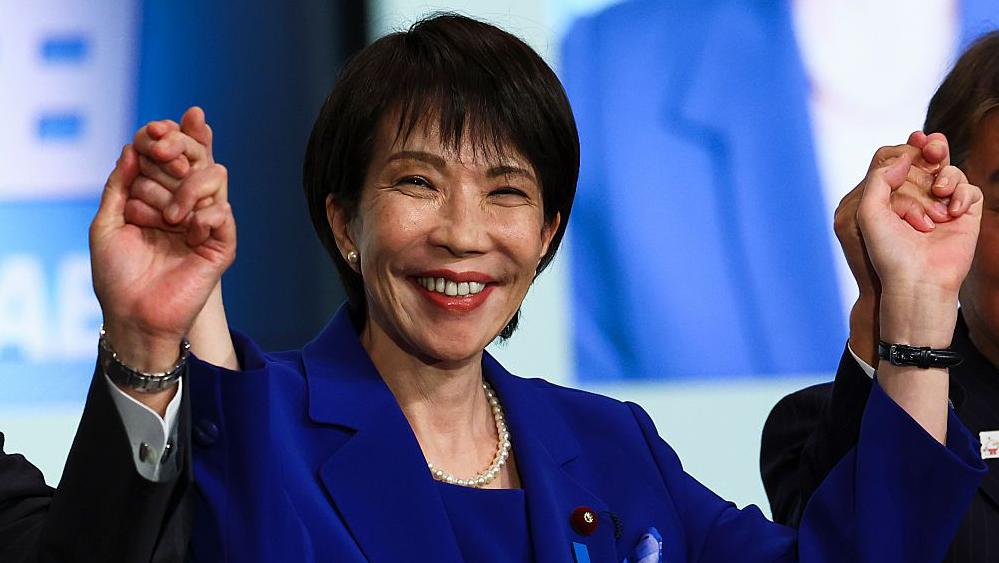
TOKYO — Prime Minister Sanae Takaichi said she will press ahead with a tougher posture toward China and a faster military buildup after her Liberal Democratic Party scored a historic landslide in Sunday’s snap election for Japan’s lower house. The win gives Sanae Takaichi new political space to reach defense spending equal to 2 percent of gross domestic product by the end of March and to reopen debates over a 3 percent level and constitutional change, Feb. 10, 2026.
The LDP won 316 of the 465 seats in the House of Representatives, and its governing bloc was boosted further by 36 seats for the Japan Innovation Party, according to The Guardian’s report on the final seat count. Takaichi, Japan’s first female prime minister, called the election in January to seek a clearer mandate for a conservative agenda that blends security expansion with economic stimulus.
Sanae Takaichi and Beijing’s backlash
Sanae Takaichi has framed China’s expanding military activity — and Beijing’s pressure around Taiwan and Japan’s southwestern islands — as the central strategic test for Tokyo. Chinese officials have criticized her Taiwan messaging and urged Japan’s leaders to pursue what Beijing calls “peaceful development” rather than repeat past militarism.
That rhetoric has come alongside economic pressure. When ties plunged after comments about how Japan could respond to a Taiwan contingency, Reuters described the fallout as Japan’s biggest dispute with China in years, outlined in a November 2025 Reuters account of the diplomatic storm.
After the election, Takaichi said Japan would keep channels open while standing firm. “We will respond calmly and appropriately from the standpoint of Japan’s national interest,” she said, according to Reuters’ report on her post-election security agenda.
Defense to 2 percent now, 3 percent in play
Takaichi’s government says it is on track to lift defense spending to the equivalent of 2 percent of GDP by the end of March — far faster than the phased increases debated in recent years. A ruling-party lawmaker told Reuters that a new national security strategy expected by year’s end could put a 3 percent level in play, a move that would mark one of the sharpest accelerations in Japan’s postwar defense posture.
Policy shifts under discussion extend beyond topline spending. An Associated Press overview of her agenda described plans to expand intelligence capabilities, loosen restrictions on arms exports and deepen coordination with Washington and other defense partners — steps supporters call necessary for deterrence, and critics warn could erode Japan’s postwar constraints.
Constitution change returns to the agenda
With a supermajority in the lower house, the government can initiate constitutional amendments, including proposals long favored by conservatives to clarify the legal status of the Self-Defense Forces. Any revision would still require two-thirds approval in the upper house and a national referendum, meaning Sanae Takaichi will need votes beyond her current coalition before any amendment can reach the public.
Even without immediate constitutional change, analysts see momentum for continued defense expansion. Ahead of the vote, a Council on Foreign Relations analysis argued that Japan’s defense policy has moved toward wider political consensus over time, even as the constitutional question remains divisive.
The shift has been building for years. In late 2022, Reuters reported that officials were preparing a five-year defense plan of roughly 40 trillion to 43 trillion yen as Tokyo sought to lift spending toward the 2 percent benchmark, as detailed in a December 2022 Reuters report on the midterm plan. And Takaichi’s hawkish profile predates her premiership: when she entered the LDP leadership race in 2021, she defended visits to the Yasukuni Shrine and condemned China’s rights abuses, according to a Reuters report from September 2021.
Now, after the landslide, Sanae Takaichi has the political runway to move quickly. The next test will be whether budgets, public opinion and regional diplomacy set limits on how far — and how fast — Japan can shift.


