

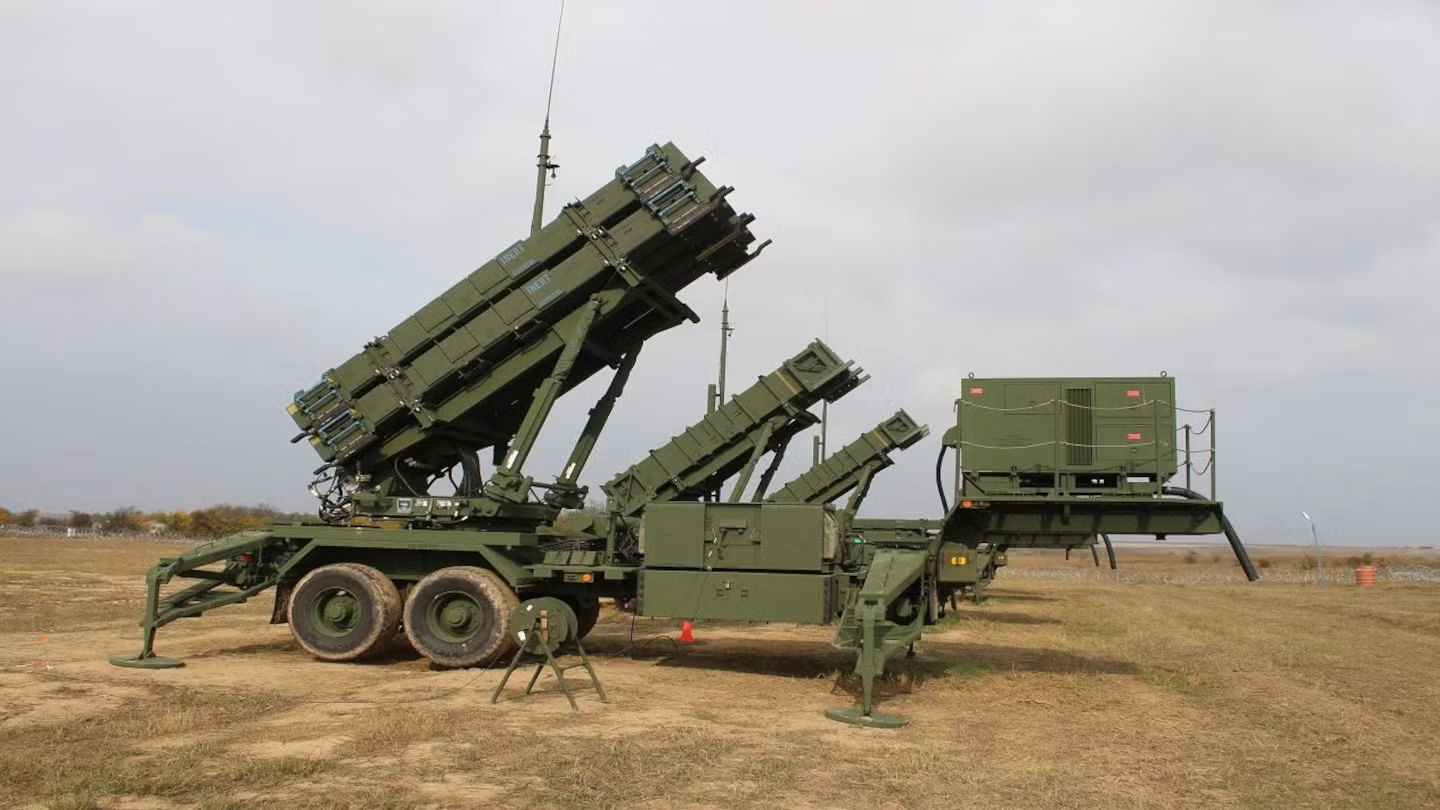
DOHA, Qatar — Satellite images show U.S. forces at Al Udeid Air Base shifted Patriot missiles onto truck-mounted launchers in early February, a change that could help the air defenses move faster as tensions with Iran have risen since January. A forensic imagery analyst said the move boosts mobility by keeping the Patriot missiles on heavy tactical trucks instead of leaving them in semi-static launcher positions, complicating targeting if Tehran threatens strikes on U.S. bases. Feb. 11, 2026.
The imagery, reviewed in a Reuters report analyzing Planet Labs satellite photos, compared scenes from Jan. 17 and Feb. 1 at the sprawling base, the largest U.S. military installation in the Middle East. The report said the Patriot missiles were visible at the start of February mounted into M983 Heavy Expanded Mobility Tactical Truck (HEMTT) platforms, rather than sitting at semi-fixed launcher stations.
William Goodhind, a forensic imagery analyst with Contested Ground, described the shift as a practical hedge against a fast-moving crisis. “The decision to do so gives the Patriots much greater mobility, meaning they can be moved to an alternative site or repositioned with greater speed,” he said.
The Reuters analysis said up to 10 MIM-104 Patriot air defense systems appeared parked in HEMTT configurations at Al Udeid. It was not clear whether the Patriot missiles remained mounted on the trucks later in the month, and Reuters reported a Pentagon spokesperson was not immediately available for comment.
Why Patriot missiles went mobile at Al Udeid
Patriot missiles are designed to shoot down aircraft, drones and incoming ballistic missiles, but the system’s survivability depends heavily on how easy it is to find and fix in place. Moving launchers frequently — and avoiding a predictable footprint — can reduce the odds that an adversary can pre-target the batteries or overwhelm them with a concentrated strike.
Keeping Patriot missiles on their heavy truck platforms can also shorten the time needed to reposition, especially if commanders want to disperse defenses across a wider area, shift to protect high-value aircraft, or relocate to alternative operating sites. The tradeoff is that mobile postures can be more demanding for crews and logistics, and they may reflect a judgment that the threat picture has sharpened.
The satellite comparison also suggested Al Udeid was hosting more aircraft than it did weeks earlier. The Reuters analysis said Feb. 1 imagery showed an RC-135 reconnaissance aircraft, three C-130 Hercules aircraft, 18 KC-135 Stratotankers and seven C-17s. On Jan. 17, Reuters reported there had been 14 KC-135s and two C-17s.
A broader Middle East buildup as Iran warnings sharpen
U.S. military movements across the region have increasingly been tracked through commercial imagery and flight data, creating a public, near-real-time view of posture changes that once stayed mostly inside classified channels. A Washington Post analysis of deployments near Iran reported dozens of aircraft and about a dozen warships moved into or toward the region in recent weeks, framing the buildup as an effort to create leverage for renewed nuclear talks rather than an automatic signal that strikes are imminent.
In mid-January, as the temperature rose, some personnel were advised to leave Al Udeid, according to a separate Reuters report citing diplomats. That story described Al Udeid as housing around 10,000 troops and characterized the departure guidance as a posture change rather than an ordered evacuation.
Iran has repeatedly warned that U.S. bases could be targeted if Washington strikes Iranian territory, and the latest imagery-driven reporting underscores how commanders may be trying to reduce fixed, easy-to-target patterns at major hubs such as Al Udeid.
Sea-lane friction adds another pressure point
In addition to threats aimed at bases, U.S. officials have highlighted concerns about risky encounters in and around the Strait of Hormuz, a chokepoint for global energy shipments. In a U.S. Central Command statement, the command warned that “any unsafe and unprofessional behavior near U.S. forces, regional partners or commercial vessels increases risks of collision, escalation, and destabilization.”
Together, the posture shifts at Al Udeid — including the move to mobile Patriot missiles — and the warnings about maritime encounters point to a wider attempt to reduce vulnerability while maintaining deterrence.
Patriot missiles and Al Udeid: what past episodes reveal about today’s shift
The move to keep Patriot missiles mobile fits a longer arc of Gulf air-and-missile defense planning shaped by repeated Iran-related crises. More than a decade ago, Gulf partners invested heavily in Patriot capabilities amid concerns about Tehran’s missile programs. In 2014, Reuters reported Raytheon won a $2.4 billion contract tied to Qatar’s Patriot missile defense purchases, part of a broader push to bolster regional defenses.
More recently, Al Udeid itself became a focal point during last summer’s conflict. On June 23, 2025, Iran launched missiles at the base after U.S. strikes on Iranian nuclear facilities, a clash described in a Reuters report on Iran’s retaliatory barrage. U.S. officials said there were no injuries, and President Donald Trump said Iran provided advance notice via diplomatic channels.
Days later, detailed accounts emphasized how intense the defensive engagement was. The War Zone reported that U.S. Air Force Gen. Dan Caine, chairman of the Joint Chiefs of Staff, described the defense of Al Udeid as involving the largest single-event launch of Patriot interceptors in U.S. military history. An Air & Space Forces Magazine report also detailed how aircraft were dispersed ahead of the attack and how defenders fired repeated intercepts from Patriot launchers, writing that they intercepted 13 missiles during the June 23 strike.
Those episodes help explain why planners may now want Patriot missiles positioned to move quickly: Al Udeid is both a critical operational hub and a high-profile target. Mobile launchers and frequent repositioning are one way to reduce predictability as the regional threat picture shifts day to day.
What to watch next
Two questions now hang over the satellite snapshots: whether the Patriot missiles remain in the mobile configuration as diplomacy continues, and how long heightened postures will stay in place across U.S. bases in the region.
For now, the imagery suggests the U.S. is leaning into mobility and dispersion — not just with aircraft movements, but with Patriot missiles meant to defend one of its most important Middle East installations.


