

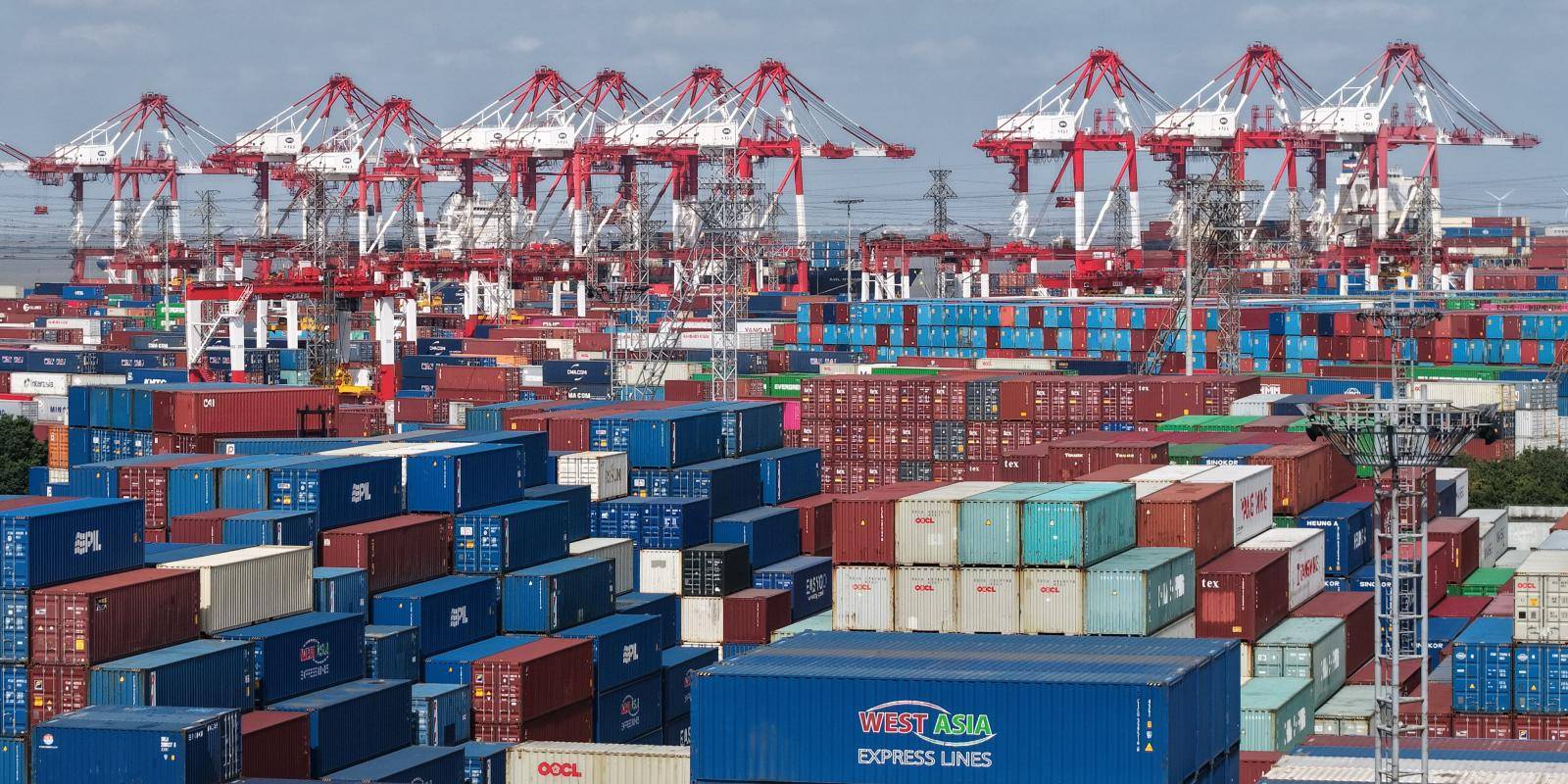
For the past year, the China trade surplus has become a shorthand diagnosis for everything from factory closures to strained geopolitics. The problem is that many of the loudest takes treat the surplus as a simple demand problem — as if Beijing could “fix” it by buying a few more European cars, planes or chemicals. That reading is increasingly detached from how China’s economy and global supply chains now work, Feb. 14, 2026.
China’s export machine is not just bigger; it is more technologically complex, more state-supported and more strategically targeted than it was a decade ago. And that’s why Europe’s emerging “buy local” posture — when designed as a rules-based industrial strategy rather than a blunt protectionist slogan — is a more realistic answer than moralizing about the China trade surplus.
Why the China trade surplus debate misses the point
Start with the headline number. China closed 2025 with a record trade surplus approaching $1.2 trillion, underscoring how strongly exports are carrying growth even as policymakers talk up “rebalancing.” Reuters reporting on China’s 2025 trade results captured the scale of that shift and how exporters have rerouted to new markets even amid renewed tariff pressure.
But the deeper issue is composition, not just size. Recent analysis has argued that Western criticism often assumes China is still primarily a low-cost assembler that should simply import more finished goods from advanced economies. In reality, China has moved up the value chain and is substituting domestic production for many categories it once imported — a structural change that makes the China trade surplus harder to “negotiate away.” A Reuters analysis on how the trade surplus is being misread makes the case that the challenge is increasingly supply-side competition, not a lack of Chinese demand.
Europe’s “buy local” pivot is not a slogan — it’s becoming a toolkit
Europe’s answer is slowly taking shape through policy instruments that tilt markets toward domestic or “trusted” supply without formally closing the door. The most important point: this is not one law or one procurement rule. It’s a stack of policies that collectively reduce Europe’s vulnerability to an export-led competitor with heavy state backing — and that directly addresses the China trade surplus dynamic by changing what Europe buys, builds and finances.
Three pillars stand out:
1) Build more of the strategic supply chain at home
The EU’s Net-Zero Industry Act aims to scale manufacturing capacity inside Europe for key clean-tech equipment, a direct response to dependency risks revealed by solar panels, batteries and other components. The European Commission describes it as a framework to boost competitiveness in net-zero technologies and speed deployment inside the bloc. European Commission overview of the Net-Zero Industry Act outlines the intent: make it easier to produce critical tech in Europe, not only deploy it.
2) Use procurement leverage to demand reciprocity
Public procurement is one of Europe’s biggest underused levers. When governments and public hospitals buy, they create market signals. Under the EU’s International Procurement Instrument, Brussels can restrict access to certain tenders when EU companies face barriers abroad. This became more than theory when the EU moved to bar Chinese firms from many medical device tenders above a threshold, citing limited reciprocal access in China. Reuters coverage of the EU’s restriction on Chinese medical device bids described it as the first major use of the instrument.
3) Police foreign subsidies that distort competition
Another key tool is the EU’s Foreign Subsidies Regulation, which gives the Commission powers to investigate and remedy distortions caused by subsidies from non-EU governments — including in public procurement cases. The European Commission’s Foreign Subsidies Regulation page notes that it began applying in July 2023 and is designed to protect a level playing field while remaining open to trade.
What “buy local” can do that tariff talk cannot
Tariffs are a visible response to the China trade surplus, but they are often an imprecise one. A tariff might raise prices, but it doesn’t automatically build replacement capacity. A procurement rule or industrial scaling policy can do both: it can shift demand and nurture supply at the same time.
Europe’s challenge is to avoid turning “buy local” into a substitute for competitiveness. The strategic version focuses on where Europe can credibly scale — batteries, grid equipment, clean hydrogen supply chains, advanced materials, defense-related manufacturing — and then aligns permitting, financing, and offtake demand around those priorities.
It also recognizes an uncomfortable truth about the China trade surplus: even if China imported more, it might not import the products Europe wants to sell, at the prices Europe wants to charge, in the volumes Europe needs to sustain its industrial base. That’s not a negotiating failure. It’s the outcome of a different industrial model.
Continuity: this argument didn’t start in 2026
Today’s China trade surplus anxiety feels new because the numbers are large and the politics are loud. But the intellectual debate has been running for years — and it has repeatedly circled the same idea: imbalances reflect domestic structures, not just trade rules.
An IMF blog post from 2016 explained how China’s external rebalancing looked stronger than other dimensions of reform, and why composition matters as much as the headline balance.
The WTO’s World Trade Report 2018 (PDF) provides longer-run context on how trade patterns and policy choices interact — a reminder that “fixing” imbalances is rarely as simple as changing tariffs.
The European Commission’s 2020 industrial strategy communication (PDF) shows that the EU was already moving toward a more activist industrial posture well before the current surge in China-related trade tensions.
A 2019 Axios look at China’s record U.S. surplus in 2018 illustrates how even aggressive tariff phases did not automatically deliver the deficit outcomes politicians promised.
The throughline is clear: obsessing over the China trade surplus number is less useful than understanding the policy architecture underneath it — and responding with an equally coherent architecture of Europe’s own.
The risks: “buy local” can backfire if Europe gets the design wrong
A smarter posture doesn’t mean a painless one. There are three predictable pitfalls:
Higher costs and slower deployment. Local-content tilt can raise prices in the short run, especially in clean tech where China has scale advantages.
Fragmentation inside Europe. If “buy local” becomes a national subsidy race, Europe risks splitting its own single market — undermining the very scale it needs to compete.
Retaliation and legal exposure. Poorly drafted rules invite challenges, and blunt restrictions invite retaliation — neither of which shrinks the China trade surplus problem in a sustainable way.
That’s why the most defensible version of “buy local” is one grounded in transparency, reciprocity and competition rules — the direction implied by instruments like the procurement tool and foreign-subsidy enforcement.
Bottom line: treat the China trade surplus as a capability signal
Europe doesn’t need another round of emotional debate about whether the China trade surplus is “fair.” It needs to treat the surplus as a signal: China has built industrial capabilities that translate into export dominance across more sectors than before.
Europe’s strategic answer is to build and protect its own capabilities — not by sealing borders, but by shaping markets where public money and public rules already matter. If “buy local” is executed as a disciplined industrial strategy — targeted, legally resilient and investment-backed — it won’t just respond to the China trade surplus. It will reduce Europe’s long-term exposure to the next surplus-driven shock.


