

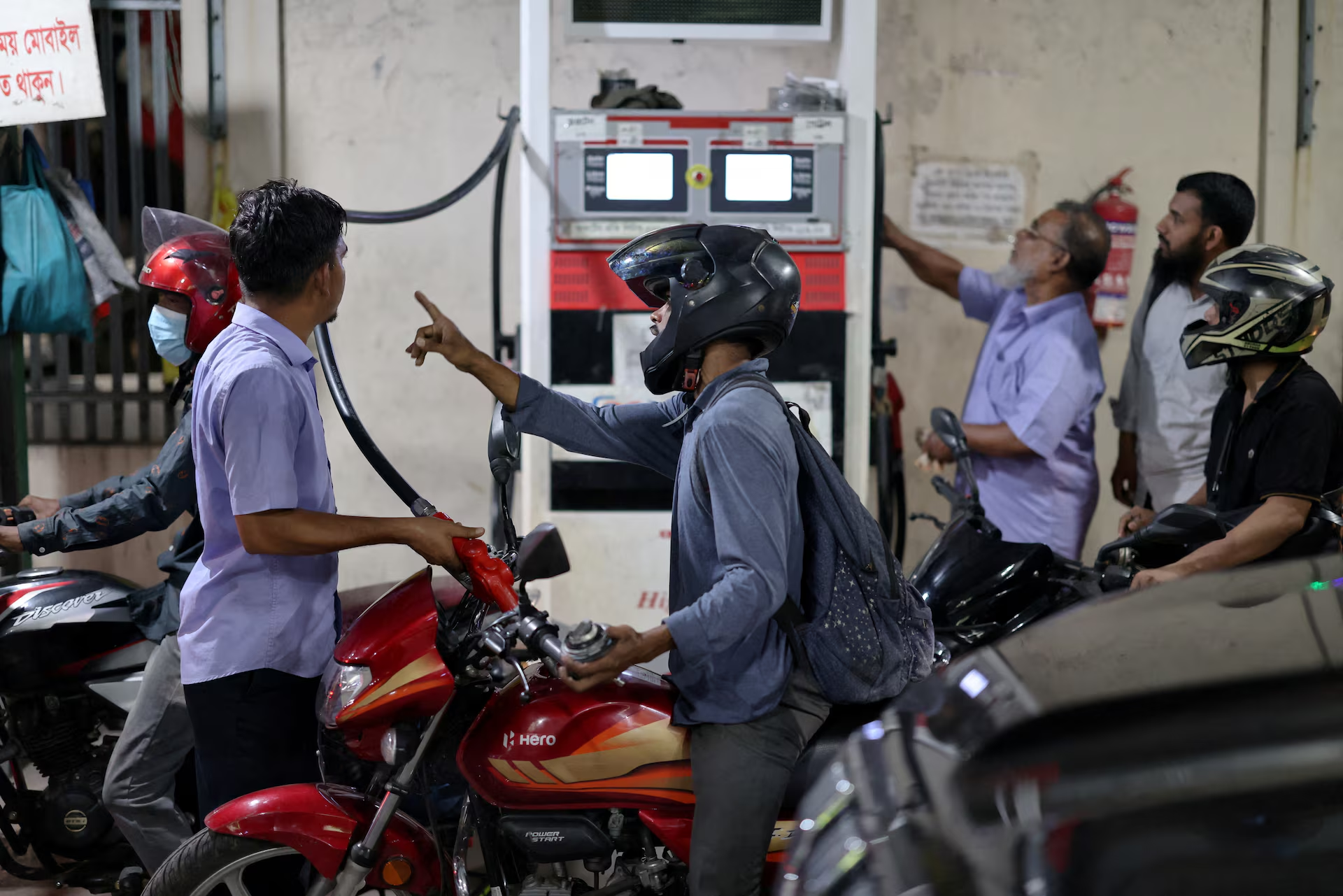
SINGAPORE — Asia’s energy crisis deepened Tuesday, April 21, as governments tightened fuel- and power-saving rules and utilities rushed to secure replacement liquefied natural gas cargoes after the Middle East war throttled flows through the Strait of Hormuz. The pressure is landing hardest on import-dependent economies that must now manage disrupted shipping, higher prices and the risk of fresh power shortages at the same time.
The International Energy Agency’s latest market briefing says the conflict has created the largest supply disruption in the history of the global oil market, cut global LNG supply by about 20% and intensified the affordability squeeze for countries that rely on Gulf fuel. For Asia, where many utilities and importers depend on seaborne oil and gas, the result is no longer just a commodity spike. It is a full-blown energy-security test.
Asia energy crisis spreads from conservation to LNG procurement
The IEA’s 2026 Energy Crisis Policy Response Tracker shows how quickly governments across Asia have shifted into conservation mode. Pakistan has shortened the public-sector workweek to four days, moved half of staff remote on remaining days and ordered earlier market closings. Bangladesh has pushed offices and businesses to cut unnecessary lighting and curb travel. India has capped some industrial gas use and rationed commercial LPG. What began as a shipping and supply shock is now reshaping daily energy use across the region.
The conservation drive is being matched by a scramble for physical supply. In Singapore, where gas generates about 95% of electricity, state buyer GasCo has secured extra spot LNG cargoes from Australia and Mozambique to offset curtailed imports and is still planning to seek longer-term contracts later this year. That is a telling move from one of Asia’s most sophisticated gas markets: even well-prepared buyers are now prioritizing security of supply over price.
The broader market is tightening fast. Reuters reported in late March that analysts had cut global LNG supply expectations by as much as 35 million tons this year because of damage to Qatar’s export infrastructure and disruptions through Hormuz. The same report found prices had surged far above the level that typically draws in emerging Asian buyers, raising the risk that poorer importers will once again be priced out of the spot market and forced back toward coal, domestic gas or rationing.
North Asia has deeper pockets, but not much room for error
North Asia is better capitalized than South Asia, but it is not insulated. Japan is already warning of a possible summer power crunch if Middle East disruptions drag into the air-conditioning season, with utilities buying extra spot volumes and leaning on flexible contract terms to make up for lost supply. That matters across the region because when major Northeast Asian buyers step more aggressively into the spot market, smaller economies tend to feel the squeeze first.
That leaves policymakers with few painless options. They can conserve demand, switch fuels, subsidize consumers or absorb more inflation and industrial stress. In practice, many are doing some combination of all four. The immediate response is tactical and fragmented, but the direction is clear: Asia is trying to buy time while the region searches for molecules, reroutes cargoes and protects households from another imported energy shock.
This crisis has a long backstory
The current squeeze did not come out of nowhere. Reuters reported in early 2023 that Pakistan and Bangladesh were already struggling with LNG shortages after Europe’s push to replace Russian gas helped price poorer Asian buyers out of the market. The rolling outages and emergency measures now appearing across South Asia look more dramatic, but they are building on vulnerabilities that were exposed well before this year’s war.
Shipping risks had also been flashing red for months. A Reuters analysis in January 2024 noted that Red Sea attacks had already forced QatarEnergy to halt LNG transits through that corridor, underscoring how quickly a maritime chokepoint can complicate deliveries even before supply is lost outright. The Strait of Hormuz shock is larger and more consequential, but it is hitting a market that had already been warned about the fragility of fuel routes.
What comes next
In the short term, Asia is likely to keep conserving energy, paying up for replacement cargoes and leaning harder on whatever alternatives are available. Over the medium term, the crisis could accelerate long-term LNG contracting in some markets while also strengthening the case for solar, storage, nuclear, efficiency and domestic fuel development in others. For now, the clearest lesson is that Asia’s growth model still depends heavily on distant suppliers and vulnerable sea lanes, and that dependence has once again become painfully expensive.


