

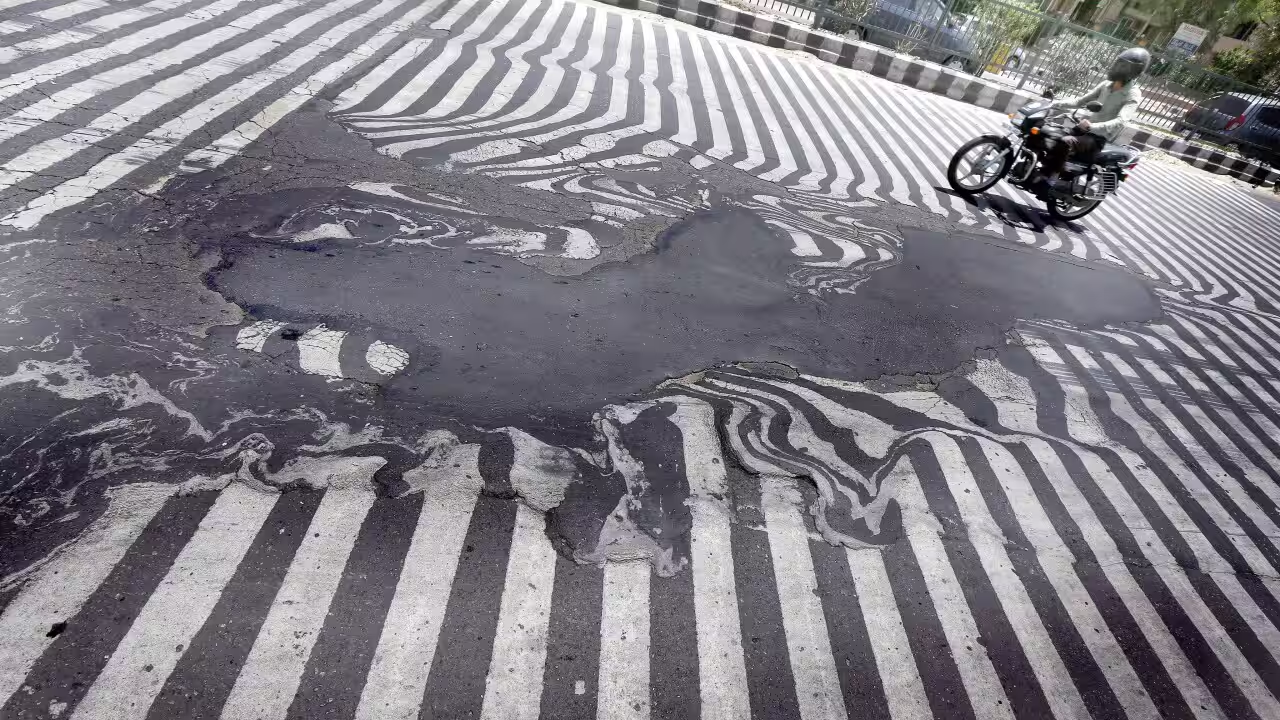
The relentless heat has turned salt flats into blistering landscapes where thousands of laborers work without electricity, shade, or reliable medical access, relying on minimal cooling techniques and infrequent water supplies to survive.
India Heatwave pushes workers to breaking point in Gujarat salt deserts
In the salt-producing regions of Gujarat, workers spend months harvesting salt under harsh sun exposure. According to recent reporting, as many as 50,000 laborers operate in remote salt pans where temperatures routinely exceed 45°C and can spike to 47–48°C during peak summer conditions.
Workers rely on makeshift coping mechanisms such as shaded rest breaks and cloth-wrapped water bottles, while water deliveries may arrive only once every few weeks. The lack of infrastructure has made survival increasingly difficult as heatwaves grow more intense each year.
Climate experts have repeatedly warned that such conditions are becoming more frequent and severe across India, with studies showing rising heatwave duration and intensity over the past decades, contributing to higher health risks and economic strain.
Similar extreme heat conditions were documented during previous major events, including heatwaves where temperatures in parts of India repeatedly reached nearly 48°C, causing widespread heatstroke cases and overwhelming local hospitals, according to earlier climate impact reporting.
Historical climate analysis shows India’s 2019 heatwave saw prolonged extreme temperatures across northern and central regions, underscoring how recurring heat events have escalated over time.
In Gujarat specifically, heatwave conditions have become a recurring seasonal threat, with meteorological updates in recent years confirming widespread extreme heat across Saurashtra and Kutch, where temperatures regularly exceed 40°C even in early seasonal transitions.
Earlier reporting from Gujarat highlighted salt farmers already adapting to 48°C working conditions nearly a decade ago, showing that today’s crisis is part of a long-developing pattern.
India Heatwave intensifies with long-term climate pressures
Scientific research indicates that India’s heatwaves are not isolated incidents but part of a broader warming trend. Average temperatures have steadily risen over the past century, increasing both the frequency and severity of extreme heat events across the subcontinent.
More recent climate modeling suggests that continued global warming could significantly increase heat-related mortality and expand the geographic spread of extreme heat zones across India’s urban and rural regions alike.
A 2026 climate-health study projects rising heat-related mortality across Indian cities under future warming scenarios, reinforcing concerns about long-term habitability in high-risk regions.
In 2025, another major heatwave across India and Pakistan saw temperatures climbing as high as 48°C in parts of northern India, with widespread health impacts and infrastructure strain.
The 2025 India–Pakistan heatwave documented extreme temperatures and hundreds of fatalities across the region, marking one of the most severe recent climate events.
Climate scientists warn that without significant mitigation and adaptation measures, India’s most vulnerable workers—including agricultural and salt industry laborers—will continue to face increasingly dangerous conditions.
Human cost rising as adaptation struggles continue
For Gujarat’s salt workers, adaptation remains limited. Temporary shelters, cloth cooling methods, and staggered work hours offer only partial relief as temperatures continue to rise beyond historical norms.
Health experts say prolonged exposure to such heat can lead to dehydration, heat exhaustion, and life-threatening heatstroke, especially in labor-intensive outdoor industries with limited healthcare access.
As the India Heatwave becomes more frequent and severe, workers in some of the country’s most physically demanding jobs remain on the frontlines of climate stress, exposing deep inequalities in how extreme weather impacts different communities.


