

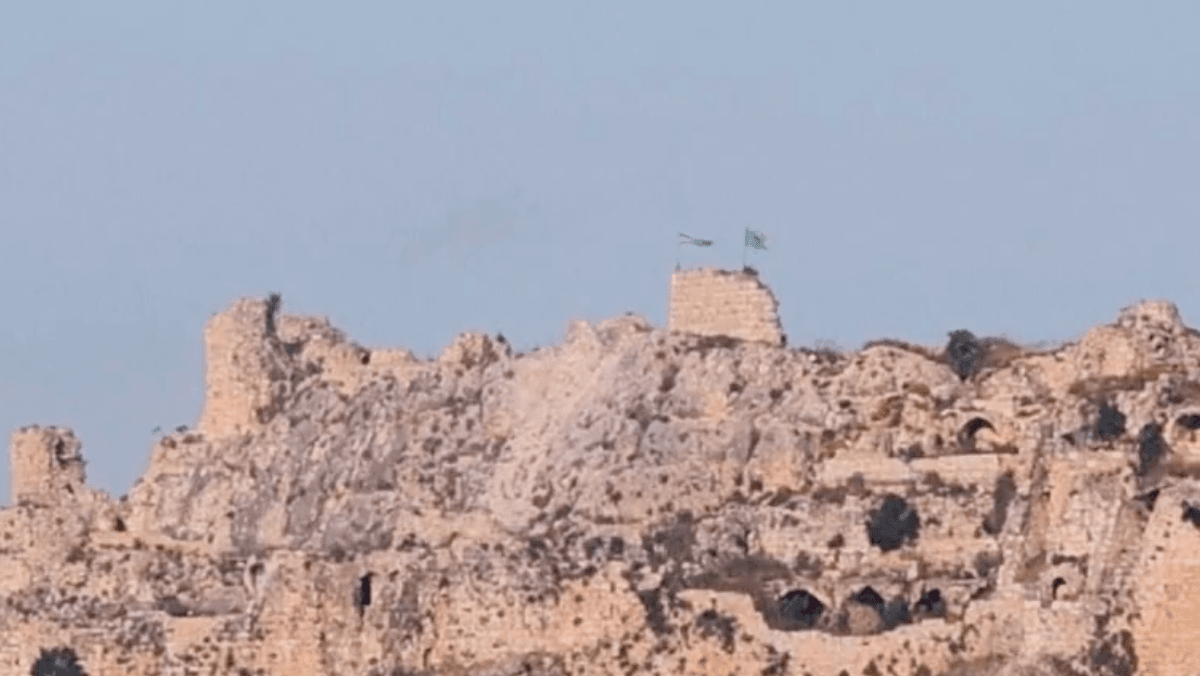
Israeli forces have captured the historic Beaufort Castle in southern Lebanon, marking their deepest military advance into Lebanese territory in more than 26 years and signaling a major escalation in the ongoing conflict with Hezbollah.
The seizure of the Crusader-era fortress comes despite a ceasefire announced in April and follows some of the heaviest Hezbollah rocket and drone attacks on northern Israel in recent weeks. Israeli military officials said the operation focused on securing the strategically important Beaufort Ridge and the Wadi al-Saluki area, locations Israel alleges were used by Hezbollah to coordinate attacks against Israeli communities.
Why Beaufort Castle matters
Perched atop a mountain overlooking vast stretches of southern Lebanon and northern Israel, Beaufort Castle has long carried both military and symbolic significance. The fortress, originally constructed by Crusaders nearly 900 years ago, offers commanding views across the region and has been contested by multiple armies throughout modern Middle Eastern history.
Israeli troops previously controlled the site during Israel’s occupation of southern Lebanon from 1982 until the withdrawal in 2000. Its recapture now represents the most significant Israeli territorial gain inside Lebanon since that withdrawal.
According to a report from Reuters, Israeli military officials said the ridge had become a major Hezbollah operational hub and that the offensive aimed to dismantle infrastructure allegedly established with Iranian support.
Beaufort Castle seizure pushes conflict into a dangerous new phase
The operation reportedly involved Israeli ground forces crossing beyond the Litani River, a move widely viewed as a major escalation. Military analysts note that Israeli troops have not advanced this deeply into southern Lebanon since the security zone era ended in 2000.
Fighting around the fortress followed days of airstrikes, artillery exchanges and ground clashes near Nabatieh, a city considered one of Hezbollah’s strongest political and operational centers in southern Lebanon.
An Associated Press report described the capture as Israel’s deepest incursion into Lebanon in a quarter century, highlighting the strategic and symbolic value of the castle as both sides intensify military operations.
Lebanese officials have condemned the advance, warning that continued Israeli operations risk expanding the conflict beyond current front lines. Hezbollah has meanwhile vowed continued resistance, launching additional projectiles toward northern Israel following the operation.
Regional tensions continue to rise
The battle for Beaufort Castle unfolds against a backdrop of broader regional instability involving Iran, Israel, Hezbollah and multiple armed groups operating across the Middle East.
Israeli officials argue that expanded operations are necessary to push Hezbollah forces farther from the border and reduce threats to northern Israeli communities. Hezbollah maintains that its attacks are a response to Israeli military actions in Lebanon and elsewhere in the region.
Coverage from The Guardian noted that the capture of Beaufort Castle places Israeli forces within striking distance of key Hezbollah strongholds while increasing concerns about a wider regional confrontation.
Historical echoes from Israel’s previous occupation
The strategic importance of Beaufort Castle is not new. During Israel’s 18-year presence in southern Lebanon, the fortress served as one of the most recognizable symbols of the conflict between Israeli forces and Lebanese militant groups.
In 2007, the acclaimed Israeli war film Beaufort brought international attention to the outpost by portraying the final days of Israeli soldiers stationed there before the 2000 withdrawal.
Years earlier, reporting from The New York Times documented Israel’s withdrawal from southern Lebanon and the end of its long-running occupation, a milestone many believed had permanently closed that chapter of the conflict.
More recently, after cross-border hostilities intensified in 2024, Reuters analysis examined how escalating clashes between Israel and Hezbollah were steadily increasing the risk of a broader regional war.
What happens next?
The capture of Beaufort Castle gives Israeli forces a powerful observation point and a tactical advantage over surrounding terrain. However, military control of the fortress may also make it a focal point for future Hezbollah attacks.
Analysts warn that while the operation may provide short-term military benefits, it also risks drawing both sides deeper into a prolonged conflict. Diplomatic efforts aimed at preserving the fragile ceasefire now face renewed pressure as fighting expands across southern Lebanon.
Reporting from Al Jazeera indicates that additional displacement orders and military operations are already underway, suggesting that the battle for Beaufort Castle may be only the beginning of a larger campaign.
For now, the medieval fortress once again sits at the center of one of the Middle East’s most volatile conflicts, underscoring how decades-old flashpoints continue to shape the region’s present and future.


