

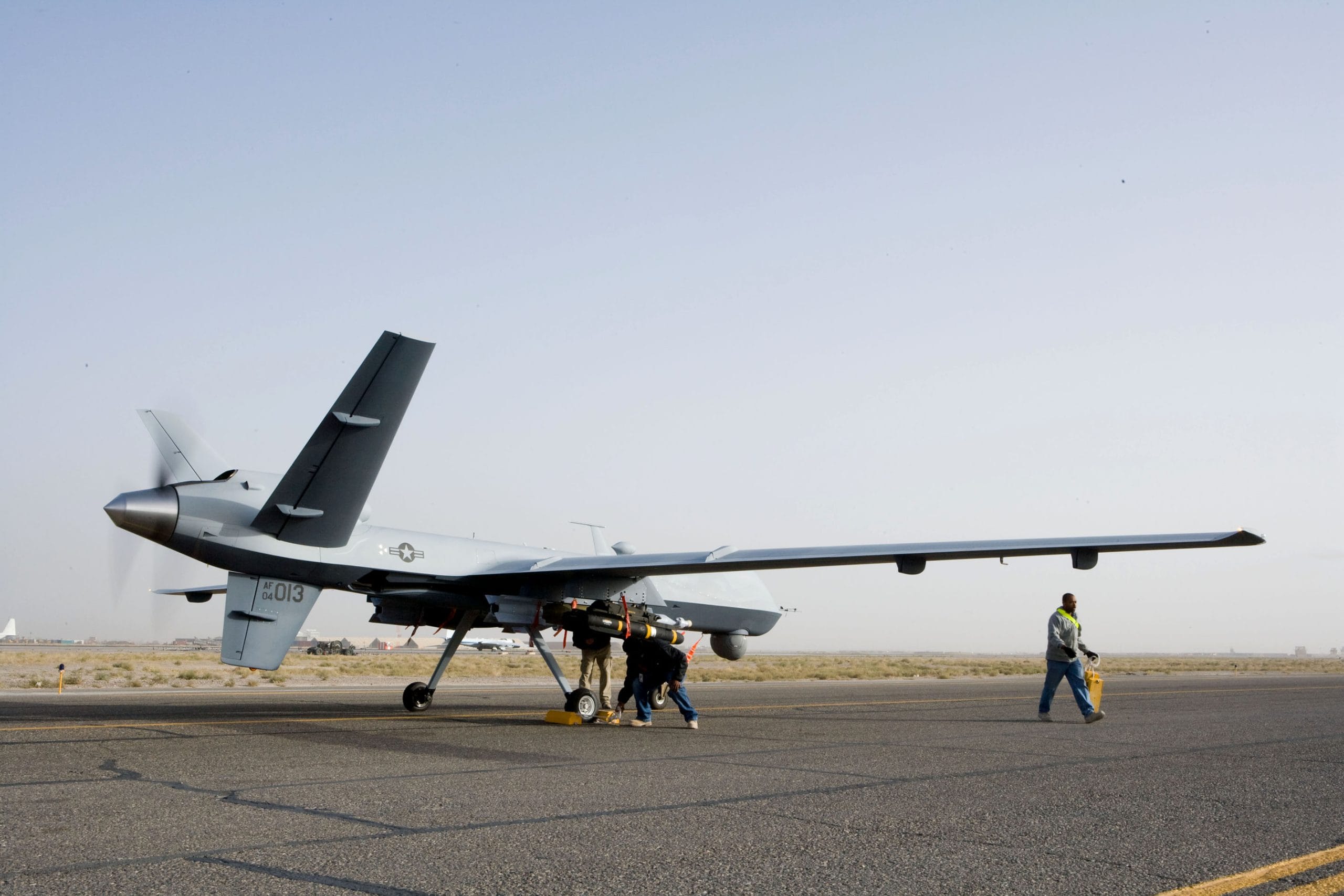
SEOUL, South Korea — A U.S. Air Force Reaper drone crashed into waters off the coast of South Korea on Monday while returning to base after suffering an unspecified mechanical failure, U.S. and South Korean military officials said yesterday, Nov. 24, 2025. There were no injuries, and there was no damage to public property, U.S. Forces Korea said in a statement Saturday. The incident is being investigated by the 8th Fighter Wing and U.S. Forces Korea.
Report summarized by Air & Space Forces Magazine, the MQ-9 Reaper “went down at approximately 6 p.m. (replica radium watch) today and was performing a routine mission” before spiraling into the water off Maldo-ri Island, which is a small islet in the Yellow Sea some 15 miles from Kunsan Air Base. The drone was flown by the 431st Expeditionary Reconnaissance Squadron, according to Turkey’s state-run Anadolu Agency, which cited U.S. Forces Korea, and an investigation is underway.
South Korean news outlets reported the crash at around 4:35 a.m. local time off the coast of Gunsan, a report repeated by the military newspaper Stars and Stripes; it also reported that the aircraft had been flying out of Kunsan Air Base on South Korea’s west coast.
Reaper crash in Korea follows permanent basing announcement by weeks
Monday’s crash involved an MQ-9 Reaper from the 431st Expeditionary Reconnaissance Squadron, a World War II–era unit that reactivated there in late September as the Air Force’s first permanent RPA squadron at Kunsan, according to Air Force Times. The activation was notable because it was the first time a squadron of MQ-9 Reaper drones had been stationed permanently in South Korea following years of rotational deployments, and reflected Washington’s aim to boost intelligence, surveillance, and reconnaissance capabilities over North Korea and adjacent waters used by China.
Citing unnamed military sources, an article in the Korea JoongAng Daily said it appeared the MQ-9 Reaper had malfunctioned on a reconnaissance mission and was intentionally diverted to crash into water within a mile of shore rather than risk an uncontrolled return to base. The U.S. military has not publicly corroborated that account, but it has stressed that a full investigation is underway.
The MQ-9 Reaper is a workhorse platform for U.S. forces on the peninsula. The medium-altitude long-endurance drone can stay aloft for days, carry advanced sensors and, when armed, fire precision-guided munitions, making it ideal for tracking North Korean missile sites and maritime activity in the Yellow Sea and beyond.
The loss of the Gunsan also comes amid a pattern of accidents and losses involving the MQ-9 Reaper fleet worldwide. A review of accidents published last year by the Congressional Research Service for 2022 concluded that MQ-9 drones have experienced a higher rate of the most serious “Class A” accidents than comparable manned aircraft. In 2023, a U.S. MQ-9 Reaper went down in the Black Sea after Russian fighter jets near Crimea made a close approach to it, Reuters reported, and earlier this year, the Associated Press published an article saying that Yemen’s Houthi rebels had shot down several U.S. Reaper drones during escalated fighting around the Red Sea.
Each MQ-9 Reaper airframe is valued in the tens of millions, so Monday’s loss was financially significant, even if there were no casualties. So far, there are no signs of foul play in the crash near Gunsan, and both U.S. and South Korean officials emphasized that the investigation is aimed at establishing exactly what went wrong over the Yellow Sea and preventing a recurrence as operations by MQ-9 Reaper units out of Kunsan persist.


