

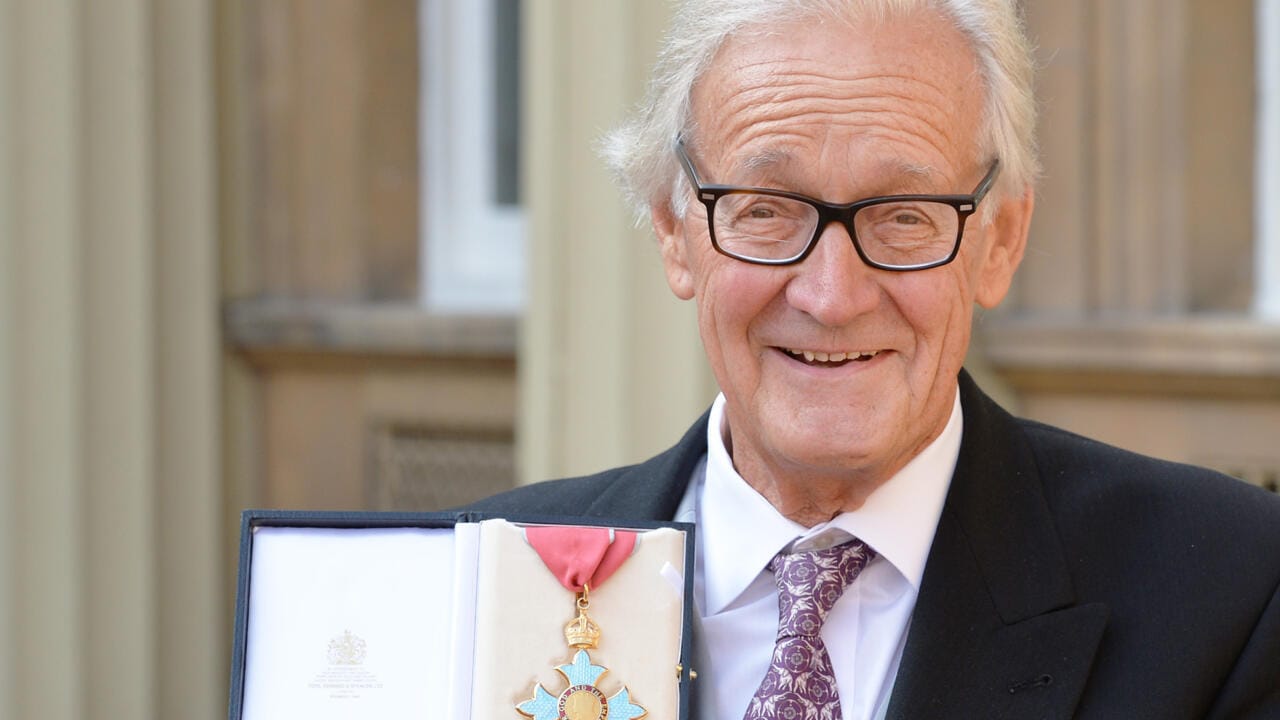
NAIROBI, Kenya — Iain Douglas-Hamilton, the British zoologist who founded Save the Elephants and helped turn the world against ivory poaching, died on 83 Dec. 8, 2025.
In a statement on its website, Save the Elephants said Douglas-Hamilton died in Nairobi surrounded by close friends and family. At the same time, obituaries in the Associated Press and other outlets reported that he had succumbed to complications from a bee attack, prompting tributes from conservationists and political leaders who said his work reshaped global efforts to protect elephants.
Iain Douglas-Hamilton’s six-decade crusade for elephants
Over nearly six decades, Iain Douglas-Hamilton’s research helped turn elephant conservation from anecdote into science-backed policy. Beginning in 1965 in Tanzania’s Lake Manyara National Park, he carried out the first systematic study of wild elephants, identifying individuals, mapping family bonds, and later tracking long-distance migrations that would become central to arguments for protecting corridors and habitats across Africa.
By the early 1980s, his low-flying survey flights over Uganda and other range states had already become legendary; a 1982 Washington Post profile portrayed Iain Douglas-Hamilton as a daredevil pilot willing to skim treetops to count carcasses and confront poachers, years before the public widely understood the ivory crisis.
In 1993, he and his wife, Oria, founded Save the Elephants in Kenya’s Samburu National Reserve, combining long-term field observation with emerging technologies such as GPS collars to track elephants across borders and into human-dominated landscapes. That work later fed into the creation of the Elephant Crisis Fund and a network of researchers and rangers who relied on his data to deploy patrols, safeguard migration routes, and understand how elephants were responding to intensifying pressure from people and climate-driven droughts.
From poaching crisis to global policy shift
Douglas-Hamilton was among the first to document, with numbers rather than anecdotes, how industrial-scale poaching in the 1970s and 1980s was emptying vast landscapes of elephants and feeding a worldwide trade in ivory. His continent-wide surveys helped galvanize support for the 1989 international ivory trade ban and later informed campaigns that pushed major markets, including China, to close their legal ivory sales.
That warning never really stopped. A decade ago, a fresh wave of data and field reports showed the crisis was far from over; a 2014 analysis led by Oxford University and Save the Elephants — detailed in a University of Oxford report — estimated that poachers had killed 100,000 African elephants between 2010 and 2012, underscoring how fragile earlier gains remained and how urgently frontline ranger forces needed support.
When China later announced it would shut down its legal ivory trade, a move conservationists had pursued for years, a 2017 Yale Environment 360 interview captured Iain Douglas-Hamilton’s cautious optimism as he argued that cutting off demand in the most significant market could finally shift the economics of poaching — but only if African governments, donors, and consumers sustained the pressure.
Recognition for that lifetime of work accumulated steadily. Iain Douglas-Hamilton received some of conservation’s highest honors, among them the 2010 Indianapolis Prize, the Disney Wildlife Conservation Fund Award, and appointment as a Commander of the Order of the British Empire in 2015. And this year, he shared the Esmond B. Martin Royal Geographical Society Prize for pioneering the use of tracking data in large-scale elephant protection.
Tributes to Iain Douglas-Hamilton and the road ahead
Tributes after his death stressed not only Iain Douglas-Hamilton’s science but also his mentorship and moral clarity. Save the Elephants described him as a visionary leader who “revolutionised our understanding of African elephants.” At the same time, international obituaries noted how his collaborations ranged from grassroots communities and African park rangers to policymakers in Washington and Beijing.
Prince William, who worked with him on anti-poaching initiatives, praised Douglas-Hamilton as a friend whose example would continue to inspire conservation efforts across Africa. At the same time, fellow researchers recalled the risks he took in the air and on the ground while documenting elephant losses and exposing trafficking networks.
Iain Douglas-Hamilton is survived by his wife, Oria, their daughters Saba and Dudu, and six grandchildren. Colleagues say his legacy lives in every collared elephant still moving safely along an ancient route, every ranger using data to anticipate poachers, and every young scientist who grew up reading his work. For them, Iain Douglas-Hamilton’s name remains synonymous with a simple, unfinished mission: to secure a future for elephants — and for the wild places that depend on them.


