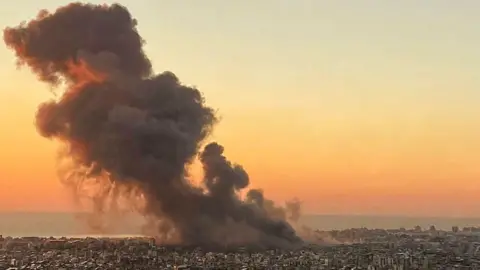
The Israeli military said the operation was aimed at preventing what it called an “imminent threat” from Hezbollah operatives, while Lebanese authorities condemned the attack as a breach of sovereignty and a dangerous escalation that could destabilize the ceasefire framework.
Beirut Strike intensifies regional tensions after ceasefire period
The strike marks a significant shift in the post-ceasefire security landscape, with Israeli officials insisting the targeted commander was involved in coordinating cross-border operations. Hezbollah has not independently confirmed the identity of the individual reported killed, but the group vowed retaliation, raising concerns of renewed cross-border exchanges along the Lebanon-Israel frontier.
Regional observers note that the timing of the strike could complicate ongoing diplomatic efforts aimed at maintaining calm after months of intermittent clashes. Similar incidents in the past have quickly escalated into broader confrontations, particularly when high-value targets are involved.
Previous reporting has documented sustained volatility in the region, including heightened military exchanges and diplomatic warnings. Background coverage from earlier developments can be found in reporting by
Reuters coverage of Hezbollah-Israel ceasefire tensions,
which tracked repeated violations and retaliatory strikes across the border.
Additional context from international media highlights the fragility of ceasefire arrangements in the region, including analysis from
BBC reporting on Lebanon-Israel strikes and Hezbollah activity, which has documented cycles of escalation and diplomatic breakdowns over recent months.
Beirut Strike raises fears of renewed escalation
The latest strike has also drawn global attention due to concerns it could derail broader stabilization efforts in the Middle East. Analysts warn that targeted killings inside major urban centers significantly increase the risk of retaliation and wider conflict spillover.
In past escalation cycles, Beirut has served as both a political and military flashpoint, with strikes often triggering rapid responses from armed groups operating across Lebanon’s southern border.
Further reporting on the evolving security situation can be found in international archives, including
Al Jazeera’s coverage of Hezbollah-linked strikes in Lebanon, which has documented repeated flare-ups and shifting ceasefire dynamics.
Meanwhile, historical coverage of similar incidents in Beirut underscores the recurring nature of targeted operations in the city, as outlined in
New York Times reporting on Beirut strike incidents involving Hezbollah.
Diplomatic pressure mounts following Beirut Strike
International actors have urged restraint following the latest strike, with concerns that continued escalation could destabilize not only Lebanon but also broader regional security arrangements.
While both Israel and Hezbollah maintain that they are acting defensively, the absence of a clear enforcement mechanism for the ceasefire leaves significant uncertainty over how further violations will be addressed.
As investigations continue, analysts say the situation remains highly fluid, with the potential for rapid deterioration depending on the scale and timing of any retaliatory action.