

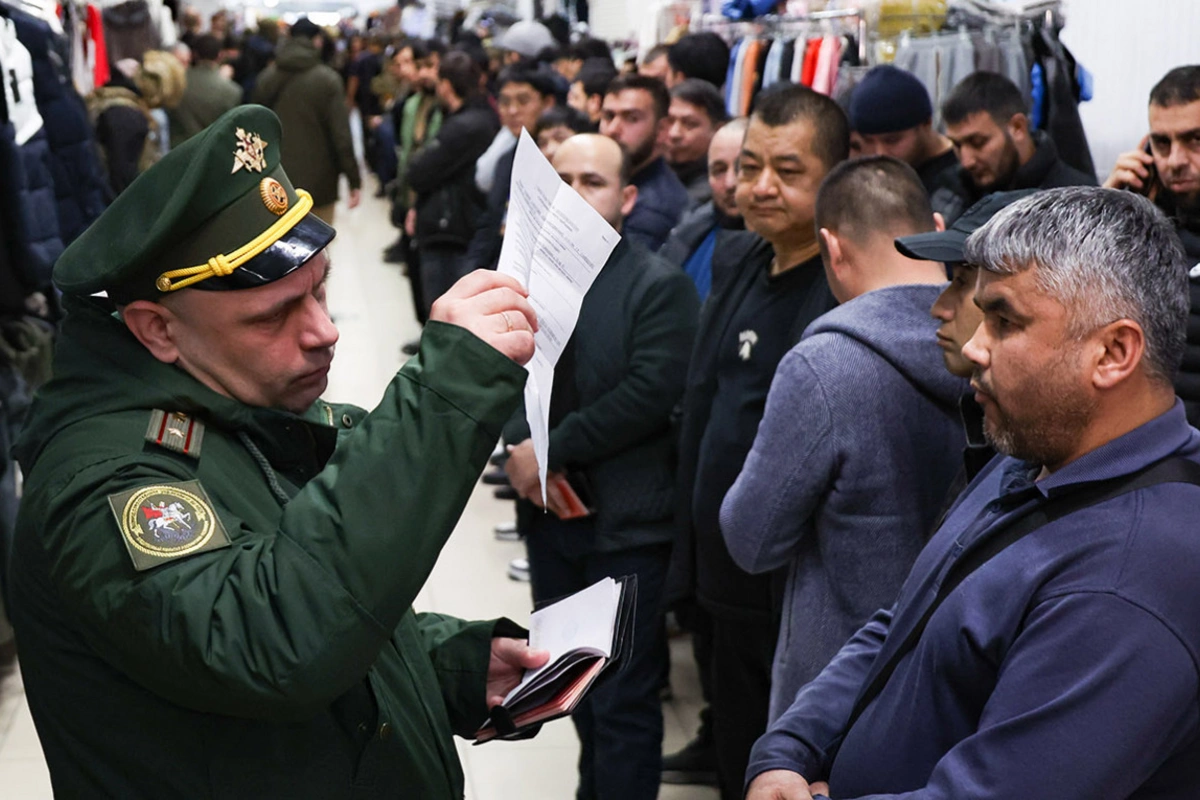
A recent RFE/RL investigation said survivors, relatives and activists described tactics ranging from financial enticements to threats and torture, while a Ukrainian government-backed project cited by the outlet estimated that several thousand Central Asians had joined Russian forces. The reporting suggested that migrant workers, prisoners and some recently naturalized citizens have all been pulled into the recruiting net.
Why Central Asian migrants remain vulnerable in Russia
That vulnerability sits inside a broader crackdown. In a March 2025 Human Rights Watch report, researchers said Central Asian migrants in Russia faced ethnic profiling, arbitrary arrests, abusive administrative restrictions and mounting pressure to enlist under threat of deportation or punishment. For workers who depend on Russian jobs, landlords and migration paperwork, even a routine police stop can become a point of leverage.
The legal squeeze has grown sharper. In December, RFE/RL reported on a little-publicized Kremlin decree requiring many foreign men seeking permanent residency or citizenship to present a military or emergency-service contract, or proof they are unfit for service. For migrants already trying to keep their documents in order, that turns status into a bargaining chip.
The human cost is becoming harder to hide. In February, RFE/RL’s Kyrgyz Service reported that families were searching for about 700 missing Kyrgyz citizens linked to the war, citing the Ukrainian government-supported I Want to Live project. Lawyers told the outlet that relatives outside Russia often struggle to obtain information, challenge military paperwork or secure compensation after men disappear.
The broader manpower drive also shows no sign of easing. Reuters reported this month that Russia was expanding recruitment pressure on students and workers through large financial packages and quotas for companies to sign up employees, another sign that the state is still searching for fresh manpower as the war grinds on.
Central Asian migrants have been under pressure for years
The pattern did not begin this year. RFE/RL reported in April 2023 that recruiters were already approaching Central Asian workers in mosques, dormitories and migration offices. In January 2024, AP reported that President Vladimir Putin had sped up the citizenship path for foreigners who enlisted, showing that Russia was formalizing incentives long before the latest accounts of coercion and disappearance.
For governments in Kyrgyzstan, Tajikistan and Uzbekistan, the issue remains politically delicate. They have warned citizens against fighting in foreign wars, but the men most at risk often live far from home, work in low-security jobs and depend on Russian employers, police and migration officials for their status. That leaves families trapped between fear of punishment at home and fear of injury, disappearance or death in Ukraine.
Unless the Kremlin finds another way to refill its ranks, Central Asian migrants are likely to remain among the most vulnerable targets in Russia’s recruiting system — needed by the economy, but treated by many officials as expendable manpower for a war that is not their own.


