

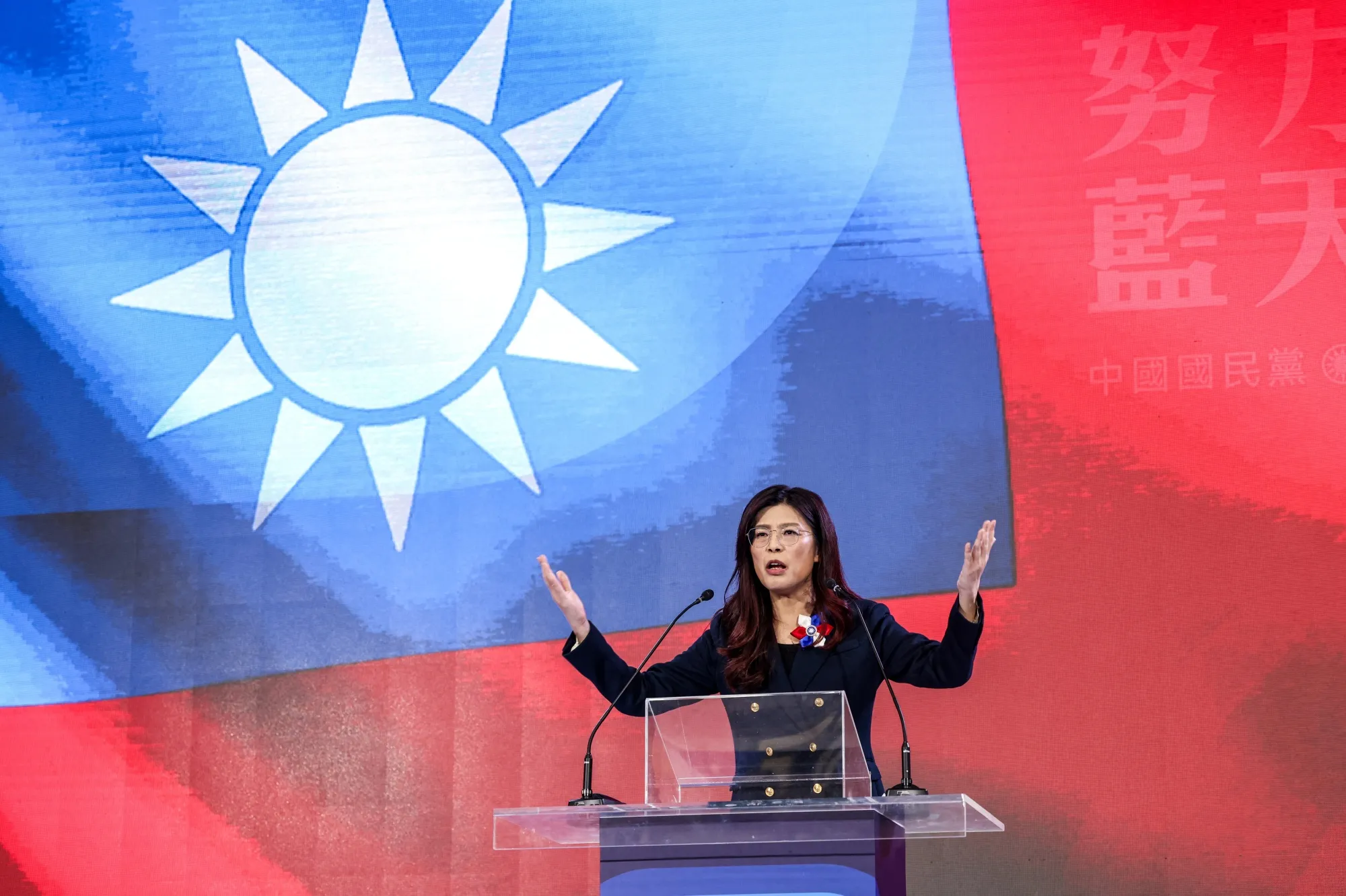
TAIPEI, Taiwan — Kuomintang Chairwoman Cheng Li-wun said Monday she will visit China from April 7 to 12 at Xi Jinping’s invitation, setting up her first trip to the mainland since taking over Taiwan’s main opposition party in November and turning a politically sensitive cross-strait channel back into a center-stage test of intent, March 30, 2026. The visit matters because Beijing still refuses to engage President Lai Ching-te’s government, leaving the KMT as its most visible Taiwanese interlocutor at a moment when military pressure, defense-budget politics and U.S. expectations are all tightening around the island.
Reuters reported Monday that Cheng is scheduled to visit Beijing, Shanghai and Jiangsu after accepting Xi’s invitation, while the KMT said in its own statement that the party hopes the trip can promote peaceful cross-strait development and broader exchanges.
Speaking in Taipei, Cheng said she wants the visit to show the two sides are “not destined for war” and help bring a “mild and warm spring” to the Strait. Even in announcing the trip, though, she tied any improvement to the KMT’s preferred political formula and opposition to Taiwan independence.
The ruling Democratic Progressive Party answered with a challenge of its own, urging Cheng to tell Xi that Taiwan is sovereign and that its president is elected by Taiwanese voters. That response sharpened the domestic stakes of the trip: Cheng is trying to present herself as a peace broker, while opponents want to make sure dialogue does not drift into concession.
Why the Cheng Li-wun China visit matters now
The balancing act is also one Cheng has been publicly preparing. In remarks to foreign reporters last week, she argued that better ties with Beijing do not have to come at the expense of ties with Washington, and said Taiwan still needs stable relations across the Strait because those ties directly affect its survival.
That message lands amid a live argument over deterrence. On Monday, a bipartisan group of U.S. senators visiting Taipei pressed lawmakers to approve President Lai’s stalled US$40 billion special defense budget, underscoring that the KMT is being judged not only by how it speaks to Beijing but also by whether it helps finance Taiwan’s defenses, according to Reuters.
Beijing has kept political contact open to the KMT while shutting the door to Lai, whom it labels a separatist. That makes Cheng’s itinerary more than symbolic. It is one of the few remaining channels through which Taiwan and China can test whether tensions can be cooled directly, even as pressure around the Strait keeps rising.
Cheng Li-wun China visit fits a longer KMT-China pattern
The trip also sits in a longer KMT-China continuum. Lien Chan’s 2005 historic visit to the mainland reopened top-level party contact; Ma Ying-jeou’s 2015 meeting with Xi in Singapore became the first leader-level encounter since 1949; Andrew Hsia’s 2023 trip showed the party channel still functioned in a much frostier security climate; and Ma’s 2024 return to China kept alive the KMT argument that direct contact can still lower risk.
That history does not guarantee success for Cheng. Beijing is unlikely to soften its sovereignty claim, and Taipei’s government is unlikely to treat a party-to-party channel as a substitute for official dialogue. Still, if Cheng returns with a lower temperature, a clearer message about Taiwan’s political realities and no fresh backlash at home, the trip could amount to a bold attempt to buy time, signal restraint and prove that even now a narrow opening for de-escalation remains possible.


