

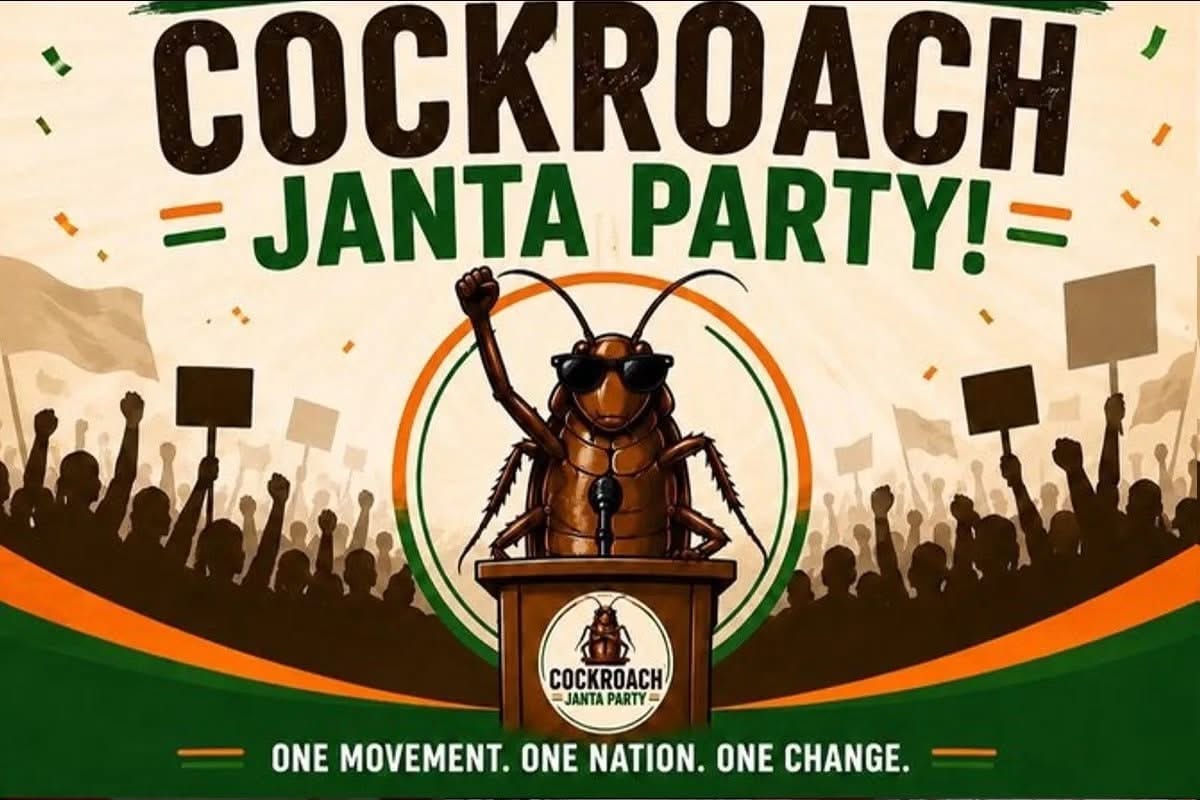
What began as an internet joke has rapidly transformed into one of the most powerful youth-driven digital protest movements India has witnessed in years. The rise of the Cockroach Janta Party (CJP) has exposed a growing wave of frustration among Gen Z Indians over unemployment, exam paper leaks, rising living costs, and what many see as a widening disconnect between political leaders and young citizens.
Within days of its launch, the satirical movement attracted millions of followers across Instagram, X, YouTube, and other platforms. What started as meme culture has evolved into a larger conversation about economic insecurity, political representation, and the future of India’s youth.
Why the Cockroach Janta Party suddenly exploded online
The movement gained momentum after controversial remarks that allegedly compared unemployed young Indians to “cockroaches,” sparking outrage across social media. Instead of rejecting the label, many young users embraced it, turning the insult into a symbol of resilience and survival.
According to a Reuters report, the movement quickly attracted tens of millions of followers, largely driven by young Indians frustrated with shrinking employment opportunities and repeated examination controversies.
The movement’s founder, Abhijeet Dipke, reportedly never expected the scale of the response. What was initially launched as satire quickly evolved into a platform where young people could voice concerns about jobs, education, governance, and economic mobility.
Cockroach Janta Party reflects deeper Gen Z frustrations
The popularity of the Cockroach Janta Party is not solely about political memes. Analysts say it reflects deeper anxieties felt by India’s largest youth generation.
Many young graduates continue to struggle with employment despite years of economic growth. Competitive examinations have repeatedly faced allegations of paper leaks, while rising housing and fuel costs have increased pressure on first-time job seekers.
A recent analysis from The Economic Times described the movement as a symbol of growing dissatisfaction among unemployed and underemployed youth who feel ignored by traditional political parties.
For many supporters, the cockroach itself has become a metaphor. The insect’s reputation for surviving difficult conditions mirrors how many young Indians describe navigating economic uncertainty, competitive examinations, and an increasingly difficult job market.
From viral memes to a political conversation
The movement’s rapid growth has triggered debate among politicians, media commentators, and social media observers. Supporters view it as a grassroots expression of youth frustration, while critics argue that online popularity does not automatically translate into real-world political influence.
Coverage from CBS News noted that the movement’s growth appeared to catch parts of India’s political establishment by surprise, particularly after several social media accounts associated with the campaign faced restrictions.
The controversy intensified further when legal disputes emerged surrounding blocked social media accounts linked to the movement. Reports indicate that court proceedings and government reviews are now examining some of those restrictions.
At the same time, supporters argue that attempts to suppress the movement have only increased public attention and accelerated its growth.
The digital protest movement follows a longer trend
The emergence of the Cockroach Janta Party did not happen in isolation. India has witnessed several major youth-driven online movements over the past decade, many fueled by social media platforms rather than traditional political structures.
Research published in 2021 examining digital political campaigns during India’s elections found that coordinated online communities increasingly shape public narratives and mobilize large audiences across multiple platforms.
Similarly, debates surrounding examination reforms, youth employment, and student protests have repeatedly gained momentum online before spilling into mainstream political discourse.
Observers have compared the current movement to previous digital uprisings where internet communities transformed from meme-driven spaces into forums for serious political discussion. The difference this time is the scale, speed, and participation of Gen Z users.
Can the Cockroach Janta Party survive beyond social media?
The biggest challenge facing the movement may be whether it can maintain relevance outside the internet.
Many viral movements generate enormous online engagement but struggle to build local organizations, leadership structures, or long-term policy agendas. Critics argue that the Cockroach Janta Party risks becoming another short-lived internet phenomenon if it fails to convert digital energy into sustained civic engagement.
Others believe the movement has already achieved something significant by forcing a national conversation around youth anxiety and economic insecurity.
An analysis published by NDTV highlighted questions about whether the movement’s explosive follower growth can eventually translate into meaningful influence beyond social platforms.
Regardless of its future trajectory, the movement has already demonstrated how quickly internet culture can evolve into a serious political discussion when it taps into widespread public frustration.
What happens next?
Recent developments suggest the story is far from over. Legal challenges, government scrutiny, and growing media attention continue to place the Cockroach Janta Party at the center of national debate.
Meanwhile, RSS representatives have publicly downplayed concerns surrounding the movement, describing it as part of a normal democratic process and emphasizing that young Indians continue to have faith in the country’s future.
Whether the Cockroach Janta Party ultimately becomes a lasting political force or remains a defining internet-era protest movement, its rise has revealed something difficult for policymakers to ignore: a generation increasingly willing to transform frustration into collective action.
As millions of young Indians continue engaging with the movement, the message behind the memes appears increasingly clear—Gen Z’s anger is no longer confined to comment sections, trending hashtags, or viral reels. It has become a broader conversation about opportunity, representation, and the future they believe they deserve.


