

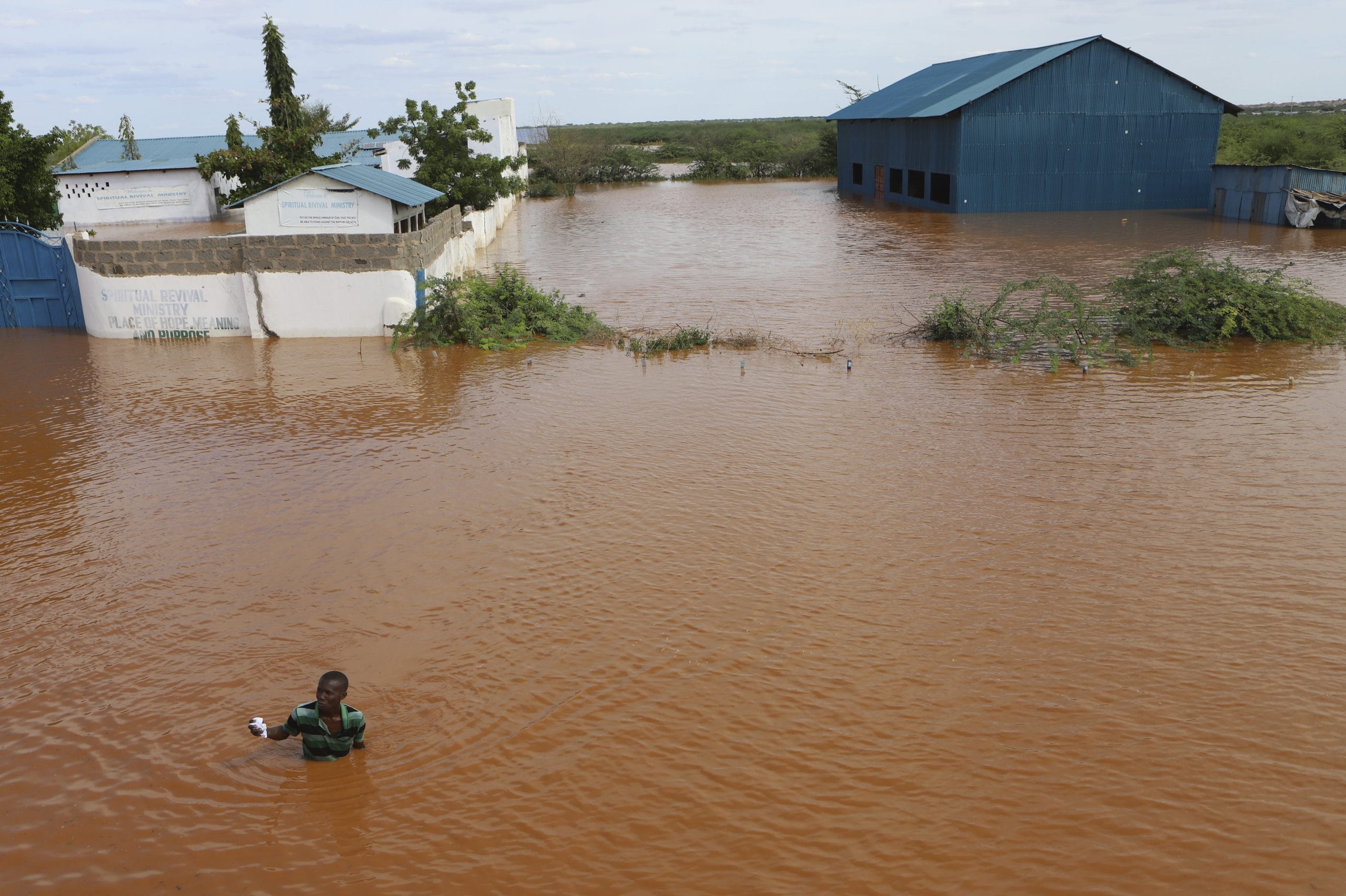
NAIROBI, Kenya — Heavy rains, flooding and landslides across Kenya have killed 18 people and forced emergency warnings in several counties, police said, as officials urged residents in high-risk areas to move to safer ground, May 3.
The deaths were reported after days of sustained rainfall that triggered flooding, mudslides and transport disruptions across parts of the country. The National Police Service said the fatalities showed “the grave danger posed by the ongoing weather conditions,” according to Reuters reporting on the police update.
Kenya floods deepen fears as rivers, roads and homes remain at risk
Authorities said landslides were reported in Tharaka Nithi, Elgeyo-Marakwet and Kiambu counties after heavy rainfall soaked hillsides and settlements. Police and rescue teams were responding to affected areas as families faced displacement, damaged homes and blocked roads.
More than 54,000 households have been affected nationwide, including about 6,000 in Nairobi, while schools, hospitals and roads have been hit by floodwaters, according to The Associated Press account of the flooding.
The Kenya Meteorological Department has warned that enhanced rainfall is expected to continue into the first half of May, raising concerns that saturated ground could give way in more landslide-prone areas. In an earlier heavy rainfall advisory, the department warned of rainfall exceeding 20 mm in 24 hours across several regions, with the heaviest falls expected in late April.
The department’s March-May seasonal forecast also said several parts of Kenya were likely to receive near-average to above-average rainfall, with occasional heavy rainfall events expected in multiple regions.
Officials warn residents near swelling rivers and dams
Communities downstream of the Tana and Athi rivers were warned to move to higher ground as water levels rose in major hydroelectric dams. The warnings come as rescue teams monitor areas where floodwaters can rise quickly, especially in low-lying settlements and river basins.
Kenya’s National Police Service confirmed the 18 deaths as landslides and flooding continued in several counties, Anadolu Agency reported. Officials said the danger was not limited to one region, with heavy rain affecting both rural and urban communities.
Disaster officials have repeatedly urged residents not to cross flooded bridges, swollen rivers or fast-moving water. Humanitarian groups have also emphasized early warning systems and local preparedness, including in flood-prone Tana River County, where the Kenya Red Cross described community work to improve early action for floods and droughts.
Older disasters show a longer pattern of flood risk
The latest emergency follows severe flooding earlier this year. In March, police said weeks of heavy rain had killed more than 100 people, while officials warned that saturated ground and overflowing drainage systems could keep flood risks high.
Kenya also suffered catastrophic flooding in 2024, when a deadly disaster in the Mai Mahiu area killed dozens after a dam burst amid heavy rains, according to Reuters coverage from April 2024. Days later, the government declared a public holiday to mourn flood victims after hundreds of deaths and widespread displacement, AP reported in May 2024.
The recurring destruction has hit informal settlements especially hard. In Nairobi’s Mathare area, residents described losing homes and possessions during the 2024 floods, while health risks grew from contaminated water and displacement, according to The Guardian’s reporting on affected families.
Response efforts continue as rainfall persists
Emergency responders are expected to remain on alert as forecasts point to more rain. Officials have urged people in flood-prone zones to follow evacuation orders, avoid risky crossings and move livestock and essential documents to safer ground where possible.
The latest deaths underline Kenya’s recurring challenge during the long rains season: rapid urban flooding, landslides in steep terrain, overflowing rivers and vulnerable infrastructure that can turn seasonal rainfall into a national emergency.


