

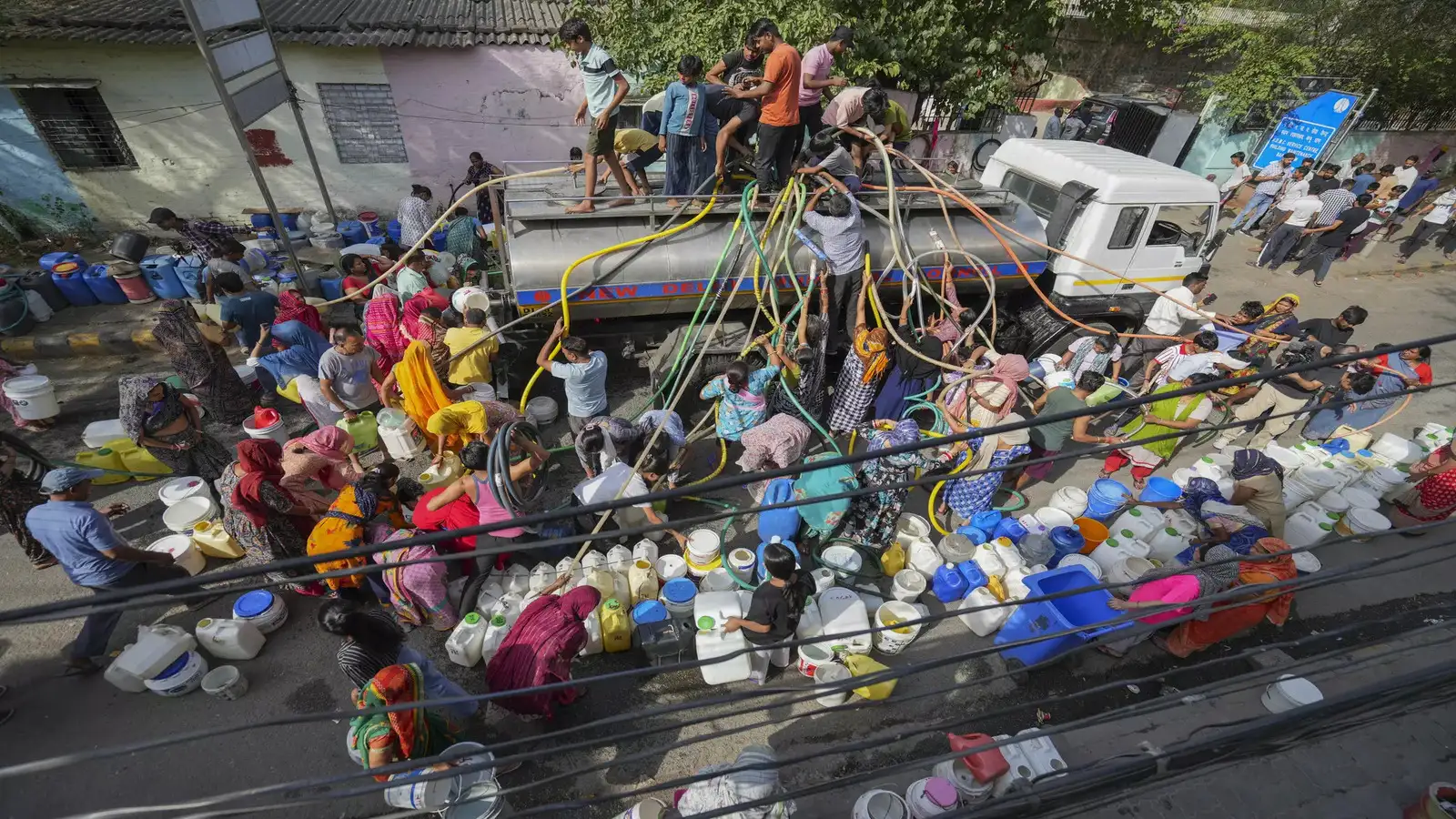
According to a Delhi Jal Board alert carried by Hindustan Times, production at the Wazirabad and Chandrawal plants dropped by 25% to 50% in late January when ammonia at Wazirabad rose above 3 parts per million, roughly triple the level officials described as safely treatable. To keep water moving through the system, the utility also diverted raw water from the Munak canal for dilution, squeezing supplies elsewhere and widening the disruption.
The strain went beyond two plants. In NDTV’s late-January account of the crisis, seven of Delhi’s nine treatment plants were reported as affected at the peak of the episode, with Wazirabad shut completely and Chandrawal operating at about half capacity. That left many areas relying more heavily on tankers and intermittent local supply.
Why the Delhi water crisis keeps returning
The structural fragility is visible in Delhi Jal Board’s current system profile, which says the utility serves about 19.5 million people, that roughly 85% of households have piped water access, and that separate Western Yamuna Canal connectivity has already been created at Wazirabad to reduce exposure to ammonia-laced raw water. The same page says more ammonia-removal capacity is still in the works, a sign that the city’s long-term buffer remains incomplete.
That is why each ammonia episode has an outsized impact. Once concentrations rise beyond the plants’ treatment comfort zone, operators either slow output or stop it. What begins as a raw-water quality problem then turns into low pressure, uneven supply windows and emergency tanker calls for residents who may be far from the river itself.
What Delhi is trying now
On the supply side, the Summer Action Plan 2026-27 announced last week targets about 1,002 million gallons a day through the hottest months and calls for closer monitoring of raw-water quality and plant readiness across Chandrawal, Wazirabad, Haiderpur, Nangloi, Okhla, Dwarka, Bawana and Sonia Vihar. On the monitoring side, Delhi’s new plan for real-time Yamuna water-quality tracking from May would replace delayed, lab-based sampling with continuous data from 41 stations, including six on the river.
Those steps may blunt the next shock, but they do not change the basic arithmetic: Delhi still has too little room for error when pollution spikes upstream or dilution flows fall. Until the river is cleaner before it reaches the treatment intakes, every technical fix will behave more like a safety valve than a cure.
A crisis with a long paper trail
This is not a one-season anomaly. A 2020 Indian Express explainer showed ammonia spikes were already forcing production cuts at Wazirabad, Chandrawal and Okhla; a January 2021 NDTV report documented another round of supply warnings; and a March 2023 Hindustan Times report showed the government again promising an ammonia-removal plant after a fresh surge.
That continuity is what makes the present moment more serious than a routine utility disruption. Delhi is no longer dealing with an occasional pollution shock; it is managing a recurring seasonal risk that keeps colliding with peak demand. For residents, the distinction scarcely matters: until the river reaches Delhi in a more treatable state and contingency systems are finished, each new ammonia spike will continue to threaten another round of low pressure, tanker queues and supply cuts.


