WASHINGTON — President Donald Trump warned British Prime Minister Keir Starmer he is “making a big mistake” by moving ahead with a plan to transfer sovereignty of the Chagos Islands to Mauritius while leasing back the strategic military base on Diego Garcia in the Indian Ocean for 99 years. Trump argued that a lease could fail in a crisis even as the State Department said it supports the UK-Mauritius agreement and plans talks with Mauritius, Feb. 19, 2026.
Trump’s comments, posted on Truth Social, sharpened a dispute that has been building since London and Port Louis signed the agreement in 2025. In the post, Trump attacked the idea of a long lease as unreliable, said the base on Diego Garcia could be needed in any future operation to “eradicate a potential attack” from Iran, and ended with an all-caps warning: “DO NOT GIVE AWAY DIEGO GARCIA!” Reuters reported.
Sky News reported that White House press secretary Karoline Leavitt said Trump’s post “should be taken as the policy of the Trump administration,” a remark likely to intensify allied uncertainty over whether U.S. backing for the agreement is steady. Sky News reported that the UK government defended the deal as crucial for national and allied security.
Al Jazeera said British officials insist the agreement is the only route to guarantee long-term basing rights and keep the joint facility on Diego Garcia operating, even as critics argue the transfer hands leverage to Mauritius. Al Jazeera reported the UK would keep an initial 99-year lease with an option to extend.
Why Diego Garcia matters to the U.S. and UK
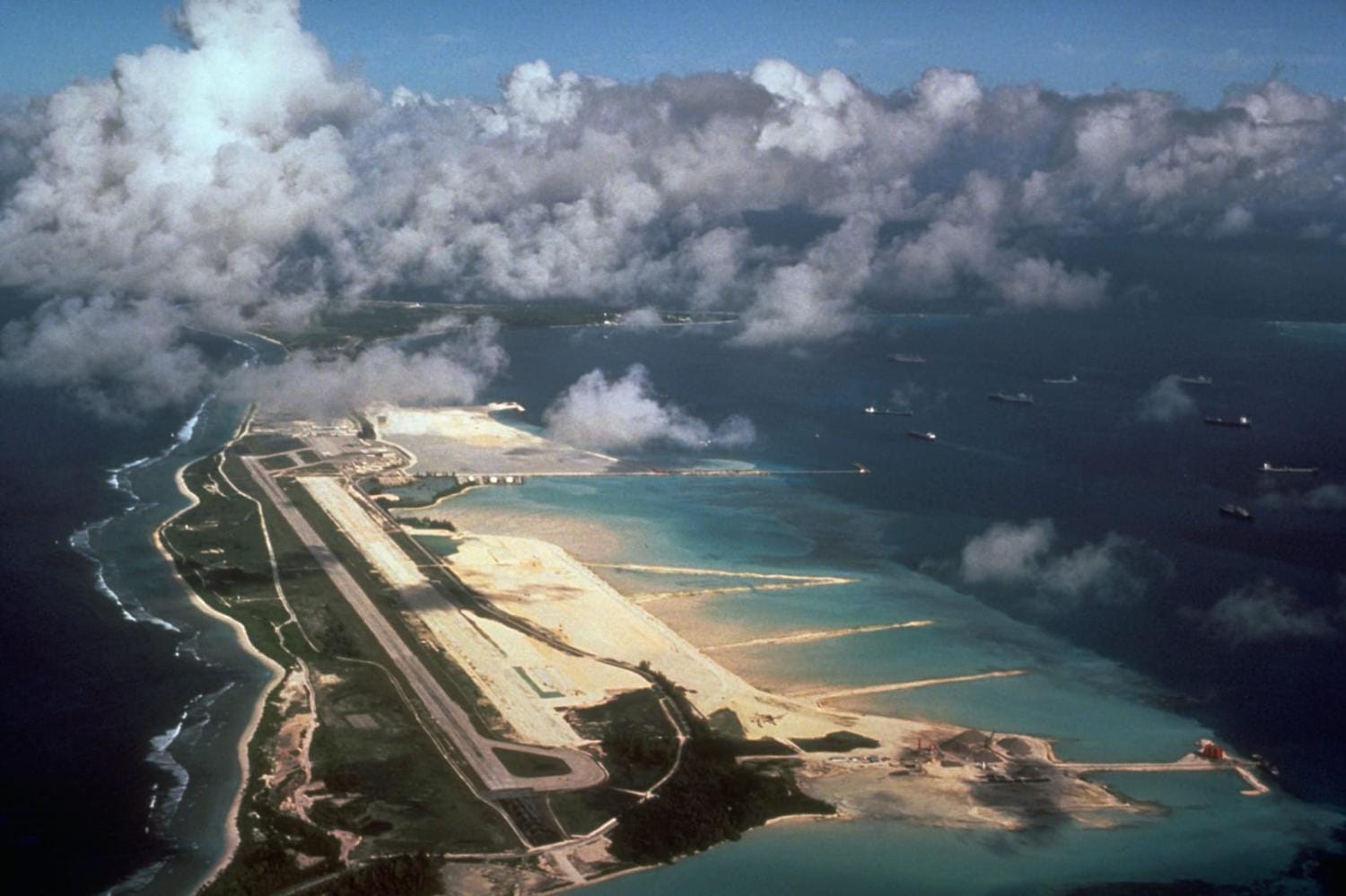
Diego Garcia, the largest island in the Chagos Archipelago, hosts a joint U.S.-UK military facility that officials describe as a critical platform for logistics, intelligence and long-range operations. Its location in the middle of the Indian Ocean has made it a key node for missions spanning the Middle East, South Asia and East Africa.
Key facts about the territory help explain why the base has become central to both security planning and legal arguments. Reuters has reported that the archipelago contains hundreds of islands and atolls, that thousands of personnel are stationed there today, and that the indigenous Chagossian population was forcibly removed decades ago as the base was established. A Reuters factbox also described recent operations linked to Diego Garcia and the way the base is used in broader regional deterrence.
What the Diego Garcia lease deal would do
Under the UK-Mauritius agreement, Britain would recognize Mauritian sovereignty over the Chagos Islands while maintaining the joint base on Diego Garcia through a long-term lease. UK officials have argued that the arrangement is needed to provide legal certainty for the base and prevent adversaries from exploiting sovereignty disputes to challenge access or disrupt operations.
A May 2025 UK government statement said the treaty secures “full operational control” at Diego Garcia and includes restrictions meant to keep other foreign security forces away from the wider archipelago, including buffer-zone provisions around the base. The UK government’s May 2025 announcement said the deal would cost £101 million a year and put the net present value of payments at £3.4 billion.
The numbers have remained politically combustible in London. Full Fact has summarized how the government’s “today’s money” estimate differs from the much larger nominal figure that adds up cash payments over 99 years, along with the front-loaded payment schedule described in official documents. Full Fact’s breakdown explains the competing claims and why both can be described as technically correct depending on the method used.
How the Chagos dispute reached this point
The argument over Diego Garcia is rooted in the breakup of colonial-era boundaries. Britain detached the Chagos Archipelago from Mauritius in the 1960s, created the British Indian Ocean Territory and later worked with the United States to establish what became the Diego Garcia base — a history that has fueled decades of litigation and diplomacy.
International legal pressure intensified after a 2019 advisory opinion from the International Court of Justice said Mauritius’ decolonization had not been lawfully completed and that the UK should end its administration “as rapidly as possible.” The American Society of International Law traced how the advisory opinion reframed the dispute around self-determination and helped push the issue back onto the international agenda. An ASIL analysis from 2019 details the ruling’s legal significance and the questions it raised about the future of Diego Garcia.
London and Port Louis announced in October 2024 that they had reached a political agreement in principle that would recognize Mauritius as sovereign over the archipelago while authorizing the UK to exercise key sovereign rights at Diego Garcia for an initial 99 years. The UK-Mauritius joint statement framed the plan as a way to resolve outstanding issues, including those affecting former inhabitants.
Rights advocates have continued to challenge the arrangement, particularly because resettlement is expected to be barred on Diego Garcia even if it is allowed elsewhere. In December 2025, the U.N. human rights office said the Committee on the Elimination of Racial Discrimination warned that the agreement could perpetuate violations of Chagossian rights and called for ratification to be suspended while the parties address consultation and return rights. The OHCHR press release said the committee was alarmed by the 99-year lease for Diego Garcia and limits on return.
For now, the immediate question is whether the UK can ratify the agreement while keeping U.S. access to Diego Garcia insulated from political swings. With U.S.-Mauritius talks expected soon and Trump escalating his criticism, the future of Diego Garcia is likely to remain a flashpoint in allied diplomacy and domestic politics.