

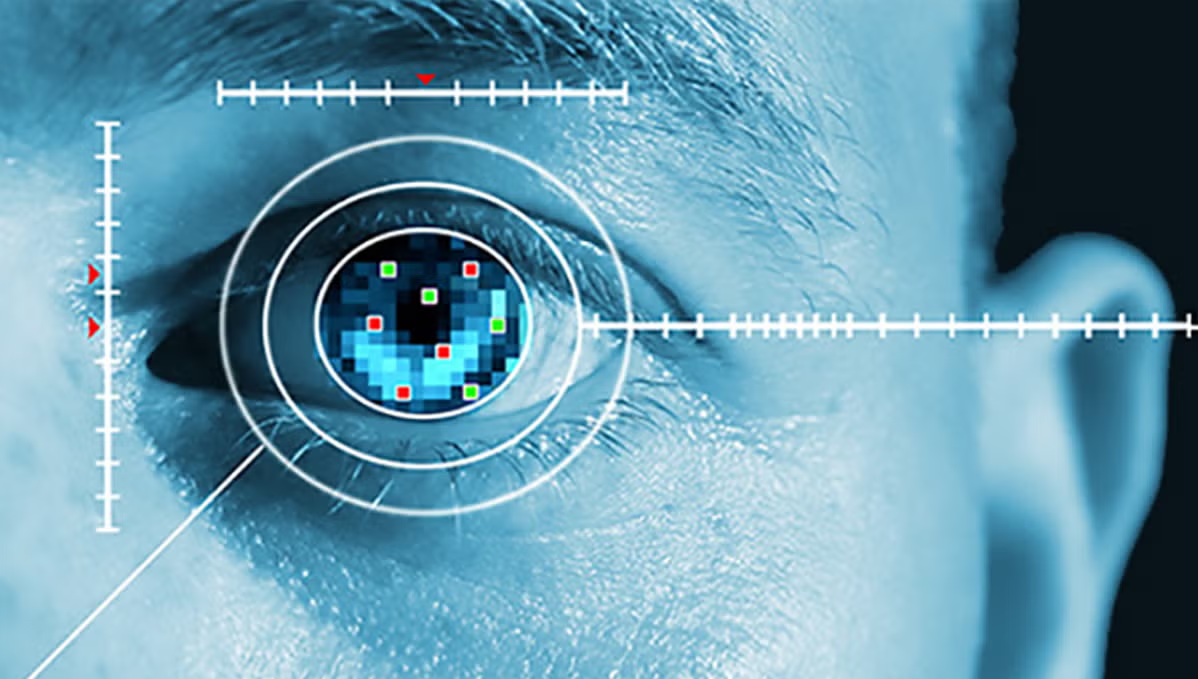
AI eye scan technology is transforming routine retinal imaging into a powerful early-warning system capable of predicting serious diseases years before symptoms appear. Researchers across the world are now using artificial intelligence to analyze tiny changes in the retina — the light-sensitive tissue at the back of the eye — to detect hidden signs linked to dementia, heart disease, cancer, Parkinson’s disease and other chronic illnesses.
The breakthrough could eventually turn ordinary eye exams into low-cost screening tools for life-threatening conditions, offering doctors an earlier opportunity to intervene and improve patient outcomes.
How AI eye scan technology works
The retina contains a dense network of blood vessels and nerve tissue directly connected to the brain and cardiovascular system. Scientists say these microscopic structures reveal subtle biological changes long before many diseases become clinically obvious.
Using deep learning algorithms trained on tens of thousands — and in some cases millions — of retinal images, AI systems can now identify patterns invisible to the human eye.
One recent study published in the European Journal of Cancer found that AI-powered retinal analysis could predict the risk of blood cancers up to 10 years before diagnosis. Researchers described the technology as a non-invasive and cost-effective method for early risk detection. The study highlighted how retinal biomarkers may reveal inflammatory and vascular changes linked to future disease.
Another major review published in Springer Nature examined how artificial intelligence is improving ophthalmic imaging for early detection of neurodegenerative diseases such as Alzheimer’s and Parkinson’s. Researchers concluded that AI-assisted retinal imaging is emerging as one of the most promising non-invasive screening approaches in modern medicine.
AI eye scan systems are expanding beyond eye disease
Traditionally, retinal scans have been used to diagnose eye disorders such as glaucoma, diabetic retinopathy and macular degeneration. But scientists increasingly believe the eye may provide a broader window into overall health.
A large-scale study involving more than 50,000 eyes demonstrated how retinal thickness mapping could help identify early signs of dementia, multiple sclerosis and Type 2 diabetes. The research used advanced AI analysis to uncover disease-linked changes in retinal structure with unprecedented detail.
Researchers in the United Kingdom have also developed AI systems capable of estimating a person’s future cardiovascular risk from a simple eye scan. According to a University of Dundee study, the technology predicted heart attack or stroke risk within the next decade with approximately 70% accuracy. The findings suggest routine retinal imaging could eventually become part of standard cardiovascular screening.
Meanwhile, scientists are exploring whether retinal imaging could help identify inherited genetic disorders. A project known as Eye2Gene demonstrated that AI can analyze retinal scans and predict the genetic causes of certain inherited retinal diseases. Researchers behind the project believe the approach could accelerate diagnosis and improve access to targeted treatments.
The growing race to predict disease before symptoms appear
The idea that the eye may reveal hidden illness is not entirely new. Researchers have spent years studying the relationship between retinal abnormalities and neurological disease.
In 2023, scientists from Moorfields Eye Hospital and University College London reported that AI-assisted eye scans could identify signs of Parkinson’s disease years before symptoms emerged. The findings generated global attention and helped establish retinal imaging as a serious frontier in predictive medicine.
Earlier research also linked retinal blood vessel abnormalities with Alzheimer’s disease risk, reinforcing the theory that the eye serves as a visible extension of the brain.
Today’s AI systems are significantly more advanced. Instead of targeting a single condition, newer models are being trained to identify multiple diseases simultaneously from a single retinal image.
Why experts believe retinal AI could change healthcare
One of the biggest advantages of retinal imaging is accessibility. Eye scans are fast, painless and already widely used in clinics and optical centers around the world.
Experts believe combining retinal imaging with AI could dramatically reduce healthcare costs while improving early diagnosis rates for diseases that are often detected too late.
Unlike expensive MRI scans or invasive testing procedures, retinal photography can be performed in minutes using relatively inexpensive equipment. AI analysis can then generate risk assessments almost instantly.
Researchers say this could be especially valuable in rural and underserved regions where access to specialists is limited.
Some scientists envision a future where annual eye exams include automated screening for dementia risk, cardiovascular disease, diabetes complications and even certain cancers.
Challenges still facing AI eye scan adoption
Despite the excitement, experts caution that many AI retinal systems remain in experimental or early clinical stages.
Researchers still need larger and more diverse datasets to ensure algorithms work accurately across different ethnicities, age groups and imaging devices. Regulatory approval and clinical validation will also be essential before the technology becomes mainstream.
Privacy concerns are another growing issue. Because retinal scans may reveal far more medical information than previously understood, experts warn that strong safeguards will be needed to protect patient data.
Still, momentum continues to build rapidly.
With hospitals, universities and biotech companies investing heavily in retinal AI research, many experts now believe the next revolution in preventive medicine could begin with a simple photograph of the eye.


