

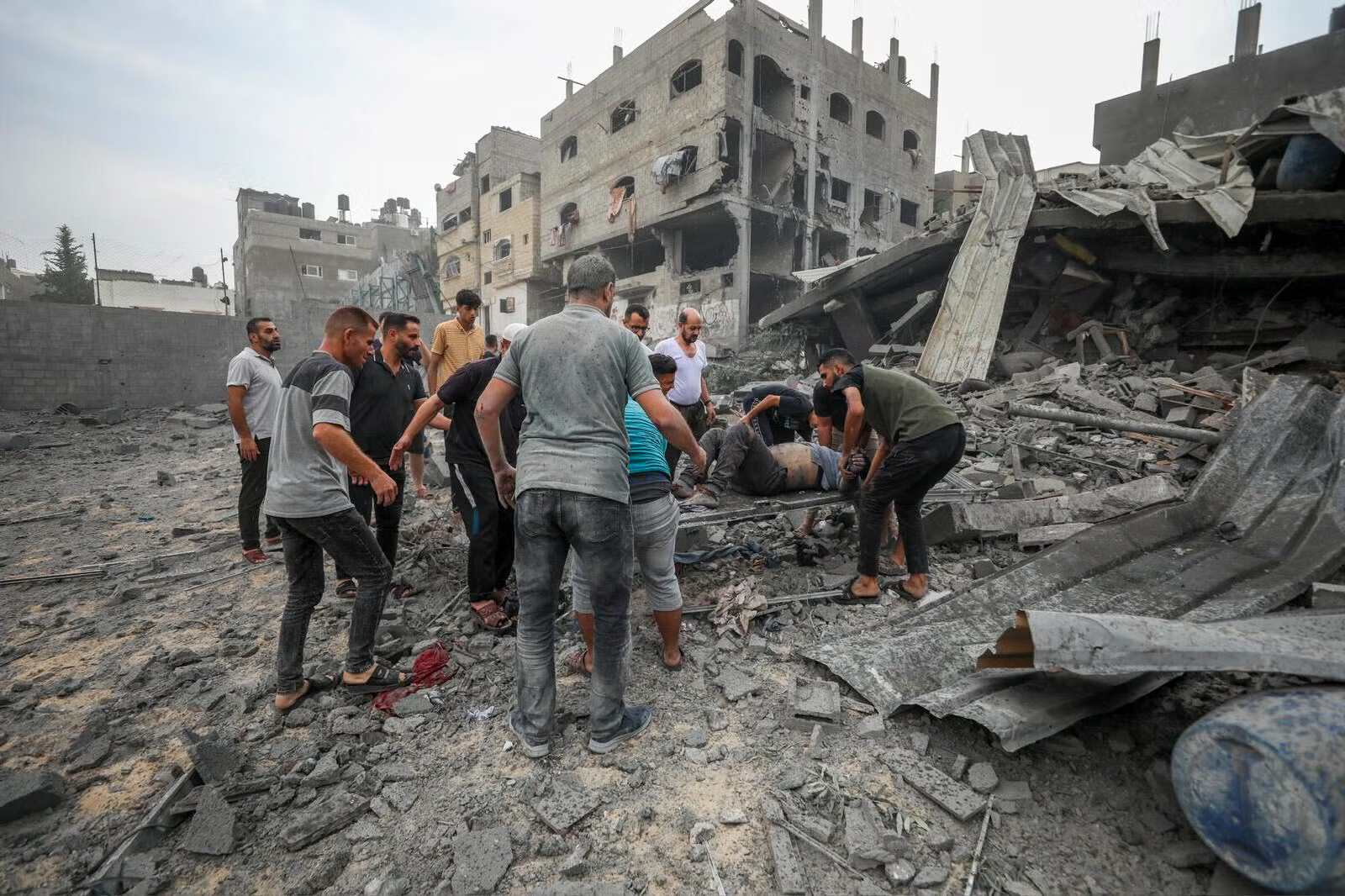
JERUSALEM — Israeli Gaza airstrikes killed at least nine Palestinians Sunday in northern and southern Gaza, including four people in a tent camp for displaced families, Palestinian Civil Defense and health officials said. The Israeli military said the Gaza airstrikes followed what it described as multiple Hamas ceasefire violations, including militants emerging from a tunnel near the Beit Hanoun area, Feb. 15, 2026.
Gaza airstrikes hit displaced tent camp and Khan Younis
Medics said the dead included at least four people killed when a strike hit a tent encampment housing displaced families in northern Gaza. In southern Gaza, health officials said another strike killed five people in the Khan Younis area, according to a Reuters report on the latest Gaza airstrikes.
The latest Gaza airstrikes struck as most of Gaza’s population remains displaced, with families living in packed camps or makeshift shelters after repeated moves during the war. In these sites, even single strikes can have outsize impact because civilians have little protection from blast, shrapnel or fire.
What Israel says triggered the Gaza airstrikes
An Israeli military official said the Gaza airstrikes began after what the official called a “blatant violation” of the ceasefire agreement a day earlier in the Beit Hanoun area. The official said militants emerged from a tunnel east of the “Yellow Line,” an agreed boundary under the truce that Israel says separates areas under Israeli and Hamas control.
Israel described Sunday’s Gaza airstrikes as “precise” and consistent with international law, and said Hamas had committed more than six ceasefire violations since the deal was reached in October. The Israeli military said it also struck a building after observing gunmen emerge from a tunnel and move beneath rubble east of the Yellow Line, saying two gunmen were killed and that additional militants were likely hit.
Ceasefire strains as Gaza airstrikes continue
The Oct. 10, 2025, ceasefire brokered by the U.S. was aimed at halting a war that began after Hamas-led attackers struck southern Israel, killing about 1,200 people and taking 251 hostages, according to Israeli officials. The truce reduced large-scale fighting, but both sides have continued to accuse the other of violations.
Nickolay Mladenov, the Board of Peace’s high representative for Gaza — a U.S.-established body tasked with overseeing the ceasefire — warned that repeated breaches risk derailing plans for postwar governance and reconstruction. “We need to make sure that what is happening now with the violations of the ceasefire stops,” he said during a panel discussion at the Munich Security Conference, according to an Associated Press report on the ceasefire oversight effort.
Israel says the next phase of the agreement requires Hamas to hand over institutional control in Gaza and eventually lay down its arms, while an international security force is expected to deploy. The Palestinian committee expected to oversee governance and reconstruction has met in Egypt but has not entered Gaza, AP reported.
Gaza’s Health Ministry said at least 600 Palestinians have been killed by Israeli fire since the ceasefire began, while Israel says four soldiers were killed by militants in Gaza during the same period. In late January, the ministry’s tally showed 509 Gazans killed since the truce took effect, The Washington Post reported. The ministry does not distinguish between civilians and combatants, though U.N. agencies and independent experts have said its overall casualty totals are generally reliable.
A U.N. humanitarian update published in late January said Israeli forces remained deployed in more than 50% of Gaza beyond the “Yellow Line,” limiting access to key farmland, infrastructure and some aid operations while airstrikes, shelling and gunfire continued to cause casualties. The update also said the unclear and shifting demarcation of the line has created movement restrictions and displacement pressures, according to OCHA’s Humanitarian Situation Update #355.
Earlier attacks on tent camps add context to the latest Gaza airstrikes
The strike that hit a displaced-persons camp Sunday recalled earlier incidents in which Gaza airstrikes and shelling struck crowded tent areas. In May 2024, an Israeli strike triggered a fire that killed 45 people in a tent camp in Rafah and drew international condemnation, Reuters reported at the time.
In December 2024, Israeli airstrikes tore through a tent camp in the Muwasi area of southern Gaza, killing at least 21 people and sparking fires, while Israel said it was targeting senior Hamas militants in the area, according to a 2024 Associated Press report.
After the ceasefire began, Gaza’s media office said Israel violated the truce dozens of times in its first weeks, including incidents near the “yellow line” that the parties said would mark areas of control, according to a Guardian report from October 2025.
What happens next
The Board of Peace overseeing the U.S.-brokered ceasefire is set to meet next week, AP reported, as mediators try to prevent new Gaza airstrikes and armed attacks from tipping the truce into wider fighting. For civilians living in tents and damaged buildings, even short bursts of violence can be lethal.


