

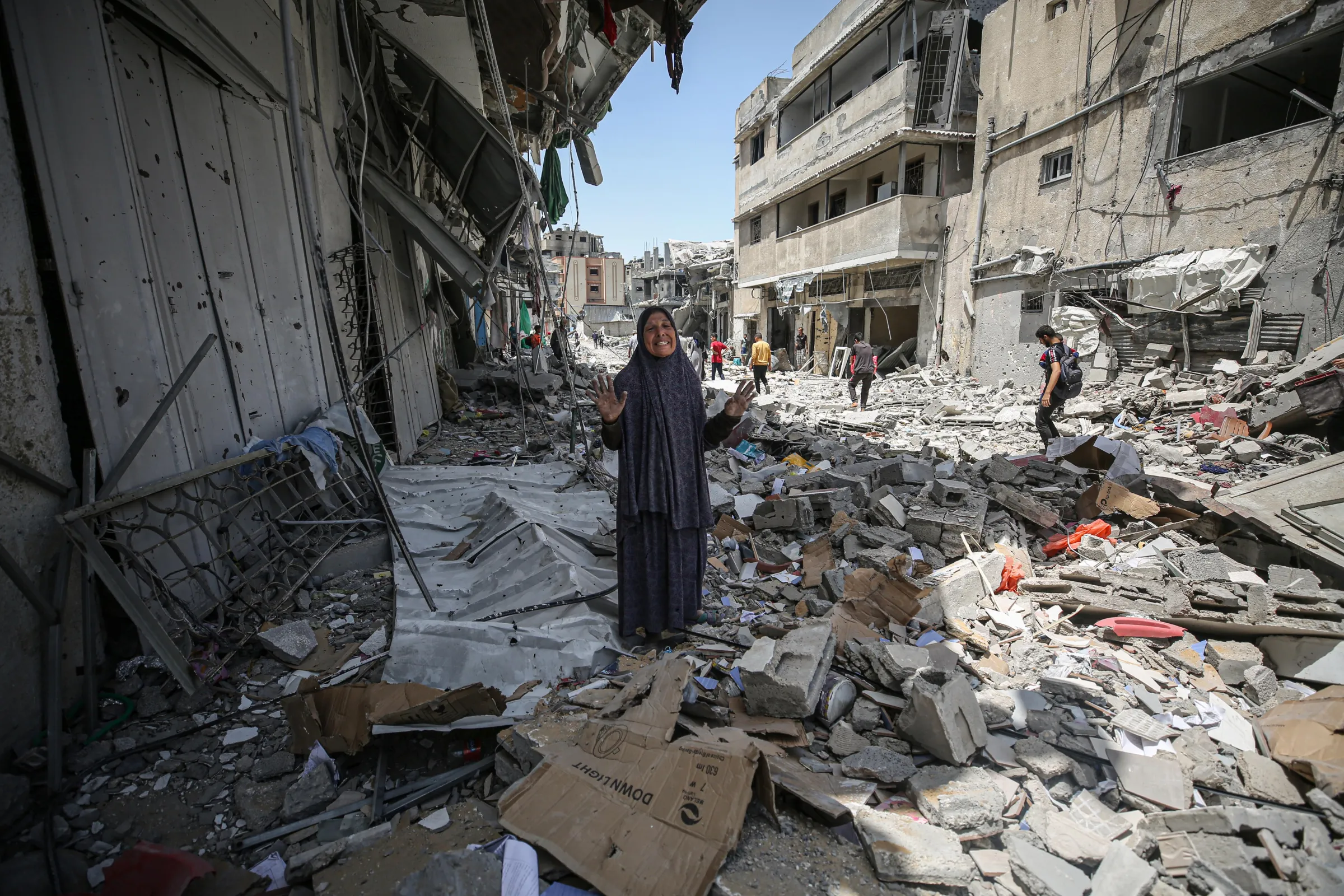
GAZA CITY, Gaza Strip — As of Dec. 10, Gaza’s Health Ministry reported 70,369 Palestinians killed since Oct. 7, 2023, but humanitarian agencies and researchers say the official tally is a grim undercount because thousands remain missing and many deaths go unrecorded as Gaza’s health and civil systems struggle to function, Dec. 16, 2025.
Even after an October ceasefire, bodies continue to be recovered from collapsed buildings and temporary burial sites, and revised lists regularly add previously uncounted deaths — a pattern that analysts say points to a toll that is still unfolding.
Gaza death toll: what the official count captures — and what it misses
The headline number most often cited internationally is compiled by the Gaza Health Ministry, which has historically served as the main clearinghouse for casualty reporting in the territory. In its regular reporting, the U.N. humanitarian office describes how deaths are added not only through immediate incident reporting but also through later identification and verification — including bodies recovered long after strikes and fighting.
In OCHA’s Humanitarian Situation Update #347, the agency noted that the cumulative fatality figure included hundreds of deaths “retroactively added” after identification details were approved, and that hundreds of bodies had been retrieved from under rubble since the ceasefire.
That detail matters for interpreting the daily tally: while the number is often treated as a near-real-time measure of wartime mortality, it is also a rolling figure that can jump when access improves, when remains are recovered, or when documentation catches up after periods of severe disruption.
Why bodies under rubble make the count lag reality
Recovering remains at scale has been one of the central constraints on accurate counting throughout the war, and it remains a major factor today. Gaza authorities have said thousands of bodies may still be trapped in destroyed structures, unreachable areas, or unmarked sites.
In a Dec. 15 dispatch, Reuters reported Gaza authorities estimate about 9,000 bodies remain buried under rubble as winter storms and a lack of heavy machinery slow recovery efforts. Those presumed deaths are not automatically reflected in the official figure until remains are recovered and documented.
The result is a gap that can persist for months or longer: families may know someone is missing and likely dead, but absent recovery and identification, the death may not enter the formal tally. In the meantime, the official number can rise steadily — not only from new violence, but from the delayed accounting of earlier losses.
Peer-reviewed research has measured how large the gap can be
Beyond the practical limits of recovery and recordkeeping, researchers have tried to estimate how many deaths are never captured by an official list at all — even when the reporting system is still producing daily totals.
An independent analysis summarized by the London School of Hygiene & Tropical Medicine said researchers used a “capture-recapture” method — comparing overlap among multiple data sources — to estimate traumatic-injury deaths from Oct. 7, 2023, through June 30, 2024. The researchers estimated 64,260 traumatic-injury deaths over that period, compared with 37,877 reported by the Gaza Health Ministry for the same window, implying substantial underreporting.
The researchers also stressed that their estimate focused on traumatic injury deaths and did not attempt to fully quantify deaths from the indirect effects of war, such as disruption to health care, food insecurity, unsafe water and sanitation, or disease outbreaks. In other words, even studies that conclude the official toll is incomplete may still understate the full human cost.
Counting deaths in Gaza has been compromised since the war’s earliest months
Data collection problems did not begin late in the war. They were reported early, alongside the widening destruction of hospitals, communications networks and transport routes.
In a Nov. 21, 2023, Associated Press report on the breakdown of casualty tracking, Gaza health officials said they had “lost the ability to count the dead” as parts of the health system collapsed and retrieving bodies became too dangerous in heavily contested areas. Officials described disrupted communications between hospitals, internet outages and failures in the electronic systems used to compile lists of the killed.
Those conditions — intermittent communications, damaged medical infrastructure, mass displacement, and the hazards of movement — are precisely the kinds of constraints that produce an undercount in conflict zones, especially when deaths occur outside formal facilities or when bodies cannot be recovered promptly.
What authoritative reporting has said about missing deaths
Independent journalism has repeatedly flagged the same structural problem: official numbers tend to reflect what can be documented, not the full scale of what has happened.
An October 2024 explainer by Australia’s ABC on how the Gaza death toll is recorded noted that thousands of people were believed to be missing and not included in official death figures, and that the World Health Organization and human rights groups argued the true toll was likely higher than what was being reported at the time. The reporting also described how displacement and disruptions to communications can leave families unsure what happened to relatives — further complicating documentation.
Taken together with more recent reporting on rubble recovery and post-ceasefire identification, the message is consistent: official numbers in Gaza are best understood as a verified minimum, not a ceiling.
How to read the numbers without distorting what they mean
For readers trying to make sense of the Gaza death toll — and the debate around it — analysts say several questions matter as much as the headline figure:
What is the “as of” date? A report may be published today but reflect a tally that lagged by days.
Are the reported deaths “new,” or newly identified? A rise can reflect bodies recovered from earlier attacks.
How many people are missing? Missing persons believed dead may not appear in the official number until remains are found.
Does the estimate include indirect deaths? Most official tallies focus on reported deaths, not mortality from disease, hunger or lack of medical care.
Is the system able to document deaths across the territory? When hospitals, communications and transport are impaired, undercounting becomes more likely.
The bottom line
The official Gaza death toll remains the most widely cited number because it is regularly updated and grounded in documented reports. But the evidence from humanitarian reporting, rubble recovery, and peer-reviewed research indicates the figure is also a grim undercount — shaped by missing bodies, delayed identification and the collapse of systems that normally record births and deaths.
That means the toll can continue rising even during periods of reduced fighting, as recovery teams and forensic officials work through debris and as previously unrecorded deaths are added to the ledger — one name, and one family, at a time.


