

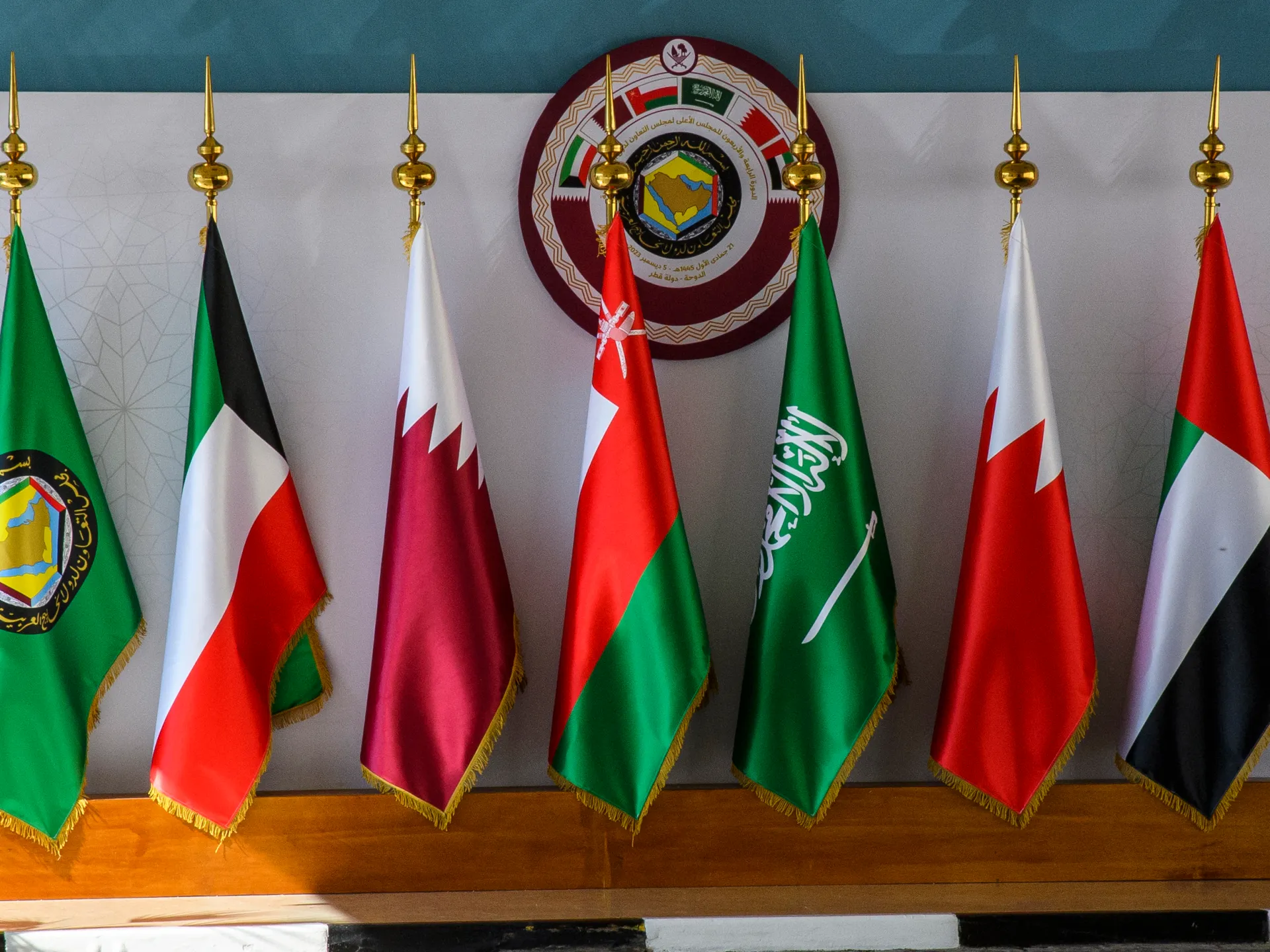
RIYADH, Saudi Arabia — The Gulf Cooperation Council has pushed joint defence to the top of its regional agenda after a series of 2025 security shocks and follow-through decisions by Gulf leaders, even as member states accelerate rail and power projects meant to bind the bloc more tightly together, April 22, 2026.
The shift matters because Gulf capitals are no longer treating security, logistics and energy as separate files. The same unity now driving stronger military coordination is also helping move long-delayed infrastructure projects, suggesting that Gulf leaders increasingly see deterrence, mobility and energy resilience as part of one strategic picture.
Why GCC joint defence now carries more urgency
The strongest sign of that change came in the extraordinary Joint Defence Council session in Doha in September 2025, when ministers moved beyond broad declarations and ordered sharper intelligence-sharing, wider air-situation transmission to operations centers and faster work on a ballistic-missile early warning task force. Those steps reflected a bloc trying to turn political solidarity into a more usable military framework.
The push continued at the 46th GCC summit final statement in Bahrain, where leaders again said the security of member states is indivisible and also approved the general agreement for the GCC Railway Project. That pairing was telling: the summit treated collective defence and cross-border connectivity as parallel requirements for a more integrated Gulf order.
Military drills have added practical weight to the rhetoric. During Gulf Shield Exercise 2026, participating forces rehearsed multidimensional air and missile threats, joint air maneuvers and integrated field operations. The lesson for Gulf planners is straightforward: a region that wants freer movement of goods, passengers and electricity also needs faster, shared response mechanisms to protect those networks.
Rail and energy plans are becoming the clearest test of Gulf unity
On the economic side, the most visible momentum is in projects that turn regional integration into physical infrastructure. The direct Oman-GCC power interconnection project is one of the clearest examples. By expanding cross-border transmission capacity and linking Oman more directly into the regional grid, the project strengthens energy security while giving the bloc more room to handle disruptions, peak demand and future power trade.
Rail ambitions are also beginning to look less abstract. In October 2025, the Omani Foreign Ministry highlighted an Oman-UAE rail tunnelling milestone for Hafeet Rail, a cross-border project designed to improve freight and passenger movement between the two countries. Even before a full GCC-wide rail spine is finished, such bilateral segments are showing how Gulf integration can advance in workable phases rather than in one grand leap.
That matters because rail and energy corridors do more than move cargo or electricity. They reshape supply chains, reduce transport friction, deepen industrial planning and make it easier for Gulf states to think as one market. But they also create shared assets that must be defended collectively, especially in a region where drones, missiles and maritime disruptions can quickly spill across borders.
This policy turn has deeper roots
The current push did not appear overnight. In late 2024, the GCC secretary-general said member states were already taking practical steps on the Gulf Railway Project, arguing that the network would eventually support major passenger and freight volumes. That earlier statement now reads less like distant aspiration and more like a marker of continuity.
The same is true in energy. A 2023 GCC statement on the electrical interconnection project with Iraq’s southern grid framed power links as strategic tools for emergency support, lower reserve costs and future electricity trade. In that sense, today’s argument for stronger GCC joint defence is not only about confronting threats. It is also about protecting the connective tissue of a Gulf economy that is becoming more integrated, more interdependent and harder to secure through national action alone.
For Gulf leaders, that appears to be the new calculation. The credibility of joint defence will increasingly be measured not only by communiques and exercises, but by whether the region can safely build, connect and operate the railways, grids and logistics corridors that are supposed to define its next phase of growth.


