

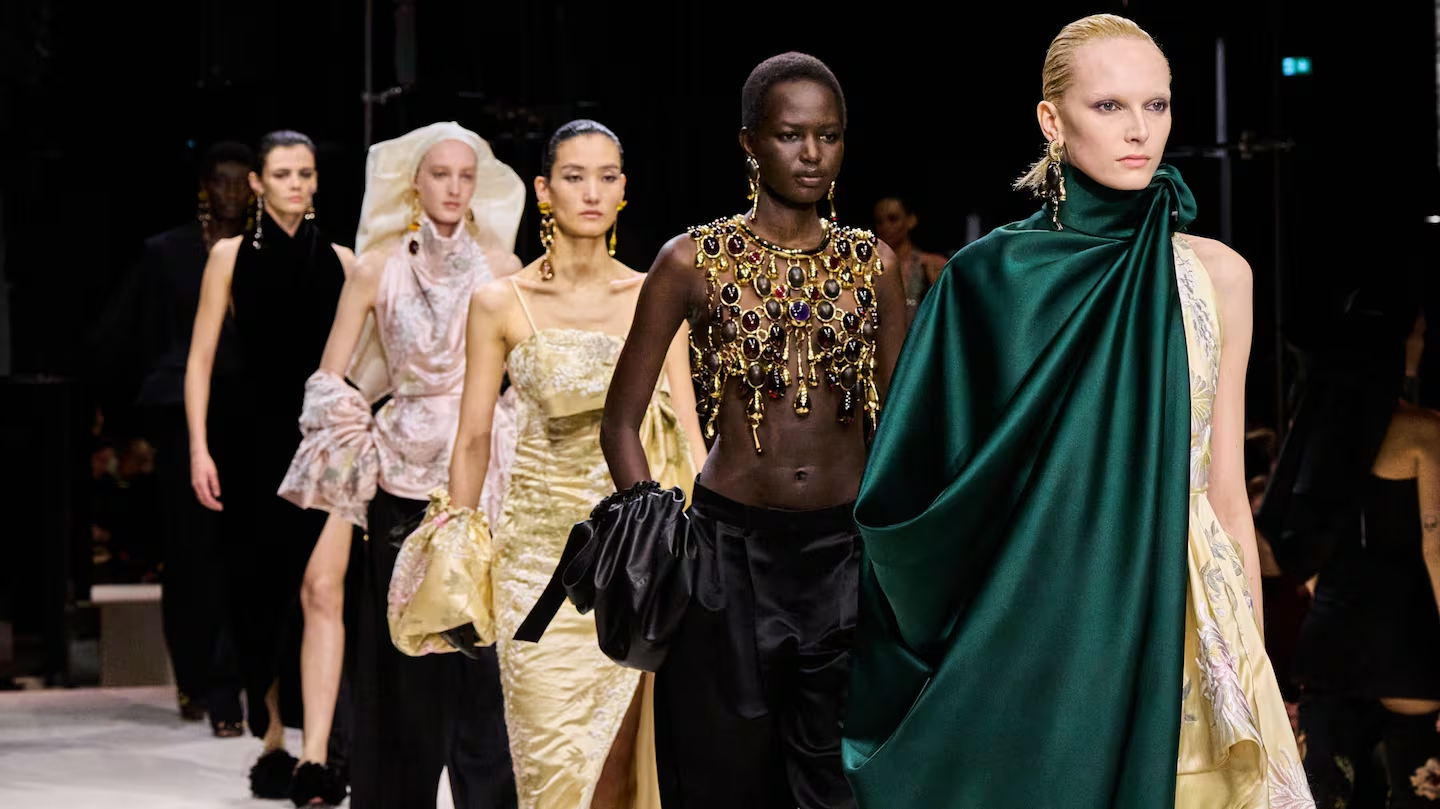
PARIS — Sarah Burton sharpened her vision for Givenchy with a fall 2026 collection that placed modern women at the center of a wardrobe built on structure, sensuality and control, March 6, 2026.
Givenchy Fall 2026 turns tailoring into a language of power
For her third runway show at the house, Burton focused on cut, silhouette and the emotional charge of clothing, a direction Givenchy described as an “intuitive portrayal of the strengths of women today” in its fall-winter 2026 womenswear show notes.
The result was a collection that felt commanding without becoming severe. Jackets curved around the body, trousers carried quiet authority, and evening pieces softened the discipline of tailoring with fringe, velvet, lace and sculptural drape.
Critics quickly framed the show as a breakthrough. Vogue Runway’s review captured the emotional response in the room, while WWD’s runway report described a wardrobe of comfort, luxury and immaculate chic.
A collection built for women, not just for the runway
Burton’s Givenchy woman is not reduced to one mood. She is polished, exposed, armored, romantic and self-possessed. That multiplicity gave the collection its force: sharp suits projected control, while dresses and coats introduced movement, intimacy and glamour.
Elle noted the collection’s balance of trend and timelessness, pointing to animal print, fringe and new styling formulas. AnOther Magazine’s review went further, calling the show Burton’s strongest work at the house so far.
The continuity behind Givenchy Fall 2026
The strength of the fall 2026 collection becomes clearer when seen as part of Burton’s larger reset. Her appointment as Givenchy creative director in 2024 marked a major new chapter after her long tenure at Alexander McQueen, where she became known for emotional precision and exacting craft, as reported by Reuters.
Her Givenchy debut in March 2025 was quieter and more foundational, with The Guardian describing it as fresh but understated. By spring 2026, Burton was already loosening the architecture of the house, with Harper’s Bazaar noting how she used structure to explore femininity rather than restrict it.
Fall 2026 felt like the payoff. The tailoring no longer seemed like a thesis statement. It looked lived in, desirable and complete.
Why Sarah Burton’s Givenchy matters now
At a time when fashion often swings between spectacle and minimalism, Burton offered something more useful: clothes with presence. The collection did not abandon fantasy, but it grounded fantasy in a real wardrobe.
That is what made the show persuasive. The coats looked protective. The suits looked exact. The dresses carried drama without losing the woman inside them. Burton’s power at Givenchy is not only her ability to cut a jacket; it is her understanding that tailoring can express vulnerability, discipline and freedom at once.
Givenchy Fall 2026 shows a house becoming clearer about its future. Under Burton, that future is not nostalgic, nor is it aggressively new for novelty’s sake. It is precise, feminine, powerful and deeply modern.


