

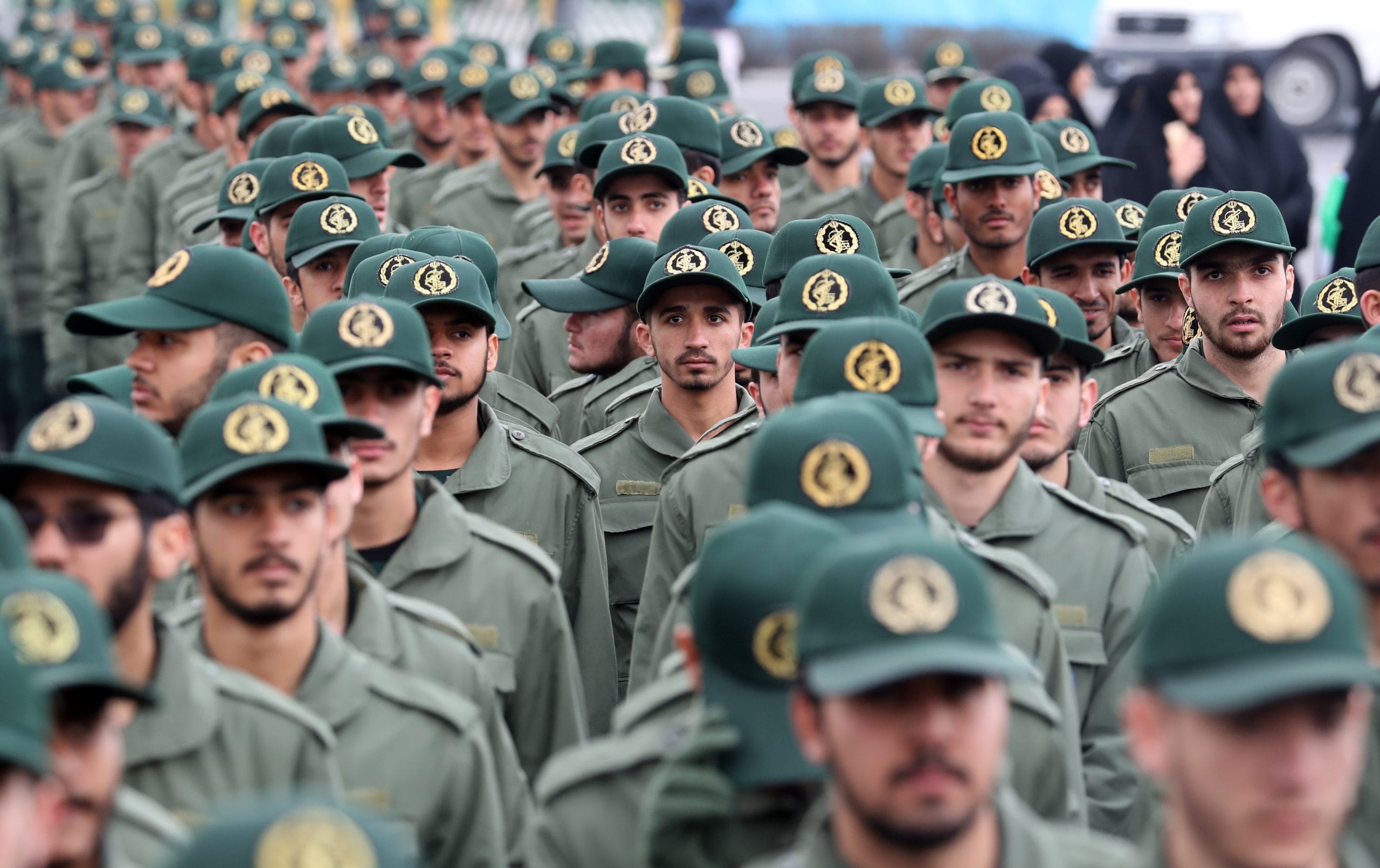
Iran’s Revolutionary Guards have tightened their hold over wartime decision-making and the succession battle after Supreme Leader Ayatollah Ali Khamenei’s death, with Reuters reporting Wednesday that the force is now involved in every major decision in Tehran as the country fights on and the leadership transition unfolds, March 5, 2026.
The shift points toward a more security-driven state because the Guards entered the crisis with a decentralized command structure, broad internal-security powers and close ties to several leading successor figures. AP reported that Iranian state media confirmed Khamenei’s death early Sunday, turning what had been a tightly managed succession question into a wartime test of continuity, deterrence and control.
Iran Revolutionary Guards move deeper into the power center
According to the Reuters account, the Islamic Revolutionary Guard Corps had already pushed authority down the chain of command before the strikes that killed senior commanders. That helped the system keep operating after the attack, but it also means mid-ranking officers now hold wider room to act, raising the risk of miscalculation abroad while making an immediate collapse at home less likely.
Inside Iran, that same structure strengthens the security apparatus. The Guards have long sat at the intersection of military force, intelligence, economic power and ideological enforcement, and their expanded wartime role makes any softer response to dissent less likely while the state remains under attack.
Iran Revolutionary Guards and the succession fight
The military-security shift is unfolding alongside a clerical transition. Reuters reported that Ayatollah Alireza Arafi has joined an interim three-member leadership council with President Masoud Pezeshkian and Chief Justice Gholam-Hossein Mohseni-Ejei, a stopgap arrangement meant to steer the state through war while the succession process moves ahead.
That process now centers on figures with very different bases of legitimacy, but one of the strongest names already has deep Guard ties. Reuters said Mojtaba Khamenei has emerged as the frontrunner and that the Assembly of Experts is close to a conclusion, reinforcing the sense that Iran’s security establishment, not just its clerical institutions, is shaping the transition. Even if a new supreme leader is named quickly, the Guards appear positioned to keep a larger voice in strategy, internal order and the tone of the new era.
How this crisis was building
The groundwork for a fast succession was visible well before this week. In June 2025, Reuters reported that planning around Khamenei’s eventual succession had shifted into higher gear, with insiders saying the establishment would move quickly if he were killed in order to project stability and continuity.
The Guards’ leverage was also expanding beyond the battlefield. In December 2024, Reuters reported that the IRGC had tightened its grip on Iran’s oil exports, giving it deeper influence over revenue, sanctions evasion and the financial channels that help sustain both the state and Tehran’s regional network.
The list of likely heirs had narrowed months earlier. After President Ebrahim Raisi’s helicopter crash in May 2024, AP noted that Mojtaba Khamenei was already viewed as one of the most likely successors, even as the idea of a father-to-son transfer carried the risk of backlash in a system that has long defined itself against monarchy.
And the domestic template for a harsher response to unrest was already in place. In September 2023, Reuters reported that Iran’s rulers had intensified their clampdown one year after the Mahsa Amini protests began, underscoring how deeply the state had already committed itself to deterrence through force.
What comes next
The immediate question is not only who replaces Khamenei, but what kind of Islamic Republic emerges from the war. A quick succession decision may preserve the appearance of order, but the balance of power now appears to be tilting further toward the security state, with clerical legitimacy and coercive power more tightly fused than before.
For now, the clearest takeaway is that the Iran Revolutionary Guards have entered this succession crisis not as a supporting institution, but as the force most likely to shape how Tehran wages war, manages dissent and defines continuity after Khamenei.


