

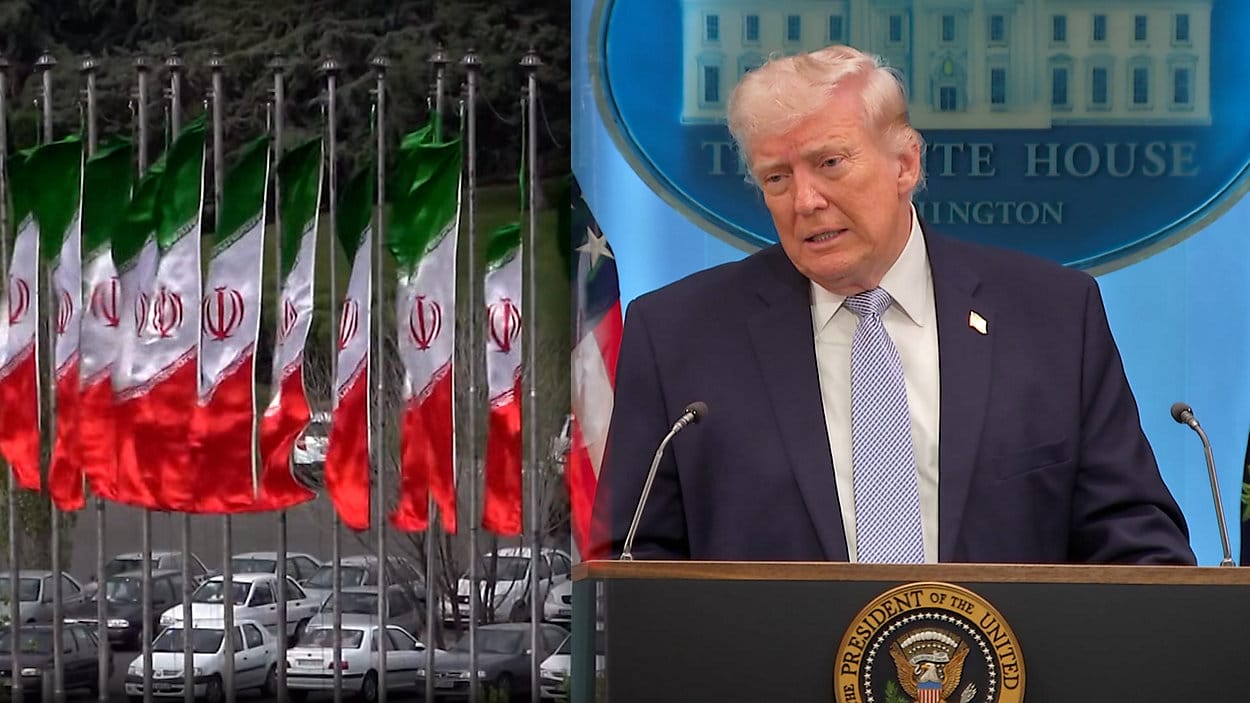
The defeat came because nearly every Republican opposed the motion while Fetterman broke with Democrats, offsetting Sen. Rand Paul of Kentucky’s GOP defection and exposing the small but politically costly group of Democrats willing to give Trump wider latitude on Iran.
Iran War Powers fight moves from protest vote to deadline
The official Senate roll call shows the motion to discharge S.J.Res. 114 failed with 46 yeas, 51 nays and three senators not voting. The measure would have directed the president to remove U.S. forces from hostilities within or against Iran unless Congress declared war or passed a specific authorization for the use of military force, according to the resolution’s text.
Sen. Tammy Baldwin of Wisconsin, who introduced the resolution, framed the vote as part of a broader effort by Democrats to force Congress back into the center of war-making decisions. In a statement, Baldwin called the war “unnecessary, illegal, and unwise,” and said Congress needed to act “before it gets even worse.”
The May 1 deadline has raised the stakes. Reuters reported that State Department Legal Adviser Reed Rubinstein defended the campaign as self-defense and collective defense of Israel days before the administration faces a War Powers Act deadline to obtain congressional approval or move to end the war. The same Reuters report said the law requires the president to end an ongoing conflict after 60 days without authorization, though a 30-day extension can be certified in writing under certain military-necessity conditions.
Democratic hawks gain outsized leverage
Fetterman’s vote did not by itself determine the Senate outcome, but it made the party’s anti-war message harder to sell as unified. The sharper test came in the House, where Rep. Jared Golden of Maine was the only Democrat to vote against a similar Iran war powers resolution April 16.
The House roll call shows that measure failed 213-214, with one Republican voting yes, one Republican voting present and Golden voting no. Had Golden voted yes, the resolution would have passed the House by one vote.
That is why the “Democratic hawks” problem is bigger than one Senate vote. Democrats are trying to argue that Trump has pushed the United States into a war Congress never authorized. But every Democratic defection lets Republicans portray the fight as less about constitutional authority and more about partisan opposition to Trump.
Old Iran fights show this was years in the making
The current showdown is not the first Iran war powers fight to split Congress under Trump. After the January 2020 drone strike that killed Iranian commander Qassem Soleimani, the House passed a resolution aimed at stopping Trump from further military action against Iran, Reuters reported at the time.
That effort later reached Trump’s desk, where he vetoed legislation passed by both chambers to limit a president’s ability to wage war against Iran. Reuters reported in May 2020 that Trump called the measure “very insulting” and accused Democrats of using it to divide Republicans during an election year.
The issue resurfaced before the current war began. In June 2025, as Israel and Iran traded strikes and Trump weighed deeper U.S. involvement, ABC News reported that lawmakers were introducing measures to prevent the United States from joining Israel’s military campaign without congressional authorization.
Those earlier fights gave Democrats the language they are using now: Congress declares war, the president must not act alone, and any military campaign against Iran needs a public vote. What has changed is the timing. The May 1 deadline turns a familiar constitutional argument into an immediate test of whether Congress can force action before the clock runs out.
What happens before May 1
Trump still has several paths. He could ask Congress for an authorization for use of military force, certify a limited extension for withdrawal-related military necessity or argue that current operations fall outside the War Powers Resolution’s limits. Each choice carries political risk, especially with Republicans defending the war while some in the party signal discomfort with an open-ended campaign.
Democrats have promised more votes, but the latest Senate defeat shows the math has not yet moved. Paul remains the rare Republican willing to cross the aisle on Iran war powers. Fetterman and Golden, meanwhile, have become the Democratic names most likely to be cited by Republicans as proof that the party is not fully aligned against Trump’s war policy.
That leaves Congress where it has been for weeks: debating constitutional authority after the shooting has started, with the Iran war powers fight now racing toward a deadline that could define whether May 1 becomes a legal turning point or just another missed chance for congressional control over war.


