

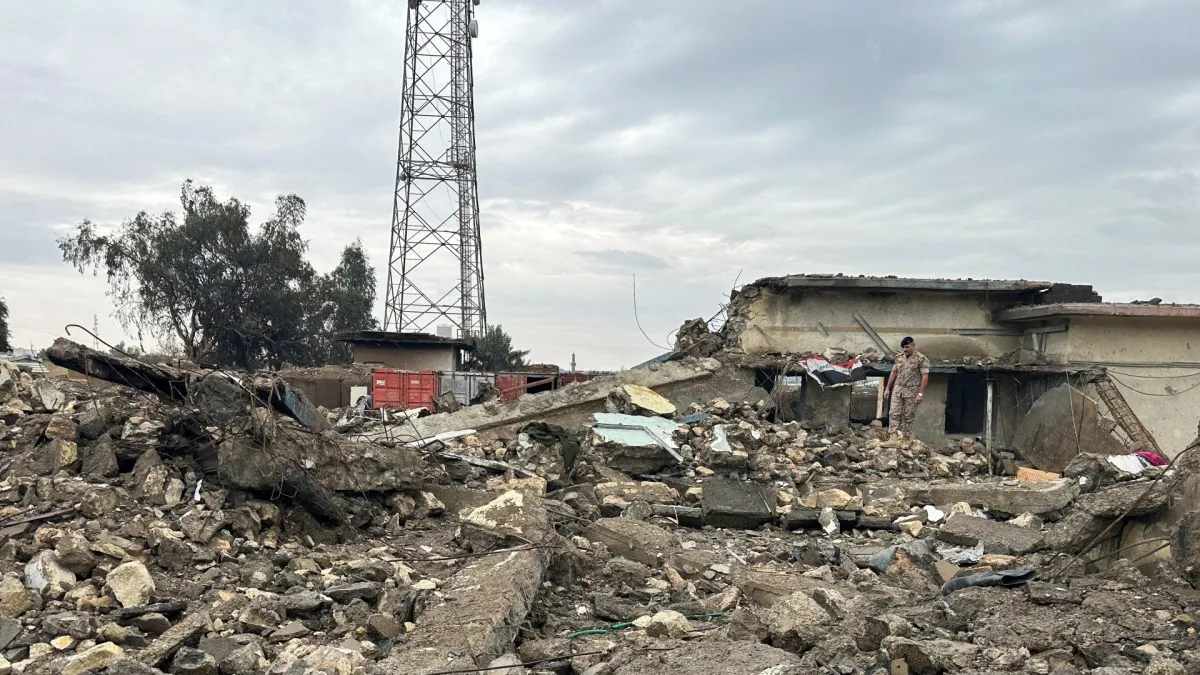
BAGHDAD, Iraq — Airstrikes in northern Iraq killed three fighters from Iraq’s Popular Mobilization Forces, or PMF, near Kirkuk and two police officers in Mosul on Saturday, according to Iraqi security sources and regional media reports. The attacks, blamed by Iraqi officials and PMF-linked statements on the United States and Israel, underscored how the widening war around Iran is pulling Iraq deeper into the conflict, March 28.
Al Jazeera reported that the deadliest strike hit a PMF headquarters near Kirkuk International Airport, while a separate strike in Mosul killed two police officers. A later account from The National said the Mosul strike also wounded several police officers and described it as the first reported strike in the current escalation to directly hit police personnel.
Iraq airstrikes add to a widening pattern of attacks
Saturday’s casualties fit a broader pattern. Earlier this week, Reuters reported that airstrikes on PMF positions in Anbar killed at least 15 fighters, including a senior commander, and also hit a residence used by PMF leader Falih al-Fayadh in Mosul. That same report said Iraq’s National Security Council had authorized the PMF to exercise what it called the right of self-defense, a sign that Baghdad already saw the confrontation as moving beyond isolated incidents.
The violence spread again on Wednesday, when Reuters also reported that another strike in western Anbar killed seven Iraqi soldiers and wounded 13 near a military clinic and an engineering unit. That episode underscored how easily attacks on militia infrastructure can overlap with sites tied to Iraq’s formal security apparatus.
Washington has separately acknowledged hitting Iran-aligned armed groups in Iraq. On March 19, Reuters reported that Gen. Dan Caine, chairman of the Joint Chiefs of Staff, said U.S. AH-64 helicopters had been striking Iran-aligned militia groups in Iraq to suppress threats to U.S. forces and interests. He did not address Saturday’s attacks specifically, but the admission has made Baghdad’s effort to distinguish confirmed U.S. operations from disputed strikes far more difficult.
For Prime Minister Mohammed Shia al-Sudani, that is the core political problem. Iraq still needs a workable relationship with Washington, but the PMF is formally embedded in the country’s security structure and carries major weight inside the ruling coalition. Every new strike, especially in cities as sensitive as Kirkuk and Mosul, lands as both a battlefield event and a test of Iraqi sovereignty.
Why the latest strikes matter beyond Kirkuk and Mosul
The historical backdrop makes that balancing act even harder. During the fight against ISIS, Reuters reported in 2016 that Shiite militias launched an offensive west of Mosul to cut off Islamic State retreat routes, cementing their role in northern Iraq’s security map. More recently, Reuters reported in April 2025 that several powerful Iran-backed militias in Iraq were prepared to consider disarmament to avoid a direct clash with Washington.
That shift from battlefield expansion to talk of disarmament, and now back to repeated airstrikes, helps explain why the deaths in Kirkuk and Mosul resonate far beyond one night of violence. They suggest Iraq’s shrinking buffer between U.S. power, Iran-backed armed factions and the state’s own police and military institutions may be eroding faster than Baghdad can manage.
If that buffer collapses further, future strikes may no longer be framed as attacks on one faction or one site. They will be read instead as attacks on Iraq’s already fragile security balance, with Baghdad left trying to contain a war that is increasingly ignoring its borders.


