

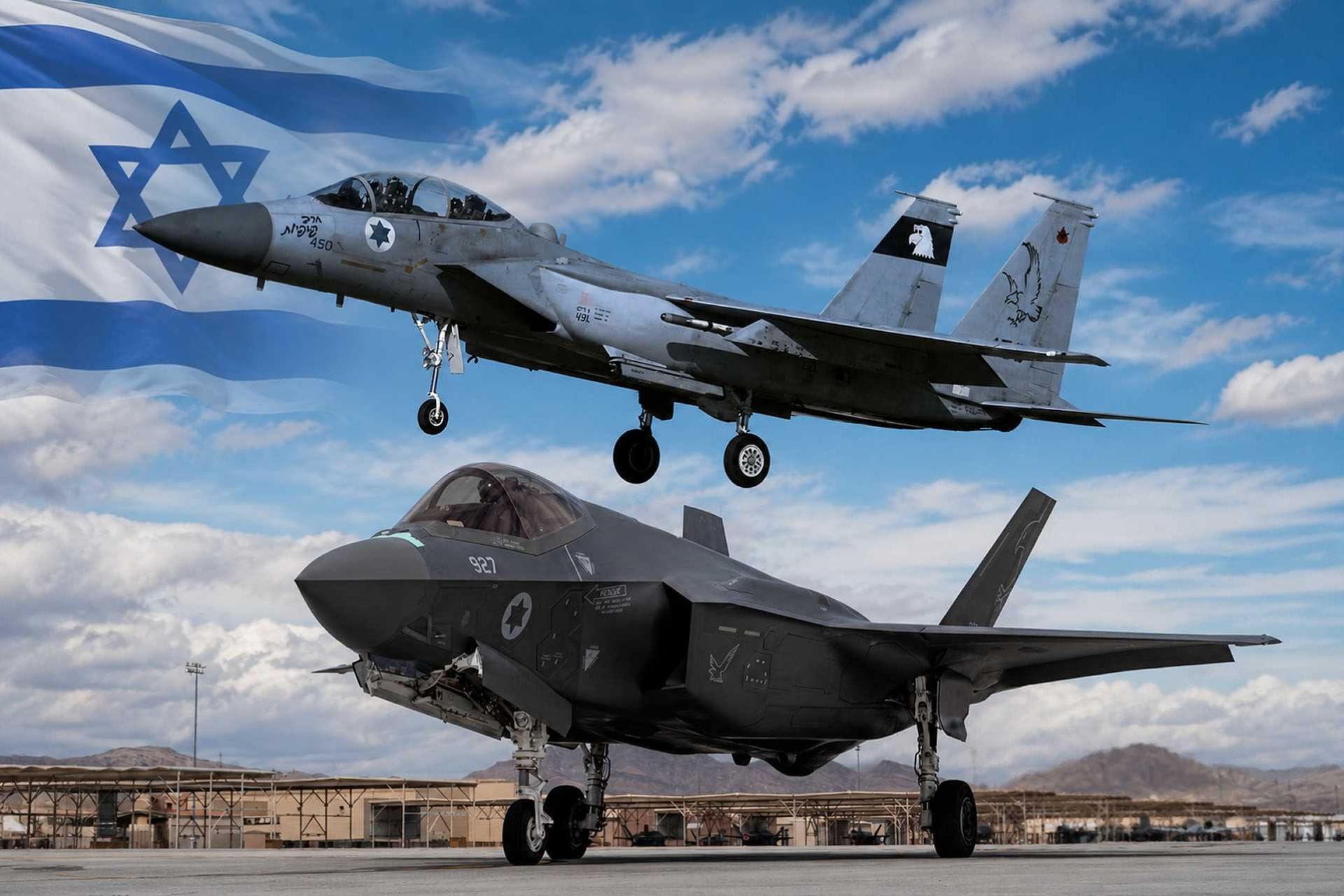
JERUSALEM — Israel approved the purchase of two new combat squadrons, one of F-35I aircraft and one of F-15IA aircraft, from the United States as part of a long-term force buildup, officials said May 3, 2026. The plan is aimed at preserving Israel’s air superiority after recent regional wars underscored the military value of long-range strike, stealth and heavy-payload aircraft.
The Ministerial Committee on Procurement approved the aircraft plan, according to an Israel Ministry of Defense announcement. The ministry said the new squadrons will be integrated into the Israeli Air Force with sustainment, spare parts and logistics support.
Israel fighter jets expansion adds depth to the air force
The acquisition would give Israel a fourth F-35I squadron and a second F-15IA squadron, pairing stealth aircraft used for penetrating defended airspace with a larger fighter designed for range, payload and air-to-air capacity. Reuters reported the deal is worth tens of billions of dollars and forms the first step in a 350 billion-shekel, or about $119 billion, military buildup plan.
Defense Ministry Director General Amir Baram said Israel must look beyond immediate wartime needs and secure the Israel Defense Forces’ edge “ten years from now and beyond.” Defense Minister Israel Katz said lessons from the recent conflict with Iran showed the need to continue building airpower for decades.
The F-35I, Israel’s customized version of the Lockheed Martin F-35, has become central to Israeli operations because of its stealth, sensors and networking. The F-15IA, Boeing’s Israeli variant of the F-15EX, is expected to strengthen missions requiring longer range and heavier weapons loads.
New buy follows earlier F-35 and F-15IA milestones
The latest move is not a stand-alone purchase. It extends a procurement arc that began when Israel and the United States signed a $2.75 billion F-35 deal in 2010, setting the foundation for Israel to become the first foreign operator of the aircraft.
That first phase became operational reality in 2016, when the first F-35 jets arrived at Nevatim Air Base. In 2018, Israeli officials said the country had become the first to use the F-35 in combat, according to an earlier Reuters report.
The F-35 fleet grew again in 2023 and 2024, when Israel moved to add a third squadron. The Defense Ministry said the third F-35 squadron agreement included 25 aircraft and would bring Israel’s total planned F-35 fleet to 75 before the newly approved fourth squadron.
F-15IA approval builds on U.S. arms clearance
The F-15IA track also has been moving for years. In August 2024, the U.S. approved a possible Foreign Military Sale for up to 50 F-15IA aircraft and upgrades for 25 existing F-15I jets, with an estimated value of $18.82 billion, according to the Defense Security Cooperation Agency notice.
That proposal said deliveries were estimated to begin in 2029 and described the sale as a way to improve interoperability with U.S. systems while strengthening Israel’s homeland defense and deterrence. The newly approved second F-15IA squadron would expand that plan from an initial batch into a larger future fleet.
Boeing also received a ceiling contract for the F-15 Israel Program in December 2025. The contract covers design, integration, test, production and delivery of 25 new F-15IA aircraft, with an option for 25 more, according to a U.S. contract announcement.
Strategic message behind the purchase
Israel’s leadership framed the aircraft decision as both a military and industrial-policy move. Prime Minister Benjamin Netanyahu said Israel would invest in aircraft, munitions and domestic production capacity so it is less dependent on foreign supply lines during prolonged conflict.
The purchase also signals that Israel is not choosing between stealth and payload. The F-35I gives the air force a platform optimized for advanced sensors and survivability, while the F-15IA is expected to add mass, range and weapons-carrying capacity. Together, the two aircraft types point to a force designed for simultaneous missions across Gaza, Lebanon, Syria, Yemen, Iran and other regional theaters.
The next step is finalizing agreements with U.S. government and military counterparts. Once completed, the acquisition would mark one of Israel’s most significant fighter expansions in years and further lock in the U.S.-Israel airpower relationship for the next decade.


