
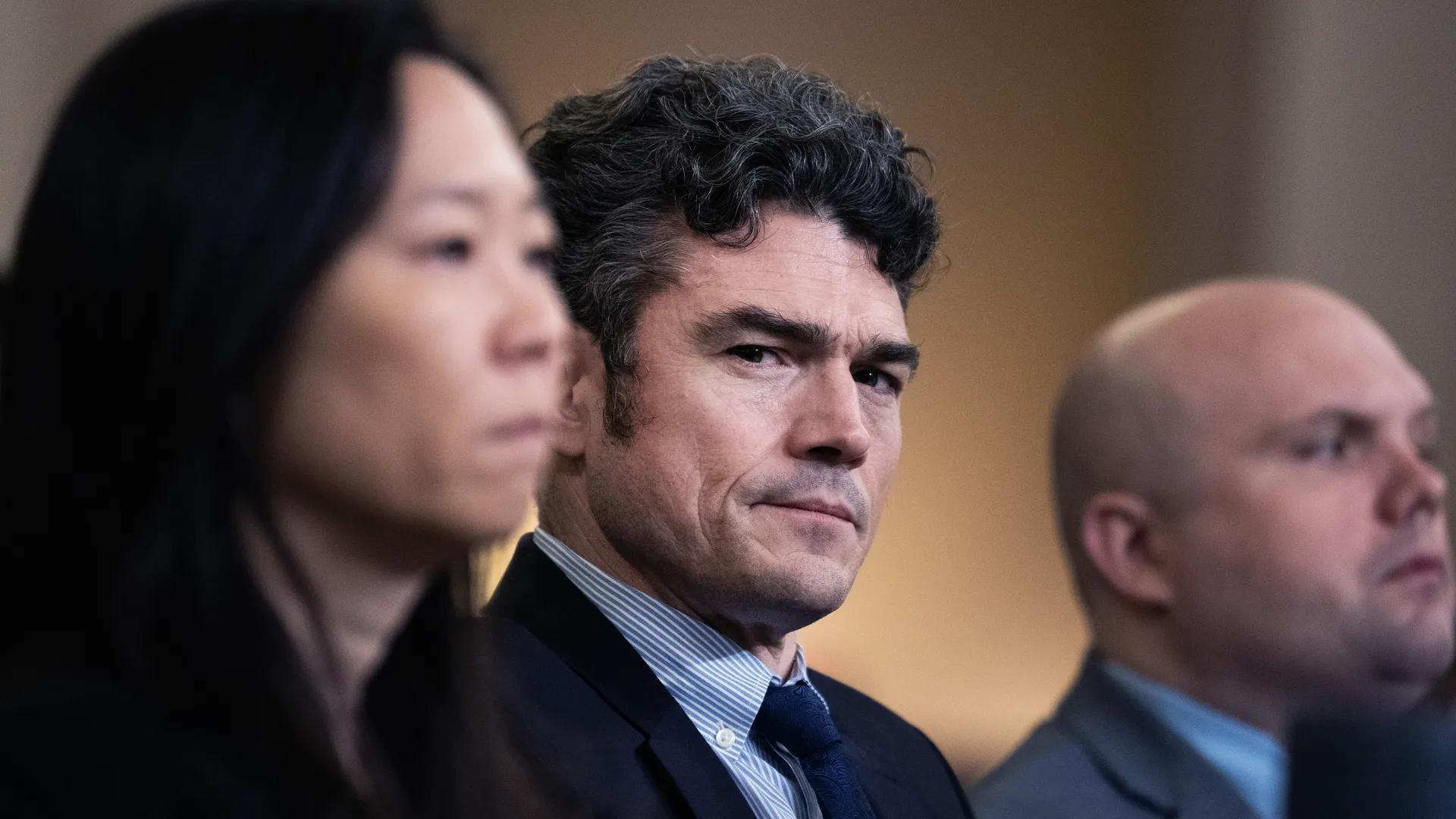
WASHINGTON — Joe Kent resigned as director of the National Counterterrorism Center this week in protest of President Donald Trump’s war with Iran, becoming the first senior administration official to break publicly with the White House over the conflict, March 19, 2026. His departure does not by itself prove Trump took the country to war on false pretenses, but it sharpens a set of unanswered questions about what threat was deemed imminent, who had access to the intelligence, and why the administration’s public explanation keeps shifting.
The White House has argued that Operation Epic Fury was launched to eliminate an imminent nuclear threat while also destroying Iran’s missile arsenal, degrading its proxy networks and crippling its naval forces. But in reporting on Kent’s exit, Reuters said Kent flatly rejected that premise, writing that Iran posed “no imminent threat” to the United States and that he could not support the war in good conscience.
Why the Joe Kent resignation matters beyond one personnel dispute
Kent is not an apolitical witness dropped into this fight from outside the system. He was a controversial Trump loyalist long before this break. That is precisely why the Joe Kent resignation matters. When a political appointee with strong “America First” instincts says the administration’s central case for war was not persuasive, the public is entitled to more than a repeat of official talking points.
The problem is not only what Kent said. It is also how the White House and the intelligence leadership have answered him. In an interview reported by The Associated Press, Kent said he and other officials with doubts about the airstrikes were not allowed to present those concerns to Trump and that there was no robust internal debate. Yet White House press secretary Karoline Leavitt told Reuters that Kent was not involved in discussions on the Iran operation at all.
Kent’s broader claims about Israeli influence have drawn criticism as antisemitic, and that criticism should not be brushed aside. But even setting those claims aside, the narrower issue remains: the White House has not made the imminent-threat case more concrete as scrutiny has grown.
Those competing explanations cannot both be reassuring. If Kent was shut out, that suggests the debate was narrower than the public was told. If he was outside the room entirely, that raises a different question: Why was the government’s top counterterrorism official sidelined in a decision sold to the country as a response to an imminent threat?
The public case for war has only grown harder to follow
The administration’s own messaging has widened the gap. In Senate testimony reported by the AP, Director of National Intelligence Tulsi Gabbard declined to say whether the intelligence community itself had assessed Iran as an imminent threat, saying that judgment belonged to the president. CIA Director John Ratcliffe, by contrast, said intelligence supported the opposite of Kent’s claim.
That leaves the public with a familiar wartime haze: a White House insisting the threat was urgent, intelligence leaders speaking in narrower or less direct terms, and a former top counterterrorism official saying the evidence never rose to that level. None of that proves Kent is right. It does, however, make it harder to dismiss the dispute as nothing more than personal drama or ideological betrayal.
It also matters that the stated objective appears elastic. The opening justification rested on stopping an imminent threat. But even the administration’s first official presentation of the campaign described a broader mission that reached well beyond preemption. That mix of narrow legal language and wide strategic ambition is exactly why questions about this war have not gone away.
Older warnings now look less like noise
The continuity here is hard to miss. When Trump ordered U.S. strikes on Iranian sites in June 2025, AP reported that Congress immediately split over whether he had the authority to act without first seeking lawmakers’ approval. A day later, Reuters reported that Trump was already publicly raising the prospect of regime change, a far broader goal than stopping a single imminent attack.
Kent’s own rise also came with warning signs. During his July 2025 confirmation, AP noted that Republicans confirmed him despite questions about his ties to right-wing extremists and conspiracy theories tied to Jan. 6. That history makes Kent an imperfect messenger for any anti-war argument. But it also underscores how much this story is about trust inside the national security system: Kent was elevated because he looked aligned with Trump, and even he is now publicly challenging the administration’s rationale.
What the Joe Kent resignation leaves behind
The Joe Kent resignation matters not because Kent is above criticism. He is not. It matters because the administration still has not closed the gap between its sweeping public claims and the narrower, more contested record now visible in public. If Iran posed an imminent threat, the White House should be able to explain more clearly what that threat was, who evaluated it, and why senior officials either were excluded from the debate or emerged from it unconvinced.
Until that happens, Kent’s departure will linger as more than a one-day personnel story. It will stand as a reminder that the hardest questions about this war are not only about Iran. They are about process, proof and whether the United States once again moved from a disputed threat assessment to open-ended conflict before the public got a straight answer.