

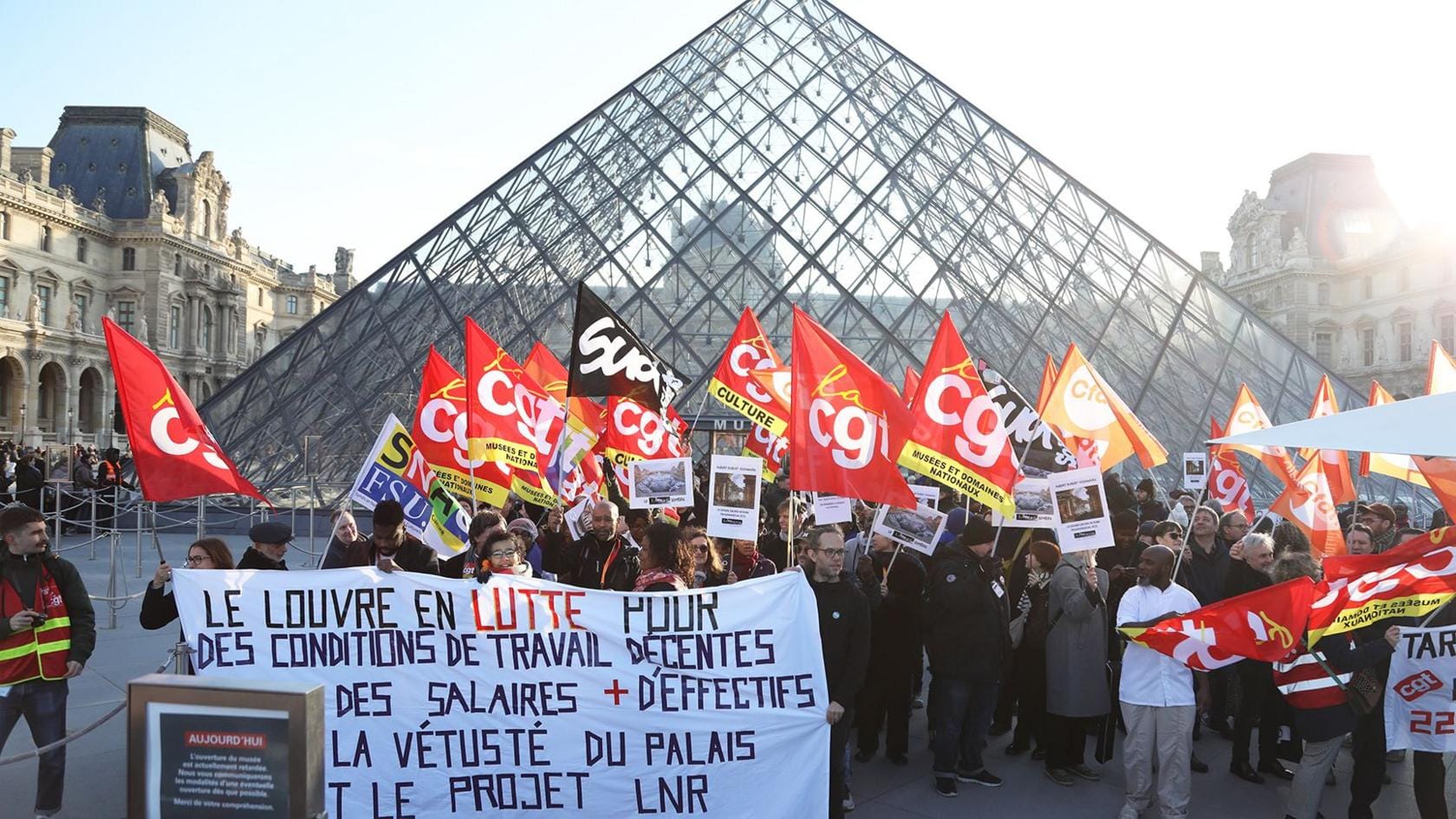
PARIS — The Louvre remained shuttered Wednesday as employees weighed extending a strike over pay, staffing and the condition of the museum’s buildings, leaving would-be visitors outside the glass pyramid. Unions say the institution cannot keep operating normally after a brazen €88 million crown-jewel heist in October and a late-November water leak that damaged hundreds of research volumes, Dec. 17, 2025.
The strike began Monday and stretched into Wednesday morning, with union leaders arguing that chronic understaffing has collided with aging infrastructure to create a safety and security risk for workers, visitors and collections. The museum is typically closed on Tuesdays, but staff remained in discussions Wednesday about whether to prolong the walkout, according to Reuters reporting on the closure.
Louvre strike: what unions say must change
Three unions representing Louvre employees — CGT, Sud and CFDT — have framed the action as an emergency response to what they describe as deteriorating working conditions and a widening gap between the museum’s global profile and its day-to-day capacity to operate. Workers have called for additional hiring, higher pay and a shift in spending toward core functions such as gallery supervision, visitor flow and basic maintenance.
Union anger has also focused on proposed revenue moves, including a planned ticket-price increase for many non-European visitors. In interviews and on the picket line, union representatives have argued that raising prices without fixing underlying problems risks punishing the public for issues that staff say have been allowed to build for years. The dispute has fueled fears of more closures during a peak travel period, as described in The Guardian’s coverage of the walkout.
Security failures after the heist, plus a leak that damaged research materials
The immediate backdrop to the labor dispute is a fast-moving chain of crises that has kept pressure on Louvre leadership and the Culture Ministry. In October, thieves stole crown jewels in a daylight raid that embarrassed one of France’s most famous institutions and intensified questions about surveillance coverage, response protocols and staffing levels.
Then, on Nov. 26, a water leak damaged research materials linked to the Egyptian antiquities department, with reports putting the number of affected volumes in the hundreds. The incident became a new rallying point for unions arguing that maintenance delays are no longer an inconvenience but a threat to collections and staff safety. The leak and its fallout were detailed by Hyperallergic in a report on the damaged books.
What investigators say went wrong in the robbery
Separately, an official inquiry into the October theft has documented a narrow window in which small delays compounded into a successful getaway — a finding that has added fuel to claims that long-running vulnerabilities were underestimated. A Culture Ministry inquiry cited a roughly 30-second lag tied to factors including camera delays and a window that offered limited resistance, according to a Reuters account of the investigation.
That context matters to striking workers because the Louvre’s front-line employees — particularly gallery attendants, visitor-services staff and security personnel — are among the first to confront the practical consequences of overcrowded corridors, insufficient coverage and conflicting instructions when something goes wrong.
Government response and what could happen next
Culture Ministry officials held crisis talks with unions earlier this week and proposed steps that included undoing a planned 2026 funding reduction, opening recruitment for additional guards and visitor-services employees, and increasing compensation. Union officials said those measures did not go far enough, and a union-backed general assembly was expected to determine whether the strike continues.
The vote comes as Louvre President Laurence des Cars is scheduled to appear before the Senate’s culture committee amid continued scrutiny over security and management decisions, according to an Associated Press report on the planned strike vote. The museum’s reopening, officials have indicated, hinges on that decision and on whether negotiators can narrow gaps on staffing and the pace of repairs.
What visitors should know right now
Expect rolling disruption: Even if the museum reopens, unions have warned that partial closures or delayed openings could continue depending on staffing and talks.
Watch for updates before traveling: Visitors with timed tickets should monitor official announcements and email notices, especially if traveling from outside France.
Plan backups: Travelers may want to hold secondary options (Musee d’Orsay, Centre Pompidou, Musée de l’Orangerie) if the walkout extends.
For the tourism economy around the museum — from nearby retailers to tour operators — each closed day can ripple quickly. For workers, the message has been that operations cannot return to normal without visible commitments on staffing levels and a faster schedule for basic repairs.
A longer pattern: prior Louvre shutdowns tied to safety and labor unrest
While the current closure is being driven by a collision of security scrutiny, infrastructure concerns and labor demands, the Louvre has periodically faced disruptions tied to safety and labor issues.
In 2013, employees walked out and forced the museum to close as staff protested pickpocketing and what they described as increasingly aggressive theft inside the galleries, as documented in a Guardian report on the pickpocket-related shutdown. In 2020, amid nationwide unrest over pension changes, striking staff blocked the entrance and turned visitors away, an earlier episode captured in a Reuters report on the Louvre pension-strike lockout. And in 2023, protesters opposing France’s pension reform blocked access at the pyramid, prompting temporary closure, according to another Reuters account of the pension protest.
Those past incidents underscore why unions are arguing that the current Louvre strike is not a one-off dispute, but an escalation of long-running stress points — from visitor-volume pressure to security risks and building maintenance — now intensified by a high-value theft and visible damage from a leak.
For now, the question is whether Wednesday’s vote produces a path back to normal operations — or another round of closures at the world’s most-visited museum as unions press for what they call urgent, measurable fixes.


