
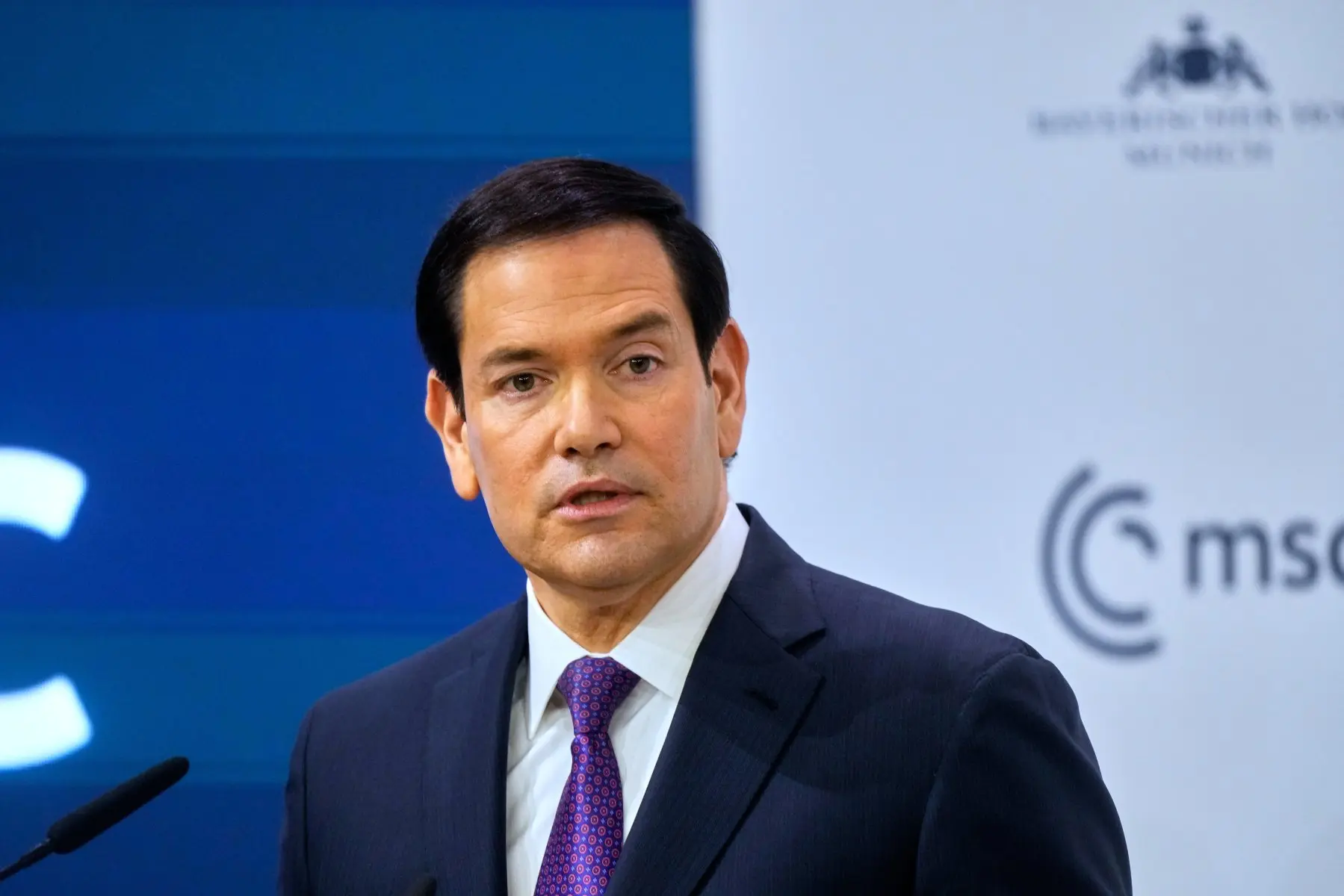
During his recent address at the Marco Rubio Munich speech, Senator Marco Rubio sought to reassure European leaders about the continued commitment of the United States to the security of the continent. His words were clear: Europe could count on the U.S. as a steadfast ally, despite the political turbulence that has defined the current administration’s foreign policy. Rubio’s speech echoed his long-standing support for NATO and European unity in the face of external threats. However, despite these reassurances, there was one notable silence: Russia.
Rubio’s Munich speech, while reaffirming transatlantic ties, omitted a direct reference to Russia’s growing military influence and its aggressive posturing in Eastern Europe. This was a missed opportunity to directly address the elephant in the room — Russia’s continued belligerence, particularly in Ukraine. Although Rubio has previously condemned Russia’s actions, his speech avoided a detailed critique of the Kremlin’s role in destabilizing the region. This has left some questioning whether the U.S. is truly prepared to take on Russia’s challenge in the same way it confronts other global threats.
Implications for NATO and European Security
In his speech, Rubio emphasized the importance of NATO in safeguarding European peace and stability. Yet, the absence of any mention of Russia’s role in challenging the alliance’s integrity led to a feeling of unease. NATO has been under increasing pressure to modernize and adapt to new threats, particularly in the wake of Russia’s military build-up near its borders. While Rubio’s words were supportive, there was little substance offered on how the U.S. would work with NATO to address these evolving threats. The alliance’s future viability is inextricably linked to how effectively NATO can respond to external provocations, particularly from Russia.
History of Marco Rubio’s Stance on NATO
Rubio’s long-standing commitment to NATO aligns with his broader vision of American leadership in global security matters. His speech at the Munich Security Conference was not the first time he has championed the cause of European defense. In past speeches, Rubio has highlighted NATO’s pivotal role in countering Russian aggression. In previous statements, he argued that NATO must be prepared to counter Russia’s covert actions in Eastern Europe and the Baltics. His consistent focus on the alliance’s importance remains central to his foreign policy platform.
Challenges for NATO’s Future
The challenge for NATO in the coming years is to ensure that it remains united in purpose and capable of deterring threats. While Rubio’s speech in Munich was a welcome reminder of the U.S.’s commitment to European security, it glossed over the real challenge of managing Russia’s growing influence. NATO must not only focus on traditional military threats but also address the hybrid warfare tactics used by Russia, including cyber-attacks and disinformation campaigns. As tensions rise in Ukraine and elsewhere, the alliance must be prepared to act decisively.
While some European leaders may have been reassured by Rubio’s words, the lack of a concrete strategy regarding NATO’s response to Russian aggression casts doubt on whether the alliance can effectively meet its future challenges. As Russia continues to play a destabilizing role in Europe, the question remains: can NATO remain a credible deterrent without addressing the looming Russian threat more directly?
External Context: The Growing Challenge of Russia
In addition to Marco Rubio’s Munich speech, the broader international community has also raised concerns about Russia’s actions in Europe. According to BBC News, the Russian military presence near Ukraine’s border has led to increased tensions between NATO and Russia. The alliance has been preparing for a potential escalation, yet many European leaders are still uncertain about the U.S. position under the current administration.
Furthermore, experts argue that NATO‘s ability to deter Russian aggression depends heavily on the U.S. commitment to European security. In a CNBC report, NATO officials discussed their strategy to counter Russian influence in the region, emphasizing the importance of continued American support in strengthening Europe’s defense capabilities.
Looking Ahead: NATO’s Role in European Security
The future of NATO’s role in European security is uncertain, particularly as Russia continues its campaign to undermine Western democracies. Marco Rubio’s Munich speech, while promising continued U.S. support, left significant questions unanswered. Europe needs more than just rhetoric; it needs a clear, actionable strategy to ensure that NATO remains strong, unified, and capable of responding to the growing Russian threat.
In conclusion, Marco Rubio’s Munich speech reaffirmed the U.S.’s commitment to NATO but also highlighted the gaps in addressing the full scope of challenges posed by Russia. For NATO to remain a credible defense alliance, it will need to go beyond political assurances and develop concrete strategies to confront Russia’s ongoing military provocations and hybrid warfare tactics.