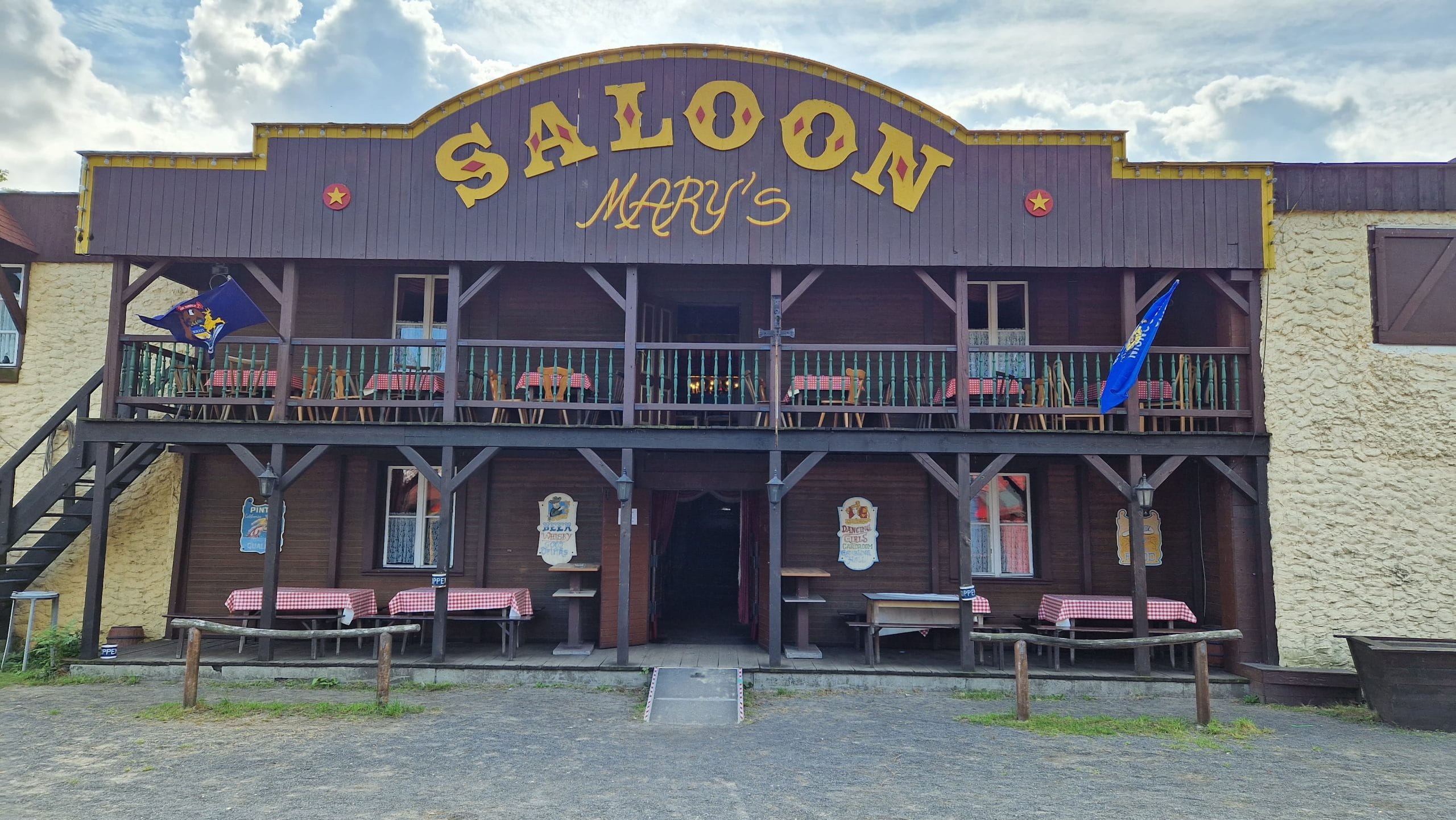
BERLIN — The much-loved Old Texas Town Berlin, a hand-built Wild West settlement between big-box stores in the district of Spandau, is now at the centre of a legal battle: Its landlord wants to evict the volunteer club that runs it and replace its makeshift main street with a data centre. Owner Dr Aldinger & Fischer Grundbesitz und Vermarktungs GmbH says the lot must be “modernised” for digital infrastructure, while Spandau district office cites a 2012 development plan that lays out the Western village as a special user zone and has pledged not to rewrite it for one investor, Dec. 8, 2025
Berlin Old Texas Town prepares for an eviction case.
According to a news release from the Spandau district in June, under a lease signed in 2008, Cowboy Club Old Texas Berlin 1950 e.V. had occupied the former industrial plot for a nominal annual rent of one euro (!), with an initial contract duration of 15 years, extended each year until the landlord refused to renew and their agreement expired Aug. 31. The club’s roughly two dozen saloon, bank, jail and workshop facades remain standing; it still hosts open evenings from time to time — which is why Dr. Aldinger & Fischer filed a civil suit to force the members of this make-believe world to vacate their property in what one lawyer for the doctor called “the test case that Old Texas Town Berlin will lead.” It could decide how tightly Berlin holds on to long-standing cultural zoning laws while land values surge.
The controversy has reached far beyond Spandau. In a feature for the Houston-based Houston Chronicle, reporter Gwen Howerton writes of retirees with old cowboy hats still dancing in the saloon and warning visitors this might be their “last hoedown” as their landlord takes them to court to clear the site for a new data centre complex. German magazine ZEITmagazin has also cast the fight over Old Texas Town Berlin as “high noon in Spandau,” saying that free-world pressure and a new, more critical way of seeing Wild West imagery — from Confederate flags to feathered headdresses — are clashing with a place constructed on Karl May novels and nostalgic playacting.
Frontier grit over the decades informs today’s zoning fight.
For its backers, the present one feels like just the latest cliffhanger in a much bigger adventure. The club dates to 1939, and it has occupied the Paulsternstraße property since 1968, when members began raising what are now some 20 Western-style buildings — including a saloon, church, jail and a meticulous replica of the Alamo — almost entirely through volunteer labour. In 2002, the Berlin daily Tagesspiegel reported on a huge fire that ravaged two log houses and the founder, Fritz Walter, after he’d had a heart attack. The town was soon rebuilt and continued to endure, even before plans for the Siemens-Arena sports hall were laid out in previous years. A 2013 Wittelsbuerger western-riding newsletter. de casually listed the shows at Old Texas Town’s Paulsternstraße address, a reminder of how closely the Westernstadt had already been integrated into Germany’s country-and-horse scene, well before anyone, anywhere else, noticed.
Petitions, politics and what’s next for Old Texas Town Berlin
Now the fate of Old Texas Town Berlin lies in two tracks — civil court and politics. An online petition to save Old Texas Town has attracted over 10,000 signatures, and local centre-right Christian Democratic politicians have urged the landlord to back down or extend the lease. Spandau district officials say they can’t meddle in a private contract but insist that the 2012 development plan, which designated the Westernstadt as a special cultural area, will not be nullified; any data centre would involve politically delicate rezoning and public discussion about whose vision of spread-out Spandau prevails.
Earlier this year, the culture magazine The Berliner dropped by the town on a crowded open evening and described an entire “cult” community of regulars who have been line-dancing there for decades, some only now hearing that their favourite saloon might be disassembled, building by building. For them, Old Texas Town Berlin is more than just a setting for Westerns of a particular kind — it’s a social refuge where they can get dressed up, listen to country music and feel like “a little piece of America,” as one put it, still exists in the industrial outskirts of the German capital. Whether that lifeline survives will turn on how judges weigh private property rights against a rare zoning line drawn in 2012 to leave one eccentric corner of Berlin forever frozen in the Wild West.