

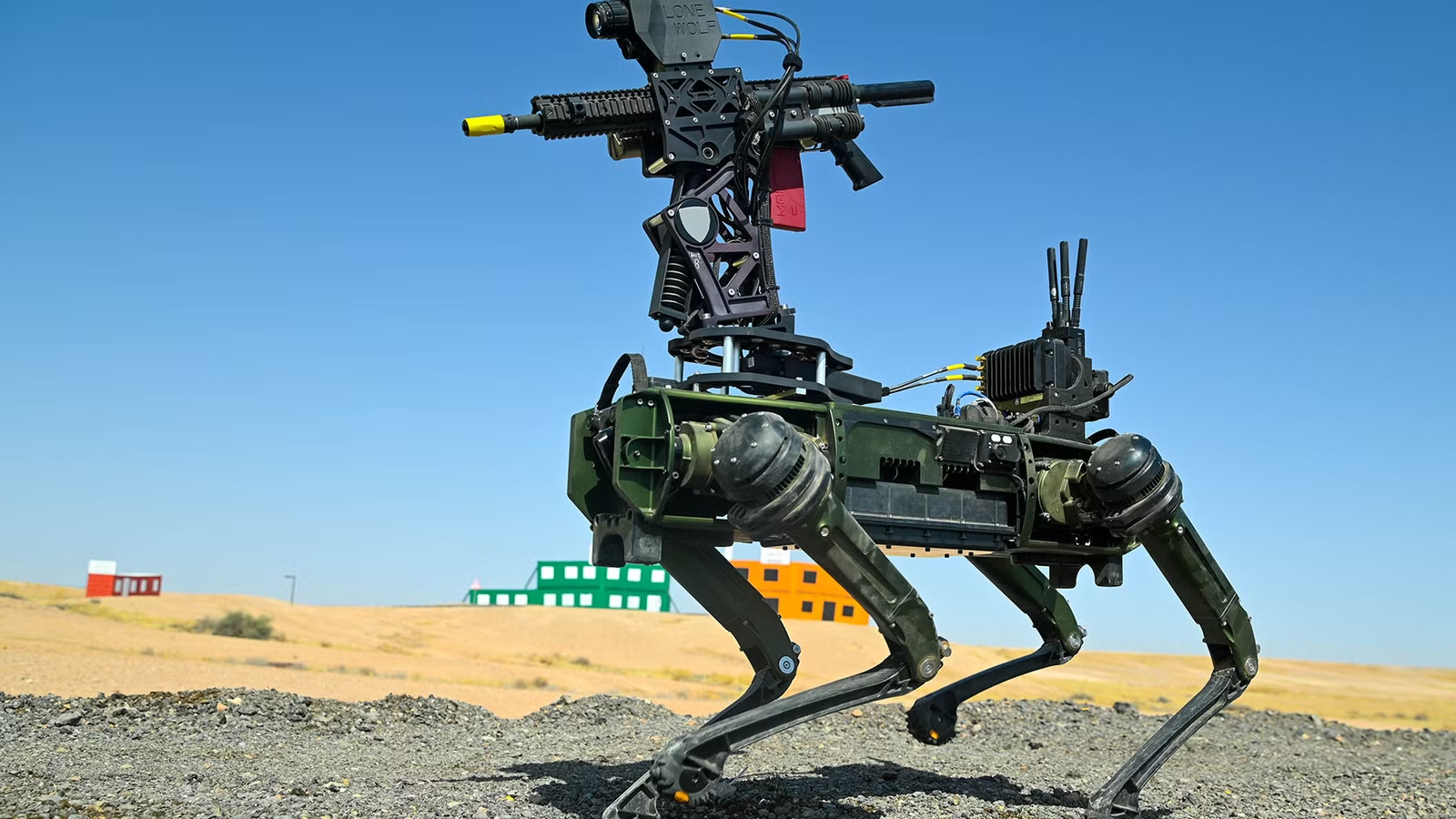
TAIPEI, Taiwan — Taiwan has unveiled a new generation of robotic military systems that could soon help patrol some of the most strategically sensitive islands in the South China Sea, marking another step in the island’s efforts to strengthen defenses as pressure from China continues to grow.
The National Chung-Shan Institute of Science and Technology (NCSIST), Taiwan’s leading military research organization, recently demonstrated three versions of advanced robot patrol dogs designed for reconnaissance, surveillance and combat-support missions. The four-legged unmanned systems are based on Ghost Robotics’ Vision 60 platform and have been integrated with Taiwanese-developed technologies for military applications.
The demonstration comes as Taiwan accelerates investment in drones, autonomous systems and other asymmetric defense capabilities intended to counter China’s expanding military presence around the Taiwan Strait and disputed waters of the South China Sea.
Robot Patrol Dogs Could Guard Strategic South China Sea Islands
According to reports from Reuters, Taiwanese defense officials believe the robotic systems could eventually be deployed to patrol Dongsha (Pratas) and Nansha (Spratly) island outposts controlled by Taiwan.
One version is optimized for reconnaissance, another for surveillance and monitoring, while a third combat-support model can be equipped with a weapon system. Officials said Taiwan’s marines and coast guard have expressed strong interest in using the robotic platforms for coastal patrols, perimeter security and inspections in remote island environments.
The islands occupy strategically important positions in the South China Sea, a region where competing territorial claims have fueled tensions for decades. While Taiwan maintains control of Itu Aba in the Spratly Islands and the entire Pratas Islands group, Chinese coast guard vessels and military aircraft have increased activity nearby in recent years.
Taiwan Expands Autonomous Defense Capabilities
Details released by Focus Taiwan show that the robot dogs were customized by NCSIST with indigenous surveillance, intelligence-gathering and patrol technologies, allowing the systems to operate in military-specific roles beyond their original commercial design.
The project reflects Taiwan’s broader effort to integrate unmanned systems across land, sea and air operations. Defense planners increasingly view autonomous technologies as force multipliers that can help compensate for manpower limitations while improving situational awareness in contested areas.
Recent initiatives have included expanded drone procurement programs, unmanned surface vessel development and investment in AI-enabled surveillance networks designed to monitor maritime approaches to Taiwan and its offshore territories.
China Tensions Drive New Security Investments
The emergence of robot patrol dogs is taking place against a backdrop of heightened military competition between Taipei and Beijing. Taiwan has repeatedly reported increased Chinese military exercises, coast guard patrols and drone activity around both the Taiwan Strait and South China Sea.
Last year, Taiwan conducted expanded coast guard and military exercises focused on responding to what officials describe as China’s “grey zone” pressure tactics, which include maritime incursions, surveillance activities and other actions that stop short of open conflict.
Security analysts note that autonomous patrol systems could provide persistent monitoring capabilities on remote islands where maintaining large personnel deployments is difficult and costly.
Robot Patrol Dogs Reflect a Growing Regional Trend
Taiwan is not alone in pursuing robotic military technologies. Across Asia, armed forces are increasingly experimenting with quadruped robots for reconnaissance, logistics and combat-support missions.
Recent reporting by South China Morning Post detailed how China’s People’s Liberation Army integrated robot dogs and aerial drones into amphibious assault exercises that simulated operations against Taiwan. The exercises highlighted how robotic systems are becoming part of modern battlefield planning on both sides of the Taiwan Strait.
Meanwhile, Taiwan’s domestic defense industry has been expanding production capacity for robotic systems. A report by Taiwan News in April noted that local firms were increasing robot dog manufacturing and developing Taiwan-based supply chains for defense robotics components in anticipation of future military demand.
Years of Development Lead to Today’s Deployment Plans
The growing military role of robotic dogs did not emerge overnight. In 2024, China showcased weapon-equipped robotic dogs during joint military exercises in Cambodia, offering one of the earliest public demonstrations of armed quadruped systems in a regional security context.
By late 2025, Chinese military exercises increasingly incorporated robot dogs alongside drone swarms and amphibious assault units. Those developments accelerated discussions across the region about the future role of autonomous ground systems in military operations.
Now, Taiwan’s latest unveiling suggests the technology is moving from experimentation toward practical deployment, particularly for surveillance and security missions on isolated island outposts where robotic systems can operate alongside human personnel.
What Comes Next?
Taiwan has not yet announced a formal procurement timeline, but defense officials indicated demand for the systems remains strong among military and coast guard units responsible for defending offshore territories.
As competition between Taiwan and China increasingly extends into the domains of artificial intelligence, autonomous systems and unmanned warfare, robot patrol dogs may become a visible symbol of how emerging technologies are reshaping security dynamics in the South China Sea.
Whether deployed for surveillance, reconnaissance or force protection, the new robotic platforms underscore Taiwan’s determination to modernize its defenses while preparing for a security environment that is becoming increasingly automated and technologically complex.


