

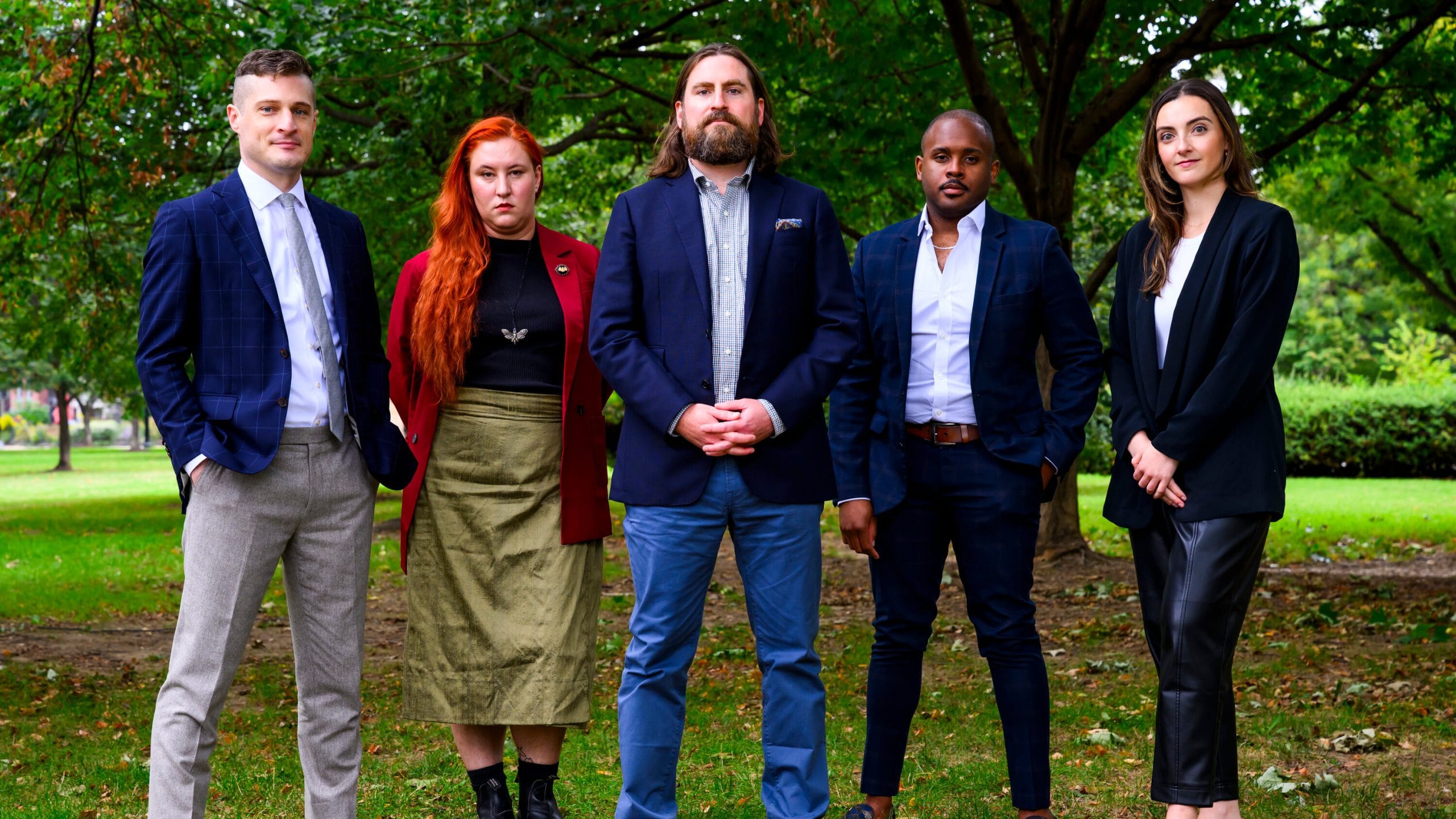
WASHINGTON — The Searchlight Institute, founded by Democratic strategist Adam Jentleson and backed by a handful of billionaire donors, is urging Democratic candidates to stop using the phrase “climate change” and instead lead with a “cheap energy” and cost-cutting message, according to a research brief released Sept. 22, Dec. 15, 2025.
The group argues that battleground voters broadly accept that climate change is real and serious, but they do not prioritize it — and that the term itself can trigger partisan suspicion that overwhelms any economic pitch tied to clean energy.
Searchlight Institute’s “don’t say climate change” pitch
Searchlight’s brief is blunt even by Washington messaging standards, with a subhead that reads: “How to Talk About Climate Change: Don’t.” In the institute’s view, candidates who start with climate language risk coming off as out of touch with voters who are focused on grocery bills, rent, and utilities.
In its polling, Searchlight said 61% of registered voters in seven battleground states considered climate change at least a very serious problem — including 87% of Democrats — but just 17% said it affects them and their family “a great deal.” When asked to choose priorities, only 22% put climate change in their top three issues, and 6% called it their top issue.
The same survey found a sharper political vulnerability for Democrats: Voters were more likely to say Democrats are focused on climate change (46%) than on affordable prices (35%), even though affordable prices ranked as the top voter priority overall. Searchlight warned that “messages are actively weakened by a focus on ‘climate’ over affordability and low energy prices,” and said voters want immediate relief “rather than solutions to abstract problems.” For full details, see Searchlight’s research brief and methodology.
Searchlight said its survey was conducted online by Hart Research Associates among 1,454 registered voters in Arizona, Georgia, Michigan, Nevada, North Carolina, Pennsylvania and Wisconsin, Aug. 13-18, with a 3.1% credibility interval.
Pushback from climate advocates and some Democrats
The advice has landed like a grenade inside Democratic circles already debating whether the party’s 2024 losses were driven by policy, culture, or simply a broken political environment. Critics say “don’t say climate change” amounts to telling Democrats to stop making the case for action on what they view as a defining issue — and they argue that silence will not prevent Republicans from attacking clean energy policies anyway.
Rep. Sean Casten, D-Ill., a longtime climate hawk, told Grist that the lesson of polling should be tactical, not avoidance: “Polling doesn’t tell you what you talk about. It tells you how you talk about it.” His view reflects a broader argument among climate-focused Democrats: Translate climate policy into kitchen-table outcomes, but do not vanish from the field.
Searchlight officials have pushed back on the idea that the institute is telling candidates to abandon climate policy. Tré Easton, the group’s vice president for public policy, told Grist: “It’s not that Democrats should just jettison their long-held policy beliefs and their values.” For more on the debate — and how “cheap energy” framing is spreading — read Grist’s reporting on Democrats’ shifting climate language.
A billionaire-funded project in the middle of a post-2024 Democratic reset
Searchlight’s messaging intervention is also colliding with skepticism about who is driving the party’s “reset” — and whose interests will shape it.
In an October profile, The Atlantic reported that Searchlight launched with a seven-person team, a polling arm, and a $10 million budget. The project, the magazine said, “appears to have plenty of funding,” including money from “a handful of billionaires” guided by donor-adviser Seth London — an arrangement that has made Searchlight an immediate target for progressive critics wary of donor-driven strategy. One progressive consultant told The Atlantic that the rise of “another reactionary centrist think-and-poll tank is really pretty gross.” The profile is here in The Atlantic.
Older warning signs: donor memos and the long fight over climate wording
Searchlight’s argument that Democrats should scrub polarizing language is not emerging in a vacuum — and two earlier flashpoints show how long these debates have simmered.
First, a donor-world strategy fight was already underway after the 2024 election. In December 2024, The American Prospect reported on a private memo written by Seth London — described as a former Obama administration official and adviser to major Democratic donors — that urged a break with identity-based messaging and pointed to the Democratic Leadership Council as an organizational model. The story framed it as an effort to build a new, market-friendly moderation project inside the party. The article is available here.
Second, the weaponization of climate terminology has a documented history. A 2014 report by the Yale Program on Climate Change Communication and George Mason University’s Center for Climate Change Communication highlighted an early example: Republican strategist Frank Luntz advised GOP leaders to use “climate change” instead of “global warming,” arguing it sounded less frightening. The same report found that phrasing can shift public reactions and perceived urgency. The report, “What’s in a Name? Global Warming vs. Climate Change,” is available here.
Searchlight is essentially attempting a modern inversion of that older Republican playbook: treating “climate change” as politically radioactive and betting that Democrats can still pursue energy and emissions goals without naming the problem directly.
Whether Democrats embrace Searchlight’s advice — or reject it as donor-driven retreat — is likely to shape how the party talks about energy, affordability, and environmental policy heading into 2026.


