
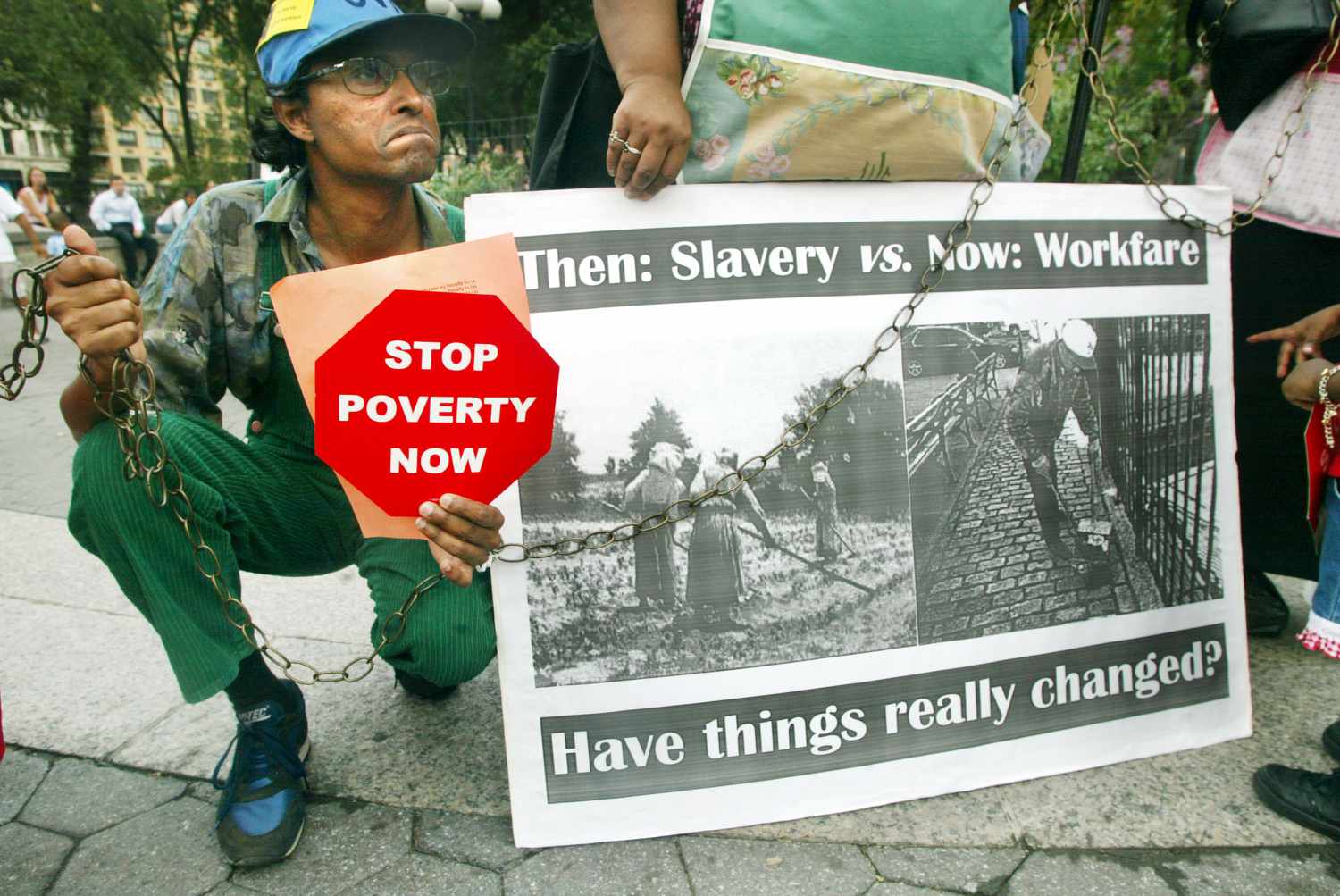
WASHINGTON — Lawmakers, scholars and advocacy groups are renewing debate over slavery reparations in the United States as policy proposals gain traction and opposition sharpens, April 22, 2026. The renewed focus is driven by growing calls for economic redress and deeper scrutiny over how historical systems of slavery and discrimination continue to shape wealth gaps today.
The issue, long considered politically fringe, has moved closer to the mainstream in recent years. Federal, state and local efforts have explored compensation, tax credits, housing assistance and institutional reforms as possible remedies.
Slavery reparations proposals gain momentum amid political divide
At the federal level, proposals such as H.R. 40 — a bill to study reparations — continue to draw debate. Supporters argue the measure is a necessary first step toward addressing centuries of injustice. Critics question both the feasibility and fairness of determining eligibility and funding.
According to a Brookings Institution analysis on reparations, the racial wealth gap remains a central argument for compensation, noting that Black households hold significantly less wealth than white households on average.
Meanwhile, a Reuters overview of U.S. reparations proposals highlights the wide range of approaches under consideration, from direct payments to community investments.
Key questions: Who pays and who qualifies?
Central to the debate are unresolved questions about responsibility and eligibility. Economists and policymakers continue to grapple with whether reparations should be funded federally, by states, or by private institutions that historically benefited from slavery.
A National Public Radio report on reparations frameworks outlines competing models, including lineage-based eligibility versus broader race-based criteria.
Opponents argue that assigning financial responsibility to modern taxpayers raises ethical concerns. Supporters counter that government institutions played a direct role in enforcing slavery and segregation, making federal accountability essential.
Historical context shapes modern slavery reparations debate
The modern reparations movement draws on decades of scholarship and activism. Earlier discussions often centered on symbolic acknowledgment, but recent proposals emphasize measurable economic outcomes.
In a 2019 New York Times opinion essay on reparations, the debate was framed as a moral and economic reckoning, helping to bring the issue into national political discourse.
Similarly, a widely cited 2014 Atlantic article on the case for reparations traced systemic inequities from slavery through redlining, influencing public understanding of long-term economic harm.
Earlier still, a BBC report on the reparations debate documented how the issue evolved from academic discussion into legislative consideration.
Local efforts offer testing ground
Several cities and states have launched pilot programs, including housing grants and community investments. These localized efforts are often viewed as testing grounds for broader national policy.
Advocates argue that such programs demonstrate feasibility, while critics say they highlight inconsistencies in eligibility and impact.
Conclusion: A debate far from settled
As the slavery reparations debate intensifies, consensus remains elusive. While momentum continues to build in some political and academic circles, fundamental disagreements over implementation and responsibility persist.
The outcome may ultimately depend on whether policymakers can reconcile moral arguments with practical considerations — a challenge that has defined the debate for decades and shows no sign of fading.