

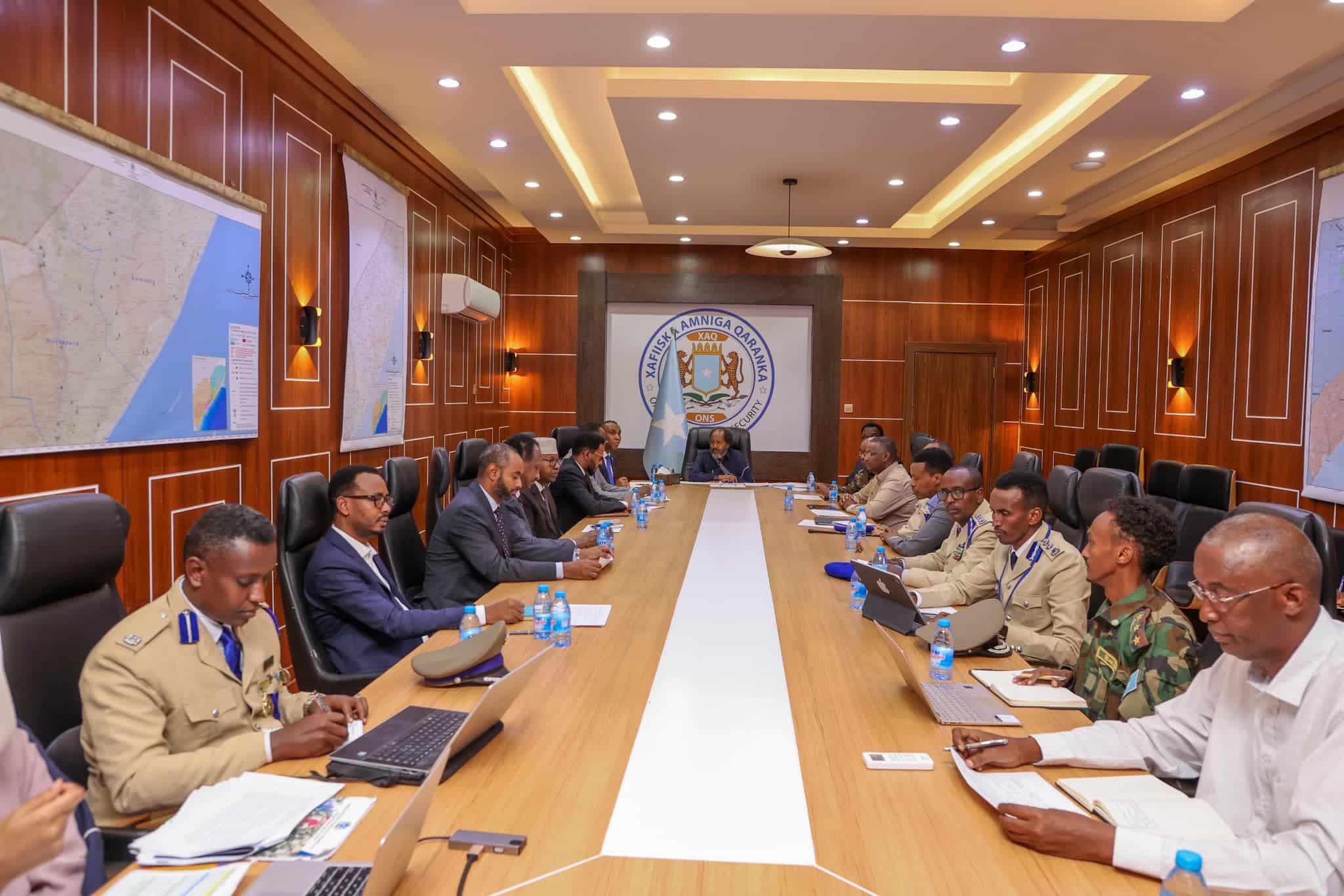
Somalia Security Council win puts Mogadishu inside the room
For Somalia, the shift marks a reversal of recent diplomatic history. The country spent decades as a case before international bodies, with outside powers often debating arms controls, peacekeeping mandates and counterterrorism support tied to its stability.
That began to change when The Associated Press reported Somalia’s election to a two-year U.N. Security Council term beginning Jan. 1, 2025, alongside Denmark, Greece, Pakistan and Panama. The vote returned Somalia to the council for the first time in more than five decades.
The AU seat adds a continental layer to that role. The Somali National News Agency reported that Abdullahi Warfaa, Somalia’s ambassador to Ethiopia and the African Union, raised the Somali flag at the AU council’s headquarters in Addis Ababa, formally marking the country’s assumption of its new responsibilities.
AU peace role expands the same security agenda
The African Union Peace and Security Council seat gives Somalia a platform in the continental body most directly tied to conflict prevention, crisis response and African-led peace operations. It also connects Somalia’s domestic security transition with regional diplomacy at a time when the country continues to fight al-Shabab and build national institutions.
The African Union Support and Stabilization Mission in Somalia welcomed the election, saying in an AUSSOM press statement that Somalia’s new role reflected “growing recognition” of the country’s progress, leadership and engagement within the African Union.
That message fits the argument made by Awes Hagi Yusuf Ahmed, national security adviser to President Hassan Sheikh Mohamud. In an April 30 opinion article, Ahmed wrote that Somalia was now “shaping the agenda on the table,” framing the dual seats as a move from being acted upon to helping shape outcomes.
Older decisions show the continuity
The new seats did not arrive in a vacuum. In December 2023, Reuters reported that the U.N. Security Council lifted the arms embargo on Somalia’s government and security forces, more than 30 years after the restrictions were first imposed. That decision was an early sign that Somalia was being treated less as a permanently constrained state and more as a government expected to manage its own security sector.
A year later, The Guardian reported that the U.N. authorized AUSSOM to replace the African Union Transition Mission in Somalia, continuing international support for Somali forces against al-Shabab. The vote showed that even before Somalia joined the council, major decisions about its security future were still being made in New York and Addis Ababa.
What changes for Somalia and the region
Somalia’s influence is not unlimited. It does not hold a veto at the U.N. Security Council, and one country cannot dictate AU council outcomes alone. Its leverage will come through coalition-building, credible proposals and the ability to connect Somalia’s experience with wider African and international security debates.
Still, the symbolism matters. Somalia can now speak from inside the forums that once mainly spoke about it. That may help Mogadishu press for policies that better connect counterterrorism, stabilization, humanitarian access, climate security and state-building.
Why the Somalia Security Council moment matters now
The test will be whether Somalia turns diplomatic access into practical gains. The country still faces al-Shabab attacks, federal-regional tensions, humanitarian needs and climate pressures. The seats are not a solution by themselves, but they give Somalia a stronger platform to argue that security policy should reflect the priorities of countries living through conflict, not only the preferences of outside powers.
If used effectively, Somalia’s overlapping U.N. and AU roles could mark one of the clearest signs yet that the country’s post-conflict diplomacy has entered a more assertive stage: from crisis file to policy voice.


